



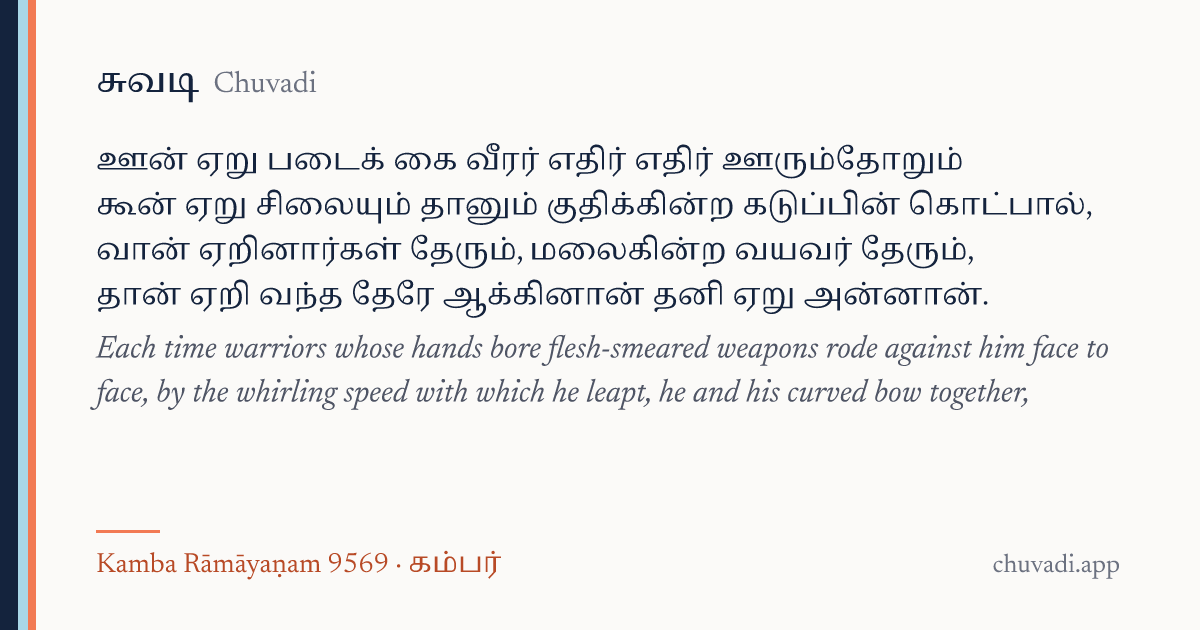
கம்பராமாயணம் 9569 · யுத்த 30.218
பாடல் · The poem
Tap a word to see its gloss in the commentary and where else it occurs.
பொருள் · Meaning in Tamil
தனி ஏறு அன்னான் - ஒப்பற்ற சிங்க ஏறு போன்றவனாகிய இராமன்; ஊன் ஏறு படைக்கை வீரர் எதிர் எதிர் ஊரும் தோறும் - தசை ஏறியுள்ள போர்க்கருவியைக் கையில் கொண்ட அரக்க வீரர்கள் எதிர்த்து எதிரில் ஊர்ந்து வரும்பொழுதெல்லாம்; கூன் ஏறு சிலையும் தானும் - வளைவு கொண்ட வில்லும் தானுமாக; குதிக்கின்ற கடுப்பின் கொட்பால் - குதிக்கின்ற விரைவான சுழற்சியால்; வான் ஏறினார்கள் தேரும் - போரிலே வீழ்ந்து வீரசொர்க்கம் அடைந்த அரக்கரின் தேர்களையும்; மலைகின்ற வயவர் தேரும் - (இன்னும் சாகாமல்) தன்னோடு போரிடுகின்ற அரக்க வீரர்களின் தேர்களையும்; தான் ஏறி வந்த தேரே ஆக்கினான் - தான் இயங்கும் நிலம் என்ற தேராகவே ஆக்கினான்.
இராமனுக்குத் தேர் இல்லை என்பதையும் அவன் தரையிலேயே இயங்கிப் போர் செய்தான் என்பதையும் நினைவிலே கொண்டு இந்தப் பாட்டின் பொருளை உணரவேண்டும்.
ஆங்கிலம் · English translationAI
Translation
- Each time warriors whose hands bore flesh-smeared weapons rode against him face to face,
- by the whirling speed with which he leapt, he and his curved bow together,
- the chariots of those who had gone up to heaven, and the chariots of the warriors still fighting,
- he, like a peerless lion, made into the chariot he himself rode.
What the poem says
Irāmaṉ has no chariot and fights on foot, which the reader must keep in mind to grasp this verse. Each time demon warriors drive at him with bloodied weapons, he and his bow leap and whirl.
He bounds from one chariot to the next, both those of the dead, now in heaven, and those of the living still fighting him. In this way the enemy's own chariots become the chariot he rides.