



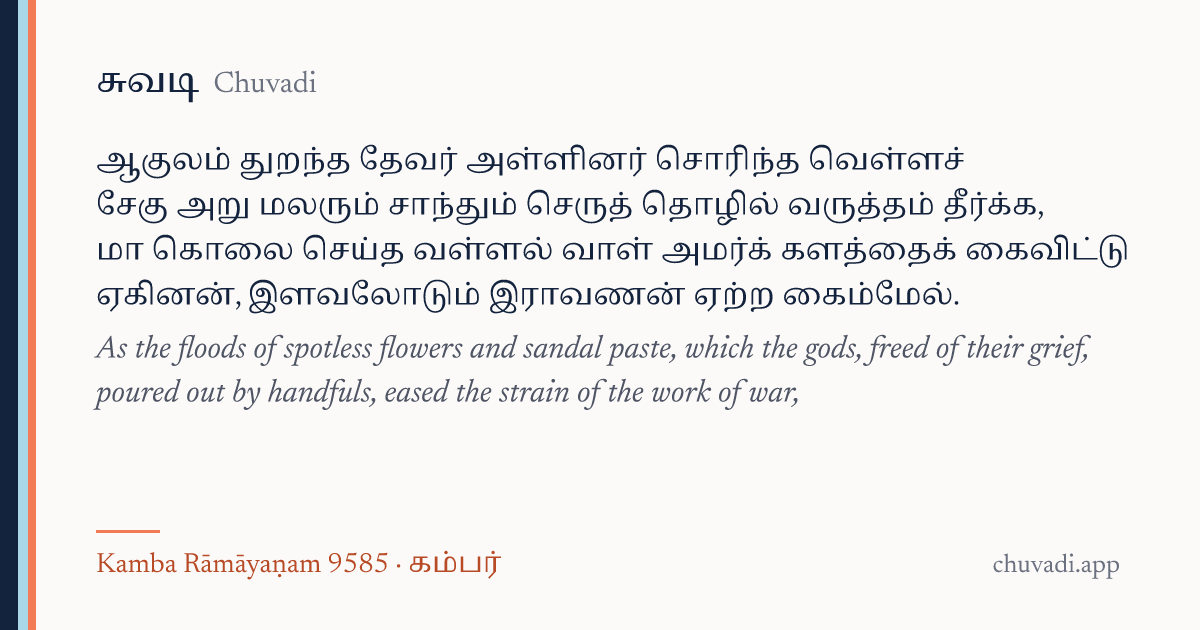
கம்பராமாயணம் 9585 · யுத்த 30.234
பாடல் · The poem
Tap a word to see its gloss in the commentary and where else it occurs.
பொருள் · Meaning in Tamil
ஆகுலம் துறந்த தேவர் - துன்பம் நீங்கிய தேவர்கள்; அள்ளினர் சொரிந்த - வாரிச் சொரிந்த; வெள்ளச் சேகு அறு மலரும் - வெள்ளம் போல் நிறைந்த குற்றமற்ற மலர்களும்; சாந்தும் - சந்தனமும்; செருத்தொழில் வருத்தம் தீர்க்க - போர்ச் செயலினால் ஏற்பட்ட துன்பத்தைப் போக்க; மா கொலை செய்த வள்ளல் - பெருங் கொலைகளைச் செய்த வள்ளலாகிய இராமன்; வாள் அமர்க் களத்தைக் கைவிட்டு - வாள் (விளையாடும்) போர்க் களத்தை நீங்கிச் சென்று; இளவலோடும் இராவணன் ஏற்ற கைம்மேல் - தம்பியாகிய இலக்குவனோடு இராவணன் எதிர்த்து நின்ற இடத்துக்கு; ஏகினன் - போனான்.
'மா கொலை செய்த வள்ளல்' என்ற தொடர் சிந்தனைக்கு உரியது. அரக்கரை அழித்ததைக் 'கொலை' என்ற சொல்லால் குறித்தார் அது தீயோரை அழிக்கும் அரசர் கடமை என்பதால். 'கொலையிற் கொடியாரை வேந்து ஒறுத்தல் பைங்கூழ் களை கட்டதனோடு நேர்' (குறள் 550) என்ற குறட்பாவையும் 'இப் பெற்றியாரைக் கண்ணோடிக் கொல்லாவழிப் புற்களைக்கு அஞ்சாநின்ற பைங்கூழ் போன்று நலிவு பல எய்தி உலகு இடர்ப்படுதலின், கோறலும் அரசற்குச் சாதி தருமம் என்பதாயிற்று' என்ற பரிமேலழகர் விளக்கத்தையும் மனத்தில் நினைந்து தெளிவு காணல்வேண்டும். மேலும் கொலை செய்தவனை 'வள்ளல்' என்ற வளச் சொல்லால் குறித்தமையும் கருதத் தக்கது. 'சாத்திரக் கருத்துப்படி இறைவனுடைய பஞ்ச கிருத்தியங்களில் ஒன்றான சம்ஹாரமும் அருட்செயல் என்றே அழைத்தல் உணர்க' என்பது ஐயரவர்கள் நூலகப் பதிப்பு விளக்கம்.
ஆங்கிலம் · English translationAI
Translation
- As the floods of spotless flowers and sandal paste, which the gods,
- freed of their grief, poured out by handfuls, eased the strain of the work of war,
- the bountiful one who had done great slaughter left the field of sword-fighting
- and went, with his younger brother, to where Irāvaṇaṉ was standing to fight.
What the poem says
The gods, freed of their grief, shower Irāmaṉ with flowers and sandal paste that soothe his battle weariness. He then leaves the field and goes with his younger brother Ilakkuvaṉ to where Irāvaṇaṉ himself is fighting.
The poet calls him 'the bountiful one who did great slaughter'. The commentary explains that killing the wicked is a king's duty, as the Tirukkuṟaḷ teaches, likening it to pulling weeds to save a crop. To destroy evil is itself an act of grace.