



கம்பராமாயணம் 9592 · யுத்த 31.5
பாடல் · The poem
Tap a word to see its gloss in the commentary and where else it occurs.
பொருள் · Meaning in Tamil
கண்டு - இராவணனைப் பார்த்து; மண்டு போரிடை - நெருங்கிச் செய்யும் போரிலே; மடிவதே நலம் என மதித்தார் - சாவதே நல்லது என மதித்தவராய்; கைகளோடு அணி வகுத்து - போர்க்களத்தில் பக்கங்களோடு முன்பின் வரிசையாக நின்று; உரும் உறழ் கற்கள் கொண்டு - இடிபோல் பகைவர்க்குத் துன்பம் செய்யும் கற்களைக் கொண்டு; கூற்றமும் நடுக்குற - எமனும் நடுங்குமாறு; தோள்புடை கொட்டி - தோள்களைத் தட்டிக் கொண்டு; அண்ட கோடிகள் - பல உலகின் பல்வேறு தர்ம முடுக்குகளும்; அடுக்கு அழிந்து - அடுக்குமுறை குலைந்து; உலைவுற - வருந்துமாறு; ஆர்த்தார் - ஆரவாரம் செய்தார்.
ஆங்கிலம் · English translationAI
Translation
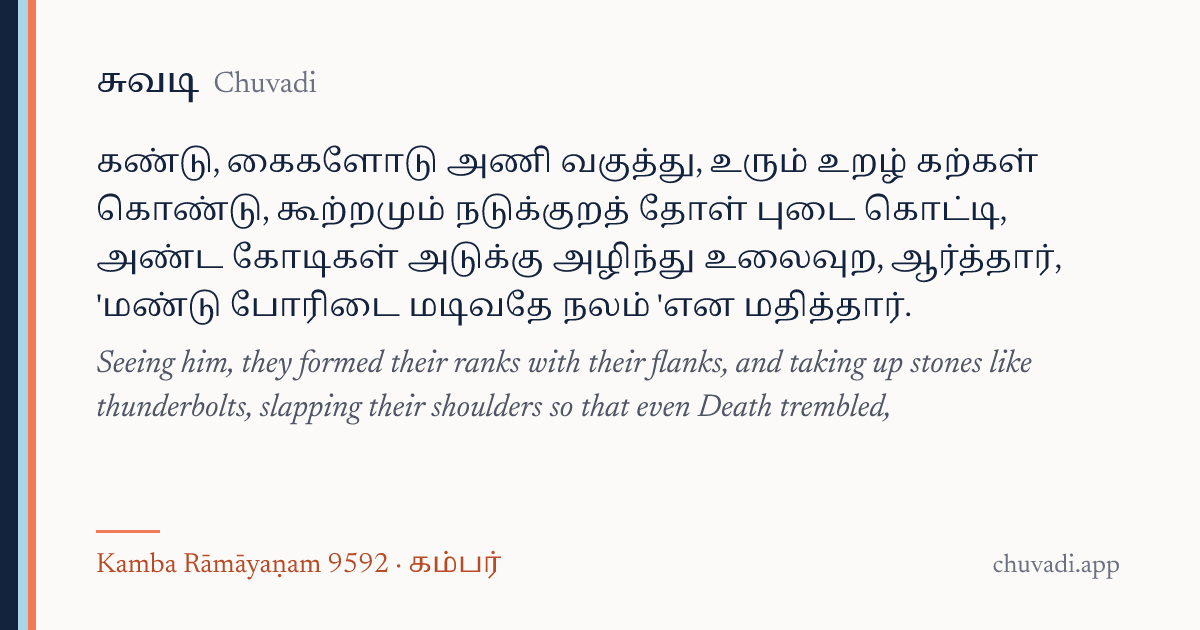
- Seeing him, they formed their ranks with their flanks, and taking up stones like thunderbolts,
- slapping their shoulders so that even Death trembled,
- they roared, so that the crores of worlds lost their order and were shaken,
- resolved that 'To die in the close-pressed battle is good'.
What the poem says
Faced with Irāvaṇaṉ, the monkeys decide it is better to die fighting at close quarters than to run. They draw up in battle order, front and flanks, and pick up rocks that strike like thunderbolts.
They slap their shoulders in challenge so fiercely that even Yama, god of death, trembles. Their war cry shakes the countless worlds out of their ordered tiers.