



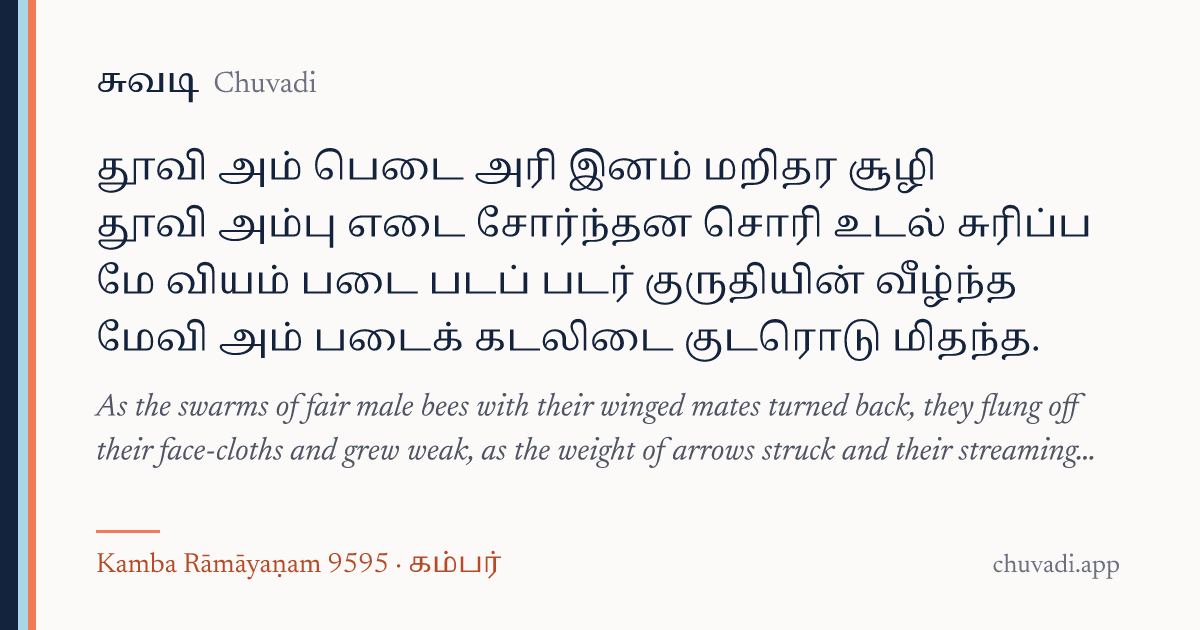
கம்பராமாயணம் 9595 · யுத்த 31.8
பாடல் · The poem
Tap a word to see its gloss in the commentary and where else it occurs.
பொருள் · Meaning in Tamil
அம்படைக் கடலிடை மேவி - (யானைகள்) சேனைக் கடலிடைச் சேர்ந்து (இலக்குவன் அம்பு தொடுக்க எடுத்தலால்); தூவி அம்பெடை அரியினம் மறிதர - சிறகுகளை உடைய அழகிய பெண் வண்டோடு கூடிய அழகிய ஆண் வண்டுக் கூட்டம் மீண்டு போகுமாறு; சூழி தூவி - முகபடாத்தை வீசி எறிந்து; சோர்ந்தன - சோர்வடைந்தனவாய்; வியம்மே படைபடப் படர் குருதியின் சொரியுடல் சுரிப்ப வீழ்ந்த - வியத்தற்குரிய அம்புப் படை மேலே படப்பட பரந்து செல்லும் இரத்தத்தில் சுழன்று அமிழ்ந்து உடல் வீழ; அம்பு எடை குடரொடு மிதந்த - அம்பின் மிகுதியால் பொருந்தி வெளிப்பட்ட குடரொடு மிதப்பவாயின.
சூழி தூவி என்பதால் யானையின் செயல் வெளிப்படும். இச்செய்யுள் யமகம் என்னும் சொல்லணி. இது முன்னிரண்டு அடிகளில் ஒருவகையாகவும் பின்னிரண்டு அடிகளில் மற்றொரு வகையாகவும் அமைந்துள்ளது.
ஆங்கிலம் · English translationAI
Translation
- As the swarms of fair male bees with their winged mates turned back,
- they flung off their face-cloths and grew weak, as the weight of arrows struck and their streaming bodies writhed;
- as the wondrous weapons struck, they fell in the spreading blood,
- and, having entered that fair sea of an army, floated along with their entrails.
What the poem says
This verse describes the war elephants falling. The bees that swarm around the musth on their temples fly off as the elephants throw off their ornamental face-cloths and sink under the weight of arrows.
Writhing, they fall into the spreading blood and float in that sea of soldiers with their entrails spilling out. The verse is a yamakam, a figure of sound in which the same syllables recur in each line with different meanings. Here one pattern runs through the first two lines and another through the last two.