



கம்பராமாயணம் 96 · பால 3.15
பாடல் · The poem
Tap a word to see its gloss in the commentary and where else it occurs.
பொருள் · Meaning in Tamil
தம் கணங்களோடும் ஓடுகின்ற மேகம் - தம் கூட்டத்துடனே செல்லும் மேகங்கள்; எல்லை காண்கிலா நாகம் ஒன்று அகன் கிடங்கை - எல்லை காண இயலாத, நாக லோகம்வரை ஆழ்ந்துள்ள பரந்த அகழியை; நாம வேலை ஆம் எனா - அச்சத்தைத் தரும் கடலாகும் எனக் கருதி; மொண்டு கொண்டு எழுந்து - நீரை முகந்து கொண்டு எழுந்து; விண் தொடர்ந்த குன்றம் என்று - அம்மதிலை வானளவும் உயர்ந்த மலை என்று கருதி; ஆகம் நொந்து நின்று - உடல் வருந்தி அம்மதிலின் மீது நின்று; தாரை அம்மதிற்கண் வீசுமே - மழைத் தாரையை அம் மதிலின்மீது பொழியும்.
மேகம், அகழியைக் கடல் என்று மயங்கி, அதன் நீரை மொண்டு மதிலை மலையென மயங்கி நின்று - மழை பொழியும் என்பதால் மயக்கவணியாகும். அகழியின் அகலமும் ஆழமும் மலையின் உயரமும் கூறப்பட்டது.
நாம்: அச்சப் பொருளைத் தரும் உரிச்சொல். அ: சாரியை பெற்று நாம என நின்றது.
ஆங்கிலம் · English translationAI
Translation
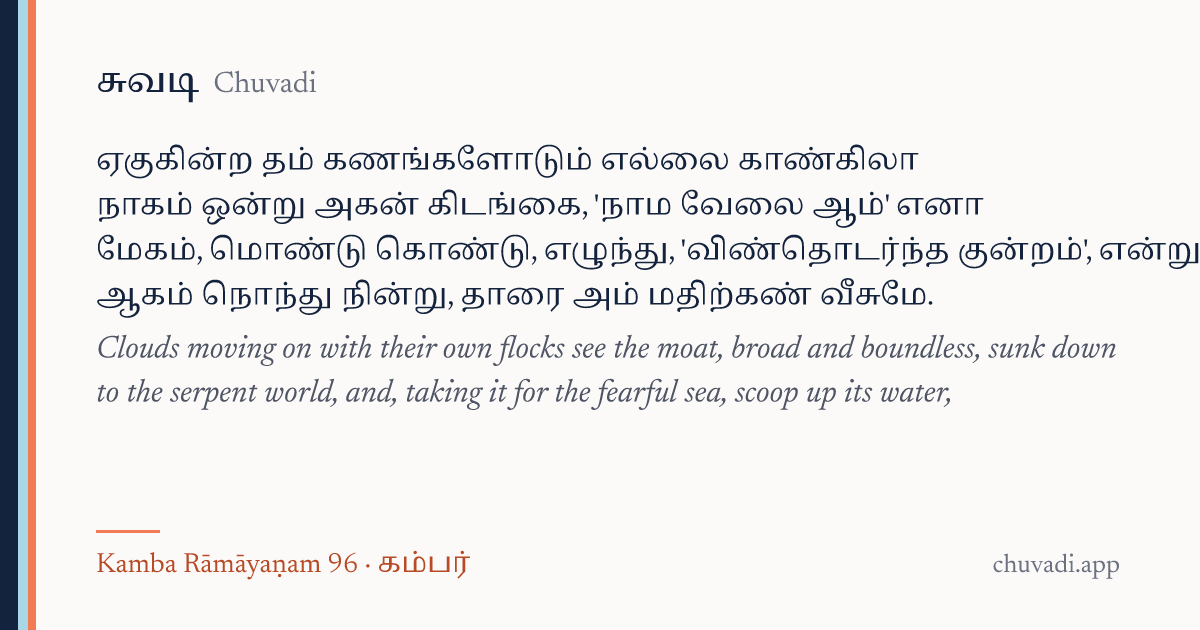
- Clouds moving on with their own flocks see the moat, broad and boundless, sunk down to the serpent world,
- and, taking it for the fearful sea, scoop up its water,
- rise up, take the wall for a mountain that touches the sky,
- and halt there, bodies aching, and pour their streams of rain upon that wall.
What the poem says
The moat is so wide and deep that the passing clouds take it for the ocean and drink from it. Then they mistake the towering wall for a mountain, stop against it as clouds stop against hills, and rain on it.
The figure is one of double mistaken identity. In a single image it shows how broad and deep the moat is and how high the wall stands.