



கம்பராமாயணம் 97 · பால 3.16
பாடல் · The poem
Tap a word to see its gloss in the commentary and where else it occurs.
பாட வேறுபாடு · Project Madurai reads
பொருள் · Meaning in Tamil
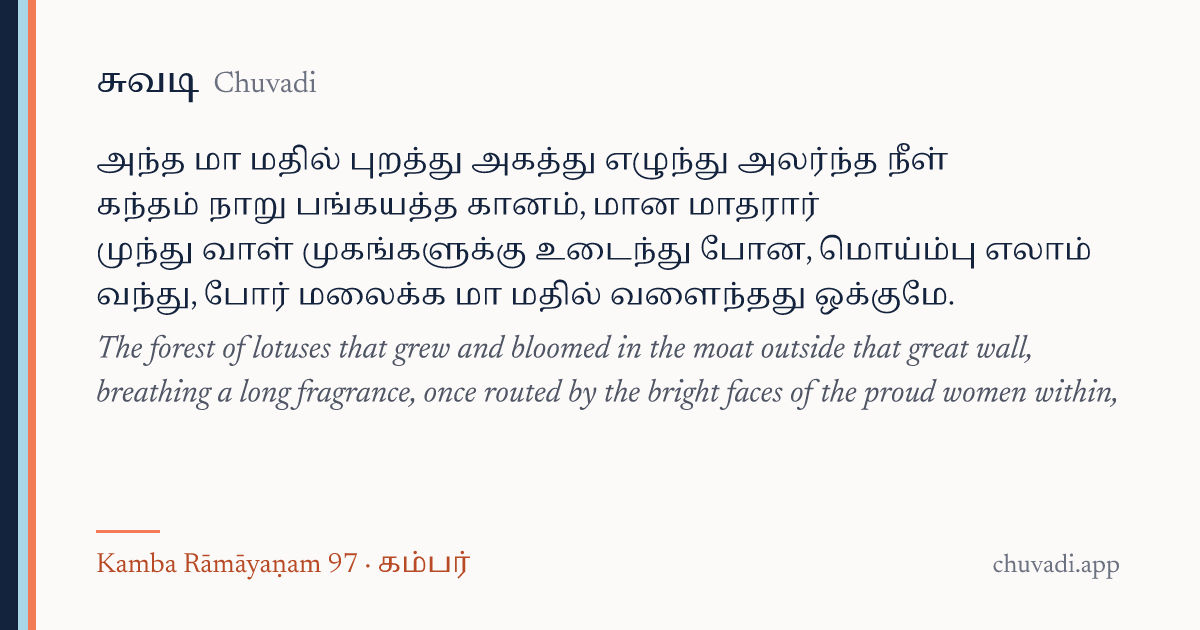
அந்தமா மதில் புறத்து - அந்தப் பெரிய மதிலின் வெளிப்புறமுள்ள; அகத்து எழுந்து அலர்ந்த - அகழியிலே தோன்றி மலர்ந்துள்ள; நீள் கந்தம் நாறும் பங்கயத்த கானம் - மிகுந்த மணம் வீசும் தாமரைக் காடு; மாதரார் வாள் முகங்களுக்கு - பெருமையுடைய அந்தப்புரத்துப் பெண்களின் ஒளியுடைய முகங்களுக்கு, முந்து உடைந்து போன - முன்பு தோற்றுப் போனமையால்; மொய்ம்பு எலாம் வந்து - மீண்டும் மிக்க வலிமை கொண்டு வந்து; போர் மலைக்க மாமதில் வளைந்தது ஒக்கும் - போர்புரிவதற்கு அந்த மதிலை வளைத்துக் கொண்டிருப்பதை ஒக்கும்.
மாநகரின் மதிலைச் சூழ்ந்திருக்கும் அகழியிலே, மலர்ந்துள்ள தாமரை மலர்கள் - அந்தப்புரத்து பெண்களின் முகங்களுக்குத் தோற்று - மீண்டும் வலிமை பெற்றுப் போர் செய்ய அந்த மதிலை வளைத்திருப்பதை ஒத்திருக்கும். இது தன்மைத் தற்குறிப்பேற்ற வணி. அயோத்தி நகரத்துப் பெண்களின் அழகைச் சிறப்பித்து இவ்வாறு கூறினார். அகத்து: அகழியினிடத்து. மானம்: பெருமை.
ஆங்கிலம் · English translationAI
Translation
- The forest of lotuses that grew and bloomed in the moat outside that great wall, breathing a long fragrance,
- once routed by the bright faces of the proud women within,
- seems to have gathered all its strength again
- and come to lay siege to the great wall, eager for battle.
What the poem says
The lotuses massed in the moat around the wall are pictured as an army. They were defeated once by the faces of the palace women, which are lovelier than any lotus, and have now regrouped to besiege the wall and fight again.
The poet invents a cause for a natural scene, a figure called poetic fancy. Its real purpose is to praise the beauty of the women of Ayōttī.