



கம்பராமாயணம் 9642 · யுத்த 32.6
பாடல் · The poem
Tap a word to see its gloss in the commentary and where else it occurs.
பாட வேறுபாடு · Project Madurai reads
பொருள் · Meaning in Tamil
நமரங்காள் - நம்மவர்களே!; ஓகத்து அம்பின் பொன்றினவேனும் - (இராமனின்) அம்புக் கூட்டத்தால் இறந்தன ஆயினும்; உடல் ஒன்றி - உடல்கள் ஒன்றுடன் ஒன்று ஒட்டி; செறி கால - இரத்தச் சேற்றில் சிக்கிய கால்களுடன்; மேகச் சங்கம் தொக்கன - மேகக் கூட்டம் கூடியது போல், வீழும் வெளி இன்றி - தரையில் வீழ இடமின்றி; காகப் பந்தர் செங்களம் எங்கும் - காகங்களிட்ட பந்தரை உடைய சிவந்த போர்க்களம் எங்கும்; நாகக் குன்றின் நின்றன காண்மின் - யானை மலைகள் நின்றுள்ள நிலையைப் பாரீர்.
ஓகம் - பெருங்கூட்டம்; சங்கம் - கூட்டம்; நாகம் - யானை
ஆங்கிலம் · English translationAI
Translation
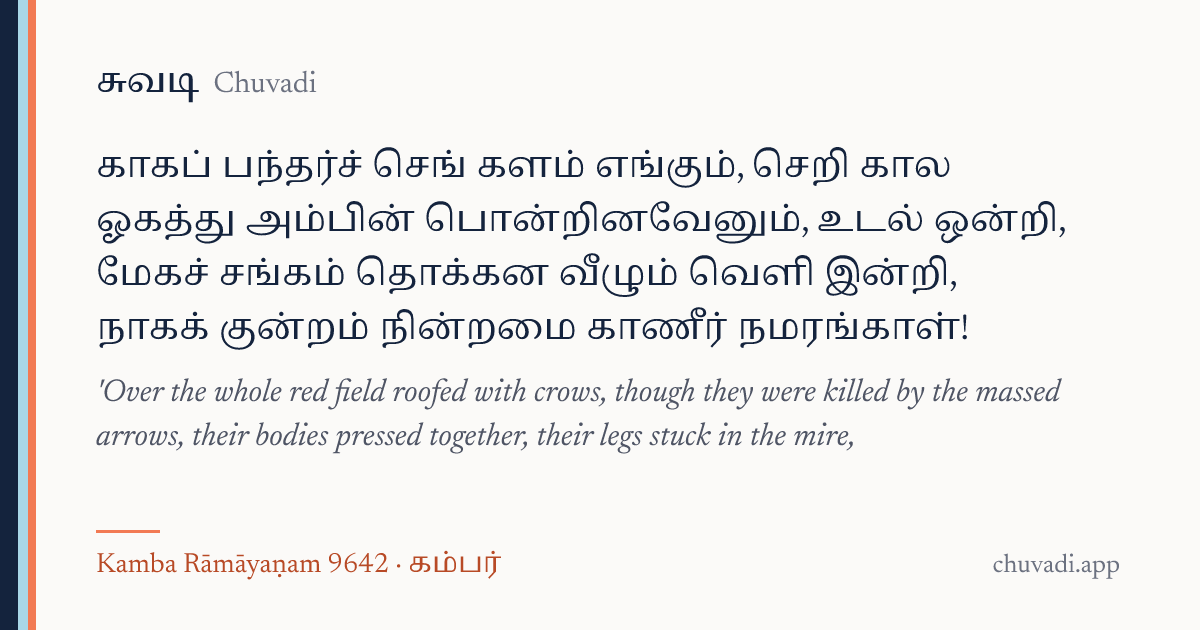
- 'Over the whole red field roofed with crows, though they were killed
- by the massed arrows, their bodies pressed together, their legs stuck in the mire,
- with no open space in which to fall, like clouds gathered in a mass,
- see how the mountainous elephants stand, our people!'
What the poem says
Vīṭaṇaṉ begins his tour of the battlefield and addresses the monkeys as 'our people'. Crows swarm above the blood-red field so thickly that they form a canopy.
He points out the war elephants. They were killed by Irāmaṉ's arrows, but the bodies are packed so close together and their legs are so deeply stuck in the mud of blood that they cannot fall. They remain standing like mountains, looking like great banks of cloud.