



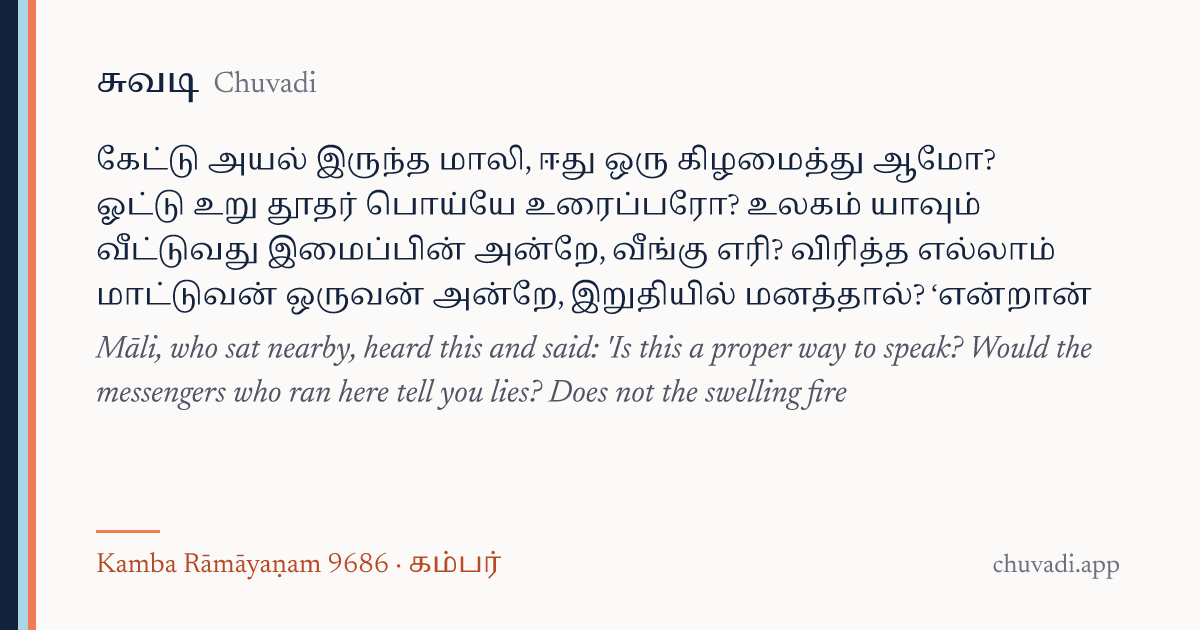
கம்பராமாயணம் 9686 · யுத்த 33.14
பாடல் · The poem
Tap a word to see its gloss in the commentary and where else it occurs.
பொருள் · Meaning in Tamil
கேட்டு அயல் இருந்தமாலி - (தூதுவரை ஐயுற்று இராவணன் கூறியதைக்) கேட்டுப் பக்கத்திலிருந்த மாலியவான்; ஈது ஒரு கிழமைத்து ஆமோ - (இராவணனை நோக்கி) இவ்வாறு கேட்பது ஒரு முறைமையுடையது ஆகுமோ? ஓட்டு உறு தூதர் பொய்யே உரைப்பரோ - நாம் விடுத்த தூதர் பொய் சொல்லுவார்களோ; உலகம் யாவும் - எல்லா உலகங்களும்; வீங்குஎரி வீட்டுவது இமைப்பின் அன்றே - ஊழித்தீ இமைப் பொழுதில் அழிந்து விடும் அல்லவா; விரித்த எல்லாம் - விரிந்து கிடக்கும் உலகங்கள் எல்லாம்; இறுதியில் மனத்தால் - ஊழியின் முடிவில் மனத்தால் நினைத்தவுடன்; ஒருவன் மாட்டுவன் அன்றே - உருத்திரன் அழிப்பான் அல்லவா.
ஆங்கிலம் · English translationAI
Translation
- Māli, who sat nearby, heard this and said: 'Is this a proper way to speak?
- Would the messengers who ran here tell you lies? Does not the swelling fire
- destroy all the worlds in the blink of an eye? And all that is spread out,
- does not one alone bring it to an end with a thought at the close of the age?'
What the poem says
Māliyavāṉ, Irāvaṇaṉ's aged grandfather and counsellor, rebukes him for doubting the messengers, who have no reason to lie.
He argues that great destruction can happen in an instant: the fire of the world's end burns everything in a blink, and at the end of an age one god (Rudra, says the commentary) dissolves the universe merely by willing it. A whole army falling to one archer is therefore not beyond belief.