



கம்பராமாயணம் 9695 · யுத்த 33.23
பாடல் · The poem
Tap a word to see where else it occurs.
பாட வேறுபாடு · Project Madurai reads
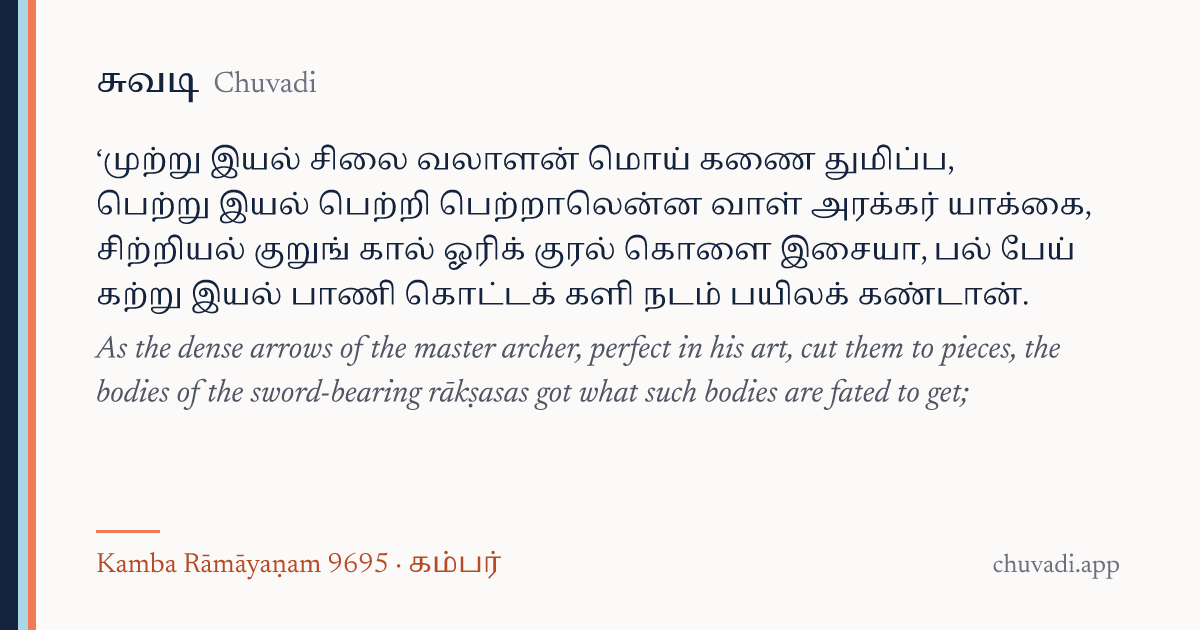
1‘முற்று இயல் சிலை வலாளன் மொய் கணை துமிப்ப, ஆவி
பெற்று இயல் பெற்றி பெற்றாம் ‘ என்ன வாள் அரக்கர் யாக்கை,
சிறு இயல் குறுங்கால் ஓரிக் குரல் கொளை இசையா, பல்பேய்
கற்று இயல் பாணி கொட்டக், களிநடம் பயிலக் கண்டான்.
பொருள் · Meaning in TamilAI
போர்க்களத்தில் இராமனின் அம்புகள் அரக்கர் உடல்களைத் துண்டு துண்டாக வெட்டி வீழ்த்தியிருந்தன. நரிகளின் ஊளைக் குரலையே பாட்டாகக் கொண்டு, பேய்கள் கற்றுத் தேர்ந்த தாளத்தில் கை கொட்டி மகிழ்ச்சியோடு நடனமாடுவதை இராவணன் கோபுரத்திலிருந்து கண்டான். முழுமையாகக் கற்றுத் தேர்ந்த வில்லாளனான இராமனின் கணைகள் அரக்கர்களுக்கு அளித்த நிலை இது எனக் கவிஞர் காட்டுகிறார்.
ஆங்கிலம் · English translationAI
Translation
- As the dense arrows of the master archer, perfect in his art, cut them to pieces,
- the bodies of the sword-bearing rākṣasas got what such bodies are fated to get;
- with the howl of the small, short-legged jackals as their song,
- many ghouls beat out the rhythm they had learned and danced a drunken dance: this he saw.
What the poem says
Still on the tower, Irāvaṇaṉ watches the battlefield where the arrows of Irāmaṉ, a perfect master of the bow, have hacked his warriors to pieces.
The scene is drawn as a grotesque festival: jackals howl in place of singers, and ghouls clap out the beat they have learned and dance in delight among the corpses.
ஒலிபெயர்ப்பு · Transliteration (ISO 15919)
1‘muṟṟu iyal cilai valāḷaṉ moy kaṇai tumippa,
peṟṟu iyal peṟṟi peṟṟāleṉṉa vāḷ arakkar yākkai,
ciṟṟiyal kuṟuṅ kāl ōrik kural koḷai icaiyā, pal pēy
kaṟṟu iyal pāṇi koṭṭak kaḷi naṭam payilak kaṇṭāṉ.