



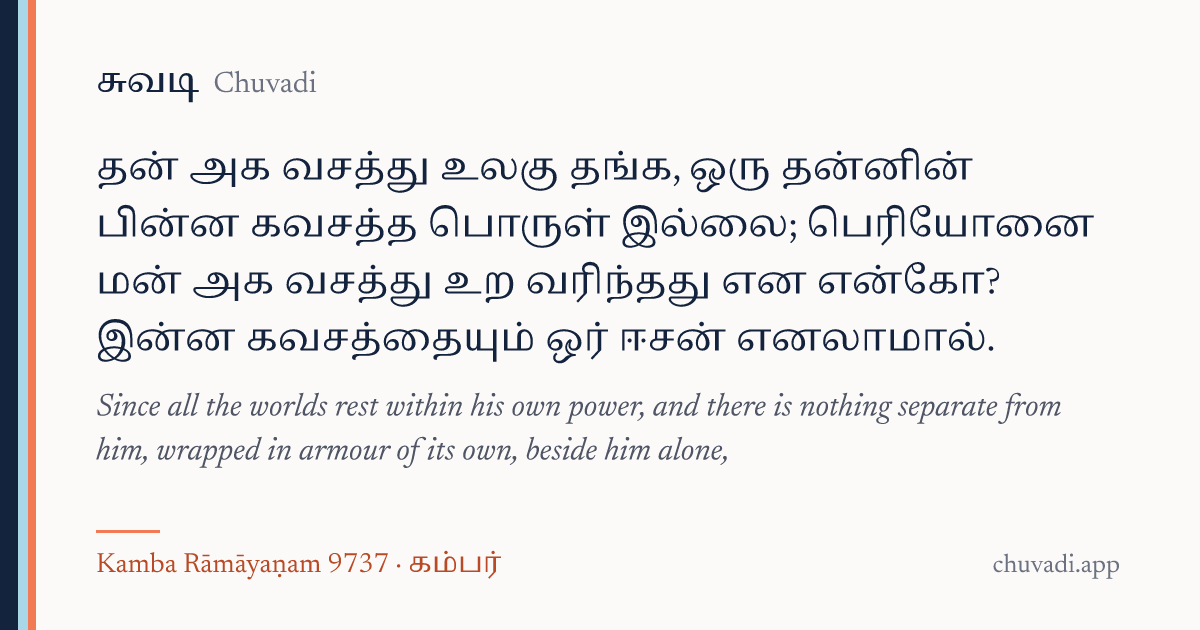
கம்பராமாயணம் 9737 · யுத்த 34.38
பாடல் · The poem
Tap a word to see its gloss in the commentary and where else it occurs.
பாட வேறுபாடு · Project Madurai reads
பொருள் · Meaning in Tamil
தன் அக வசத்து - தன்னுள்ளே; உலகு தங்க - உலகங்களெல்லாம் தங்கியிருக்க; ஒரு தன்னின் - ஒப்பற்ற தன்னினும்; பின்னக அசத்த பொருள் இல்லை - வேறுபட்டதும் சக்தியற்றதுமான வேறு எப்பொருளும் இல்லை; என - என்பது போல; பெரியோனை - இராமபிரானை; மன்ன, கவ்வ - நிலைபெற்றுக் கவ்வுமாறு; சத்து உற வரிந்தது என என்கோ? - உண்மை பொருந்த கட்டப்பட்டது என்று சொல்வதா?; இன்ன கவசத்தையும் - பிணித்து இராமன் மேனியைப் பற்றிய கவசத்தையும்; ஓர் ஈசன் எனலாம் - ஒரு பரம்பொருளே எனலாம்.
"கடவுள் எல்லாப் பொருளிலும் தங்கி அவ்வப் பொருட்குச் சக்தியைத் தருகிறான் என்பதும், அவனிலும் வேறாகி அவனால் வலிவு பெறாத ஒரு பொருளும் இல்லை என்பதும் நூற்கொள்கை யாதலால், அப்படிப்பட்ட கடவுளுக்குக் கவசம் என்று ஒன்று உடலில் பதிந்து ரட்சையாக நிற்கக் கட்டப்பட்டது என்று சொல்வது பொருந்துவதாகாது; இக் காலத்து ஸ்ரீராமபிரானைத் தன்னுட் கொண்டமையால் அந்தக் கவசத்தையும் ஒரு கடவுள் போலப் பாராட்டுதலாகிய இவ்வளவே நாம் செய்யத்தக்கது" - வை. மு. கோ.
ஆங்கிலம் · English translationAI
Translation
- Since all the worlds rest within his own power, and there is nothing
- separate from him, wrapped in armour of its own, beside him alone,
- shall I say this armour was bound to clasp the Great One firmly and truly?
- Rather, this armour too may be called a god.
What the poem says
Irāmaṉ puts on his armour, and the poet pauses over the paradox. As the Supreme Being, Irāmaṉ contains every world within himself, and nothing exists apart from him or has strength except from him. It hardly makes sense to say that something was strapped on to protect him.
The verse plays on the word kavacam (armour), splitting it as ka-vacam. Since the armour now holds the Lord within it, the poet concludes it can only be praised as itself divine, as the quoted older commentary explains.