



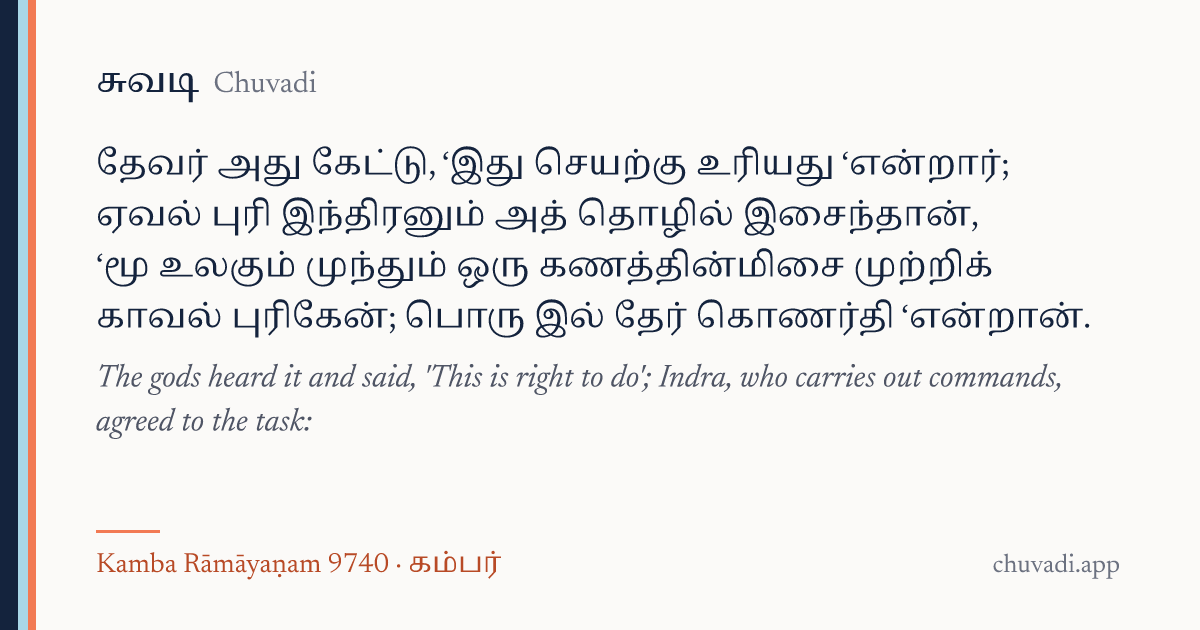
கம்பராமாயணம் 9740 · யுத்த 34.41
பாடல் · The poem
Tap a word to see its gloss in the commentary and where else it occurs.
பாட வேறுபாடு · Project Madurai reads
பொருள் · Meaning in Tamil
தேவர் அது கேட்டு - தேவர்கள் சிவபிரான் சொன்னதைக் கேட்டு; 'இது செயற்கு உரியது' என்றார் - 'இச் செயல் செய்வதற்கு உரியது என்று (இந்திரனிடம்) சொன்னார்கள்; ஏவல் புரி இந்திரனும் - சிவபிரான் ஏவியதைச் செய்யும் இந்திரனும்; அத்தொழில் இசைந்தான் - அந்தச் செயலைச் செய்ய ஏற்றுக்கொண்டான்; மூ உலகும் முந்தும் - மூன்று உலகங்களிலும் ஏற்பட்டுச் சிறப்பதாயும்; ஓர் கணத்தில் முற்றி - ஒரு கணத்தில் (அந்த மூவுலகங்களையும்) முழுவதாகச் சுற்றிவருவதாயும்; கோவில் புரிவேன் - சிறப்புள்ள தேரை இராமனுக்கு ஏற்ற கோவிலாகச் செய்வேன்; பொரு இல் தேர் கொணர்தி - ஒப்பற்ற தேரினைக் கொண்டு வருக; என்றான் - என (மாதலியாகிய தன் சாரதியிடம்) கூறினான்.
வெறும் போர்த் தேராக அன்றி இராமபிரான் எழுந்தருளுவதாலும் அவதார நோக்கம் நிறைவேற்றுவதற்கு உரியதாகலானும் 'தேரைக் கோவிலாக்குவேன் என்றான்.
ஆங்கிலம் · English translationAI
Translation
- The gods heard it and said, 'This is right to do';
- Indra, who carries out commands, agreed to the task:
- 'I will keep guard, having gone round all three worlds before anyone in a single instant;
- bring the peerless chariot,' he said.
What the poem says
The gods agree with Śiva, and Indra takes on the task. He orders his charioteer Mātali to bring his incomparable chariot, which can circle all three worlds in an instant.
The commentary follows a reading in which Indra vows to make the chariot a temple for Irāmaṉ: because God himself will ride in it to fulfil the purpose of his incarnation, it will be more than a war chariot.