



கம்பராமாயணம் 9751 · யுத்த 35.11
பாடல் · The poem
Tap a word to see its gloss in the commentary and where else it occurs.
பாட வேறுபாடு · Project Madurai reads
பொருள் · Meaning in Tamil
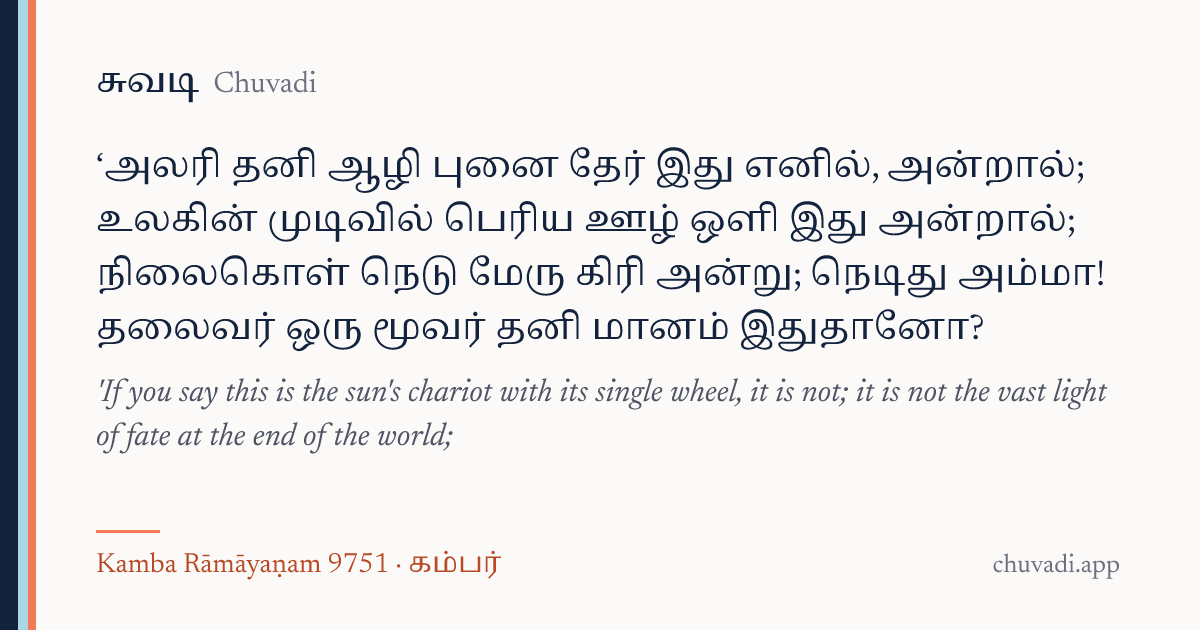
அலரி - சூரியனுடைய; தனி ஆழி புனை தேர் இது எனில், அன்று - ஒற்றைச் சக்கரம் பூண்ட தேர்தான் இது எனின் அப்படி இல்லை; உலகின் முடிவில் - உலகங்களின் அழிவுக் காலத்தில் எழுகின்ற; பெரிய ஊழ் ஒளி இது அன்று - பெரிய ஊழிக் காலத்தில் தோன்றும் தீயின் ஒளிகொண்டது இது அன்று; நிலைகொள் நெடு மேரு கிரி அன்று - நிலைபேறுடைய பெரிய மேரு மலையும் அன்று; நெடிது - மிகவும் உயரமானது இது; (அம்மா என்ற சொல் வியப்புக் குறிப்பானது); தலைவர் ஒரு மூவர் - தலைவர்களாகிய ஒப்பற்ற மும்மூர்த்திகளின்; தனிமானம் இதுதானோ - சிறந்த விமானம் இதுதானோ?
ஆங்கிலம் · English translationAI
Translation
- 'If you say this is the sun's chariot with its single wheel, it is not;
- it is not the vast light of fate at the end of the world;
- it is not the firm, tall mountain Mēru; how tall it is!
- Is this the unique celestial car of the three Lords?'
What the poem says
Irāmaṉ marvels at the chariot. He considers what it might be: the one-wheeled chariot of the sun, the blaze of the fire that ends the world, or Mount Mēru itself, and rejects each guess.
Astonished at its height, he wonders whether it is the celestial vehicle (vimāṉam) of the three supreme gods, Brahmā, Viṣṇu and Śiva.