



கம்பராமாயணம் 9753 · யுத்த 35.13
பாடல் · The poem
Tap a word to see its gloss in the commentary and where else it occurs.
பாட வேறுபாடு · Project Madurai reads
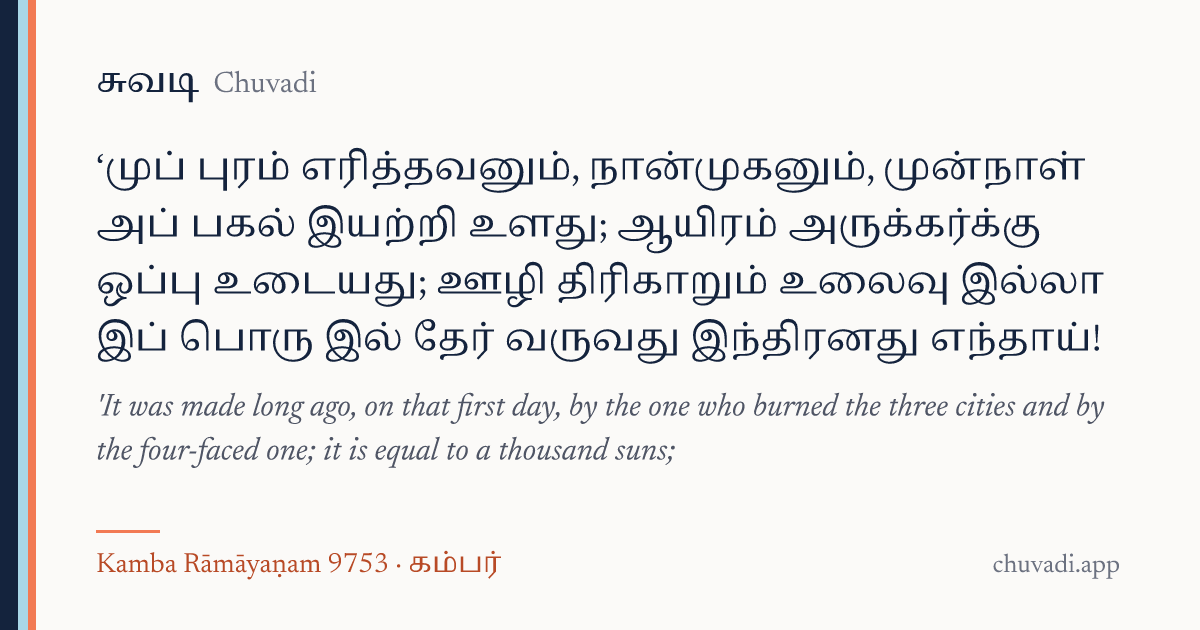
1‘முப்புரம் எரித்தவனும், நான்முகனும், முன்நாள்
அப்பகல் இயற்றி உளது; ஆயிரம் அருக்கர்க்கு
ஒப்பு உடையது; ஊழி திரி காலும் உலைவு இல்லா
இப்பொரு இல் தேர் வருவது இந்திரனது எந்தாய்!
பொருள் · Meaning in Tamil
எந்தாய் - என் தந்தையே!; முப்புரம் எரித்தவனும் - திரிபுரம் எரித்த சிவபெருமானும்; நான்முகனும் - பிரமனும்; முன் நாள் அப் பகல் - முதல் நாளாகிய படைப்புக் காலத்தில்; இயற்றி உளது - செய்தது (இத்தேர்; ஆயிரம் அருக்கர்க்கு ஒப்பு உடையது - தன் ஒளிச் சிறப்பால் ஆயிரம் சூரியர்களுக்கு நிகரானது; ஊழி திரிகாறும் உலைவு இல்லா - ஊழிக்காலம் மாறும்போதும் அழிவிலாததாகி, இத்தேர் வருவது - வந்துள்ள இந்தத் தேர்; இந்திரனது - இந்திரனுக்கு உரியது.
ஆங்கிலம் · English translationAI
Translation
- 'It was made long ago, on that first day, by the one who burned the three cities
- and by the four-faced one; it is equal to a thousand suns;
- it does not falter even as the ages turn;
- this matchless chariot that has come is Indra's, my lord!'
What the poem says
Mātali replies. The chariot was built at the dawn of creation by Śiva, who burned the three flying cities of the demons, and by Brahmā.
It shines like a thousand suns and remains undamaged through the cycles of cosmic ages. It belongs to Indra.
ஒலிபெயர்ப்பு · Transliteration (ISO 15919)
1‘mup puram erittavaṉum, nāṉmukaṉum, muṉnāḷ
ap pakal iyaṟṟi uḷatu; āyiram arukkarkku
oppu uṭaiyatu; ūḻi tirikāṟum ulaivu illā
ip poru il tēr varuvatu intiraṉatu entāy!