



கம்பராமாயணம் 9763 · யுத்த 36.2
பாடல் · The poem
Tap a word to see its gloss in the commentary and where else it occurs.
பாட வேறுபாடு · Project Madurai reads
பொருள் · Meaning in Tamil
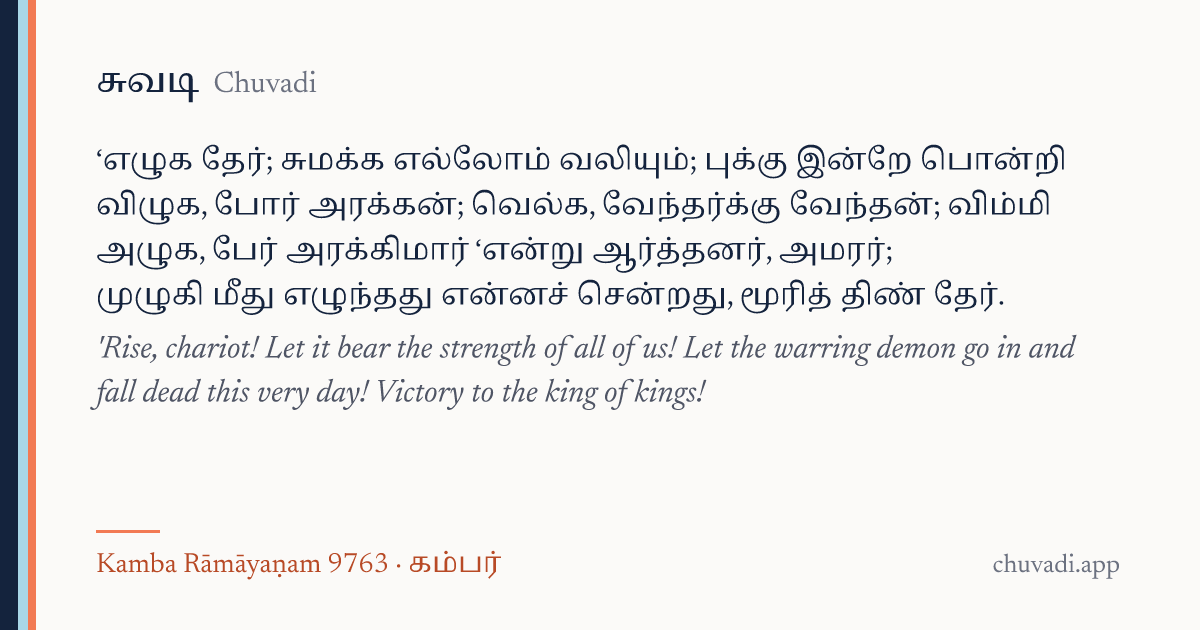
(தேவர்கள் மேலும், அமரர்- தேவர்; தேர் எழுக - இத்தேர் மேலெழுக; எல்லோம் வலியும் சுமக்க - நம் யாவருடைய வலிமையையும் இத்தேர் ஏந்துவதாக; புக்கு இன்றே போர் அரக்கன் பொன்றி விழுக - (இத்தேர் புகுவதால் இன்றைய தினமே போர் வெறி கொண்ட அரக்கனாகிய இராவணன் அழிந்து வீழ்வானாக; வேந்தர்க்கு வேந்தன் வெல்க - வேந்தருக்கெல்லாம் சக்கரவர்த்தியான இராமன் வாகை சூடுவானாக, பேர் அரக்கிமார் விம்மி அழுக - அரக்கர்களின் மனைவிமார்களான எண்ணற்ற அரக்கியர் (தம் கணவர் மாய) விம்மி அழுவார்களாக'; என்று அமரர் ஆர்த்தனர் - என்று கூறி தேவர்கள் ஆரவாரம் புரிந்தனர்; மூரித்திண்தேர் - வலிமையும் திண்மையும் மிக்க இராமனின் தேர்; ஆழி முழுகி மீதெழுந்தது என்ன - கடலில் முழுகி மேலெழுந்தாற் போன்று (புழுதியினின்றும் பொங்கியெழுந்து), சென்றது - (போர்க்களம் நோக்கிச் சென்றது.
ஆங்கிலம் · English translationAI
Translation
- 'Rise, chariot! Let it bear the strength of all of us! Let the warring demon
- go in and fall dead this very day! Victory to the king of kings!
- Let the great demon women sob and weep!' So the immortals roared;
- and the huge, strong chariot went on, as if it had sunk and risen up again.
What the poem says
The gods cheer Irāmaṉ on. They call on the chariot to rise, as if lending it their own strength, and pray that Irāvaṇaṉ will fall today, that Irāmaṉ, king of kings, will win, and that the demons' wives will be left weeping.
The chariot, whose wheels had sunk into the dust, surges up and rolls forward towards the battle like something rising from the sea.