



கம்பராமாயணம் 9774 · யுத்த 36.13
பாடல் · The poem
Tap a word to see its gloss in the commentary and where else it occurs.
பாட வேறுபாடு · Project Madurai reads
பொருள் · Meaning in Tamil
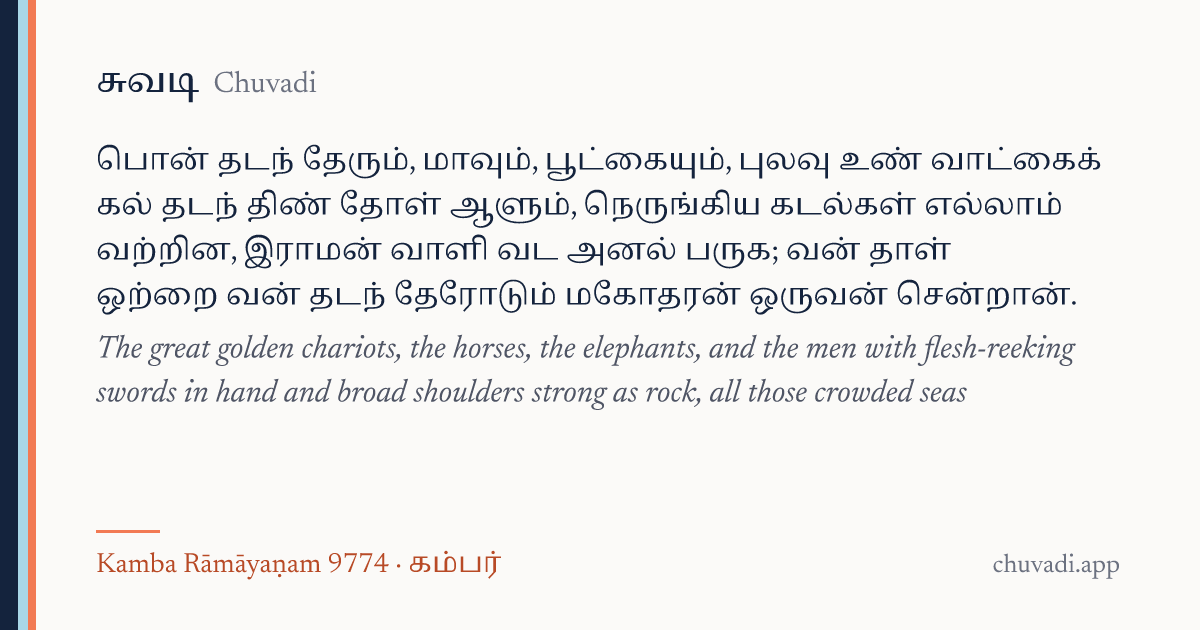
(அப்போரில் மகோதரனிடமிருந்த) பொன் தடந்தேரும்- பொன் மயமான பெரிய தேர்களும்; மாவும் - குதிரைகளும்; பூட்கையும் - யானைகளும்; புலவு வாட்கை - புலால் நாறும் வாளேந்திய கரங்களையும், கல் தடந் திண் தோள் ஆளும் - கல்போல் வலிய அகன்று திரண்ட தோள்களையும் உடைய காலாட் படைகளும்; நெருங்கிய - (கொண்டு) நெருக்கமுற்ற; கடல்கள் எல்லாம் - படைக் கடல்கள் யாவும்; இராமன் வாளி வடவனல் பருக - இராமபிரானின் அம்புகள் என்னும் வடவைக் கனல் குடிக்க; வற்றின - வறண்டு (ஏதுமில்லாமல்) போயின (எனவே); ஒற்றை வன்தடந் தேரோடும் - (மிஞ்சிய) தன் ஒரே பெரிய வலிய தேருடன்; வன்தாள் மகோதரன் - வலிய (கால்களை உடைய) வனாகிய மகோதரன்; ஒருவன் சென்றான் - தன்னந்தனியாக இராமபிரான் பக்கம் சென்றான்.
ஆங்கிலம் · English translationAI
Translation
- The great golden chariots, the horses, the elephants, and the men
- with flesh-reeking swords in hand and broad shoulders strong as rock, all those crowded seas
- dried up as Irāmaṉ's arrows, the submarine fire, drank them; and with only
- his one great strong chariot, strong-legged Makōtaraṉ went on alone.
What the poem says
Makōtaraṉ's whole army, its chariots, horses, elephants and foot soldiers, is likened to an ocean. Irāmaṉ's arrows are the fire beneath the sea that drinks it dry.
When everything else has been destroyed, Makōtaraṉ is left with only his own chariot, and he presses on alone against Irāmaṉ.