



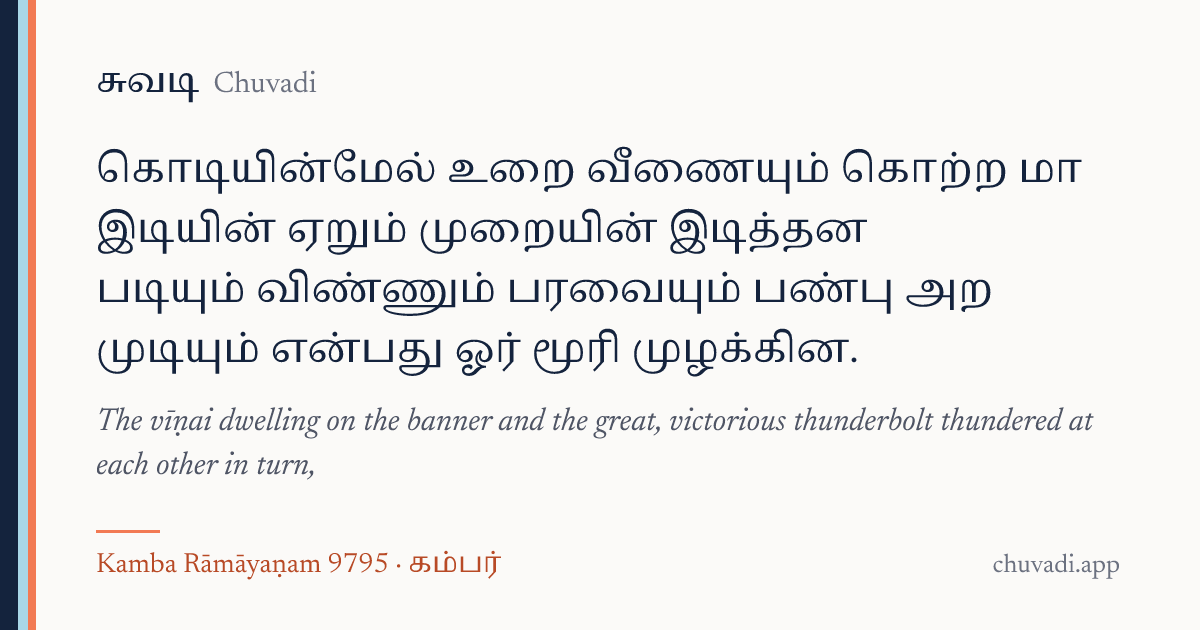
கம்பராமாயணம் 9795 · யுத்த 36.34
பாடல் · The poem
Tap a word to see its gloss in the commentary and where else it occurs.
பொருள் · Meaning in Tamil
கொடியின் மேல் உறை - (இராவணன்) கொடி மீதிலிருந்த; வீணையும் -; கொற்றம் - வெற்றியையுடைய; மா இடியின் ஏறும் - (இராமபிரான்) கொடி மீதிருந்த இடியேறும்; படியும் - பூமியும்; விண்ணும் - வானமும்; பரவையும் - கடலும்; பண்பு அற - தம் இயல்பிற் குன்றி; முடியும் - அழிந்து விடும்; என்பது ஓர் மூரி முழக்கினால் - என்று கூறத்தக்க ஆற்றல் மிக்க ஓசையோடு; முறையின் இடித்தன - மாறி மாறி பேரொலி எழுப்பின.
மானுடத் தலையைக் கொடியில் இராவணன் கொண்டிருந்தானென்று முதல் நூல் கூறும் (வை. மு.கோ. உரை)
ஆங்கிலம் · English translationAI
Translation
- The vīṇai dwelling on the banner and the great, victorious
- thunderbolt thundered at each other in turn,
- with a mighty roar as if earth, sky and ocean
- would lose their nature and come to an end.
What the poem says
The emblems on the two banners, Irāvaṇaṉ's vīṇai and the thunderbolt on Irāmaṉ's (Indra's) chariot, come alive and roar at each other in turn.
Their din is so great it seems the earth, sky and ocean must lose their form and perish. The commentary notes that in Vālmīki's original, Irāvaṇaṉ's banner bore a human head.