



கம்பராமாயணம் 9896 · யுத்த 36.135
பாடல் · The poem
Tap a word to see its gloss in the commentary and where else it occurs.
பாட வேறுபாடு · Project Madurai reads
பொருள் · Meaning in Tamil
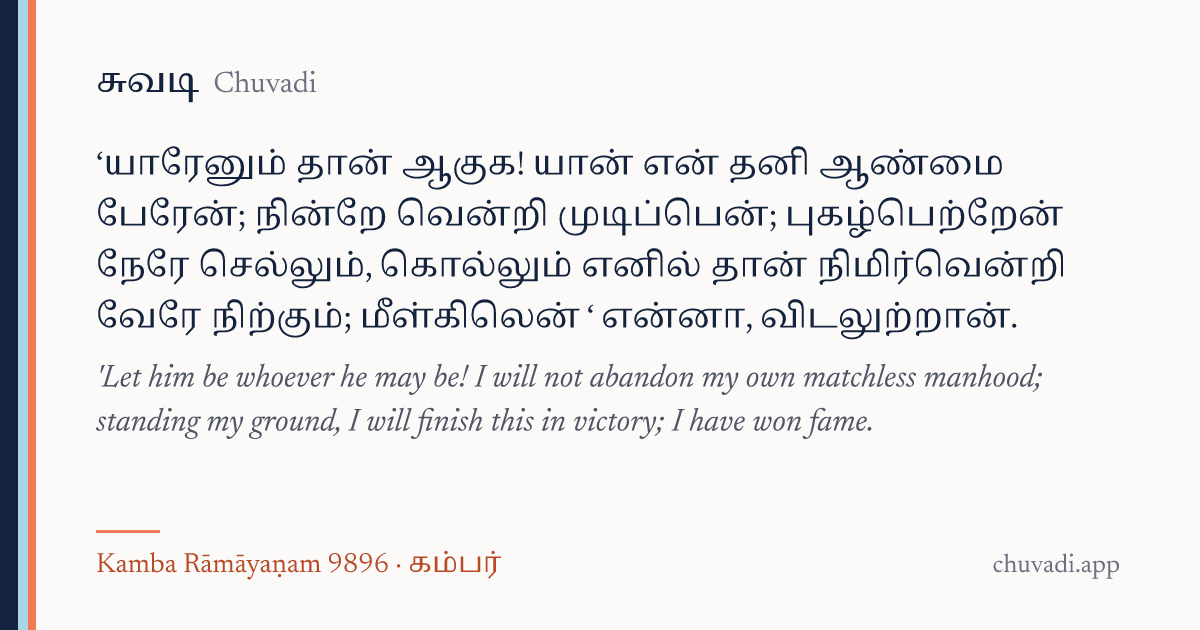
யாரேனும் தான் ஆகுக - எதிர் நிற்பவன் (மேல் நாம் நினைத்தவருள்) எவனாக இருப்பினும் இருந்து விட்டுப் போகட்டும்; யான் என் தனி ஆண்மை பேரேன் - நான் எனக்கேயுரிய தனியாற்றலிலிருந்தும் பெயர மாட்டேன்; நின்றே வென்றி முடிப்பென் - (எதிர்) நின்றே என் வெற்றியை முடிப்பேன்; புகழ் பெற்றேன் - மூவுலகிலும் நான் வீரத்தால் புகழ் பெற்றவன்; நேரே செல்லும் - (ஒரு வீரன்) நேருக்கு நேர் செல்வான்; கொல்லும் - கொல்வான்; எனில் தான் - என்றால்தான்; நிமிர் வென்றி வேரே நிற்கும் - மடங்காத வெற்றியின் (புகழ்) வேர் நிலைத்து நிற்கும்; மீள்கிலென் - (எது நேரினும்) திரும்பேன்; என்னா விடல் உற்றான் - என்று கூறியவாறு (இராவணன்) அம்புகளை விடுவதற்கு ஒருப் பட்டான்.
முன் பாடலில் சிறிதே தலையெடுத்த சத்துவகுணம், இராவணனின் ராசதக் குணத்தால் மீண்டும் அடங்கி ஒடுங்கிப் போனமையை இப்பாடல் அறிவிக்கின்றது.
ஆங்கிலம் · English translationAI
Translation
- 'Let him be whoever he may be! I will not abandon my own
- matchless manhood; standing my ground, I will finish this in victory; I have won fame.
- Only if a warrior goes straight at his foe and kills does the root
- of soaring victory hold firm. I will not turn back,' he said, and began to shoot.
What the poem says
The moment of insight passes. Irāvaṇaṉ decides it does not matter who Irāmaṉ really is: he will not give up his own unrivalled valour or his hard-won fame, and true glory comes only from facing the enemy head-on and killing him. He will not retreat.
The commentary observes that the trace of sattva, the quality of clarity, that surfaced in the previous verse is swallowed again by his rajas, the quality of passion and pride.