



கம்பராமாயணம் 99 · பால 3.18
பாடல் · The poem
Tap a word to see its gloss in the commentary and where else it occurs.
பொருள் · Meaning in Tamil
ஈரும் வாளின் வால் விதிர்த்து - அறுக்கும் ரம்பம் போன்ற வாலை அசைத்து; எயிற்று இளம் பிறைக் குலம் - பற்களாகிய பிறைக் கூட்டம்; பேரமின்னி வாய் விரித்து - ஒளி வீசுமாறு வாயைத் திறந்துகொண்டு; எரிந்த கண் பிறங்கு தீ சோர - பிரகாசிக்கும் கண்கள் தீப்பொறி சிதற; ஒன்றை ஒன்று முன் தொடர்ந்து - ஒன்றை மற்றொன்று முந்திச் சென்று; சீறு இடங்கர்மா - சீறுகின்ற முதலைகள்; போரில் வந்து சீறுகின்ற போர் அரக்கர் போலுமே - போர்க்களத்தே வந்து ஒருவருடன் ஒருவர் சினந்து போர் புரியும் அரக்கர்களை ஒத்திருக்கும்.
முதலைகள் சீற்றம் கொண்டு ஒன்றை ஒன்று தாக்கிக் கொள்வது போர்க்களத்திலே சினந்து போர்புரியும் அரக்கர்களை ஒத்திருக்கும் என்றார். பல என்பதால் பிறைக்குலத்தை உவமை கூறினார். வாலுக்கு ஈர்வாள் உவமை. வாள் இங்கே ரம்பத்தைக் குறித்தது.
ஆங்கிலம் · English translationAI
Translation
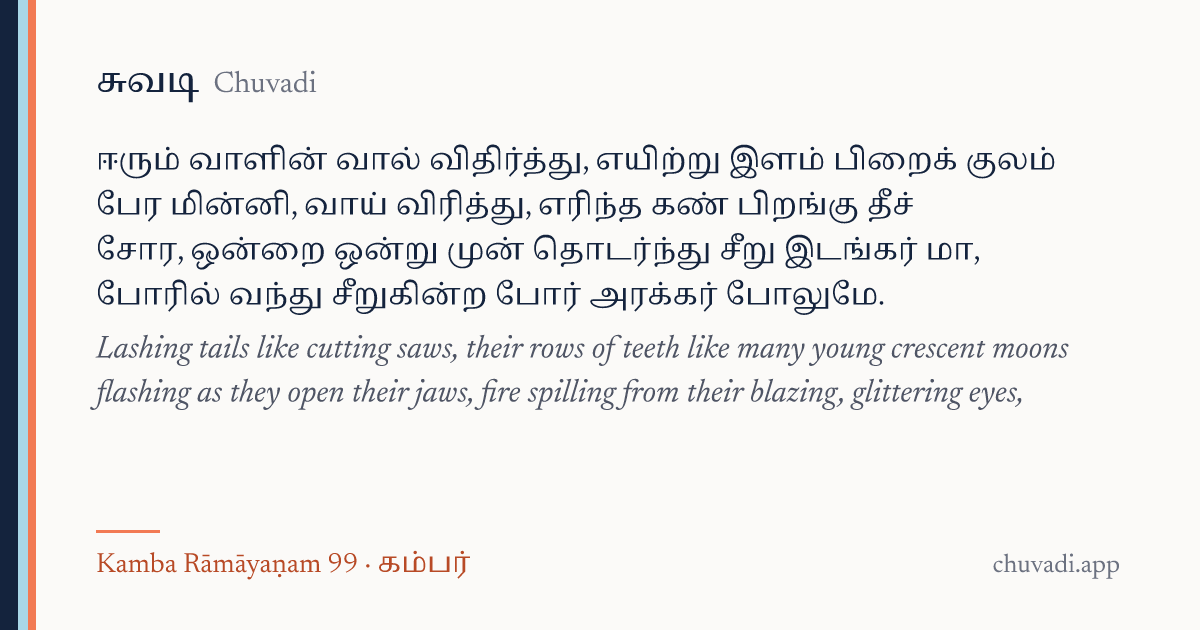
- Lashing tails like cutting saws, their rows of teeth like many young crescent moons
- flashing as they open their jaws, fire spilling from their blazing, glittering eyes,
- the crocodiles hiss and rush at one another, each trying to get ahead,
- like fierce demon warriors who come to the field and rage in battle.
What the poem says
The crocodiles of the moat are pictured fighting one another like demons on a battlefield. Their tails are compared to saws, and their many curved teeth to a cluster of crescent moons.
The word for 'sword' in the first line is used here in the sense of a saw.