



கம்பராமாயணம் 9909 · யுத்த 36.148
பாடல் · The poem
Tap a word to see its gloss in the commentary and where else it occurs.
பாட வேறுபாடு · Project Madurai reads
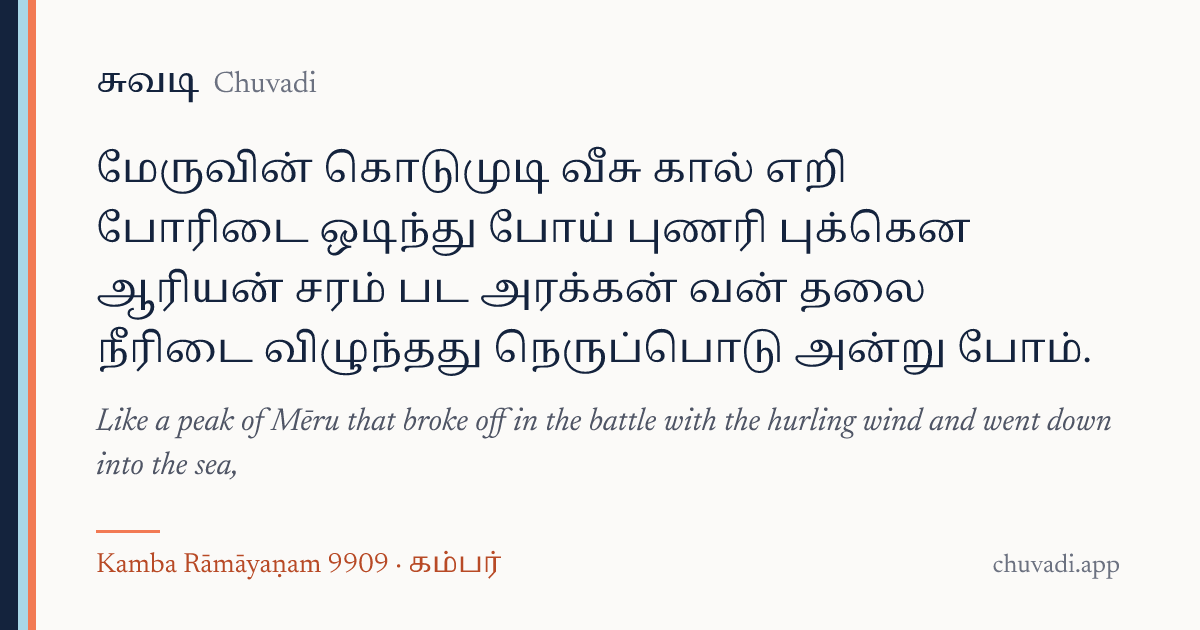
1மேருவின் கொடுமுடி வீசு கால் எறி
போரிடை ஒடிந்துபோய் புணரி புக்கு என
ஆரியன் சரம்பட அரக்கன் வன்தலை
நீரிடை விழுந்தது நேர்கொண்டு ஒன்றுபோய்.
பொருள் · Meaning in Tamil
வீசு கால் எறி போரிடை - வீசுகின்ற தன்மையனான காற்றுக் கடவுளோடு நிகழ்ந்த (ஆதிசேடனின்) போரில்; மேருவின் கொடுமுடி - மேரு மலையின் சிகரம்; ஒடிந்து போய் - முறிந்து போய்; புணரி புக்கென - கடலில் புகுந்தது போல்; ஆரியன் சரம் பட - இராமபிரானுடைய அம்பு தாக்கியதன் விளைவாக; அரக்கன் வன் தலை - இராவணனது வலிய தலை; அன்று - அந்நாளில்; நெருப்பொடு போய் நீரிடை வீழ்ந்தது - யோடு சென்று கடல் நீரில் போய் விழுந்தது.
ஆங்கிலம் · English translationAI
Translation
- Like a peak of Mēru that broke off in the battle
- with the hurling wind and went down into the sea,
- struck by the noble one's arrow, the rākṣasa's mighty head
- fell into the water that day, flying with fire.
What the poem says
Irāvaṇaṉ's severed head falls blazing into the sea. The poet recalls the legend of the contest between the wind god Vāyu and the serpent Ātiśēṭaṉ, in which a peak of Mount Mēru was snapped off and fell into the ocean (traditionally becoming the island of Ilaṅkai itself).
ஒலிபெயர்ப்பு · Transliteration (ISO 15919)
1mēruviṉ koṭumuṭi vīcu kāl eṟi
pōriṭai oṭintu pōy puṇari pukkeṉa
āriyaṉ caram paṭa arakkaṉ vaṉ talai
nīriṭai viḻuntatu neruppoṭu aṉṟu pōm.