



கம்பராமாயணம் 9927 · யுத்த 36.166
பாடல் · The poem
Tap a word to see its gloss in the commentary and where else it occurs.
பொருள் · Meaning in Tamil
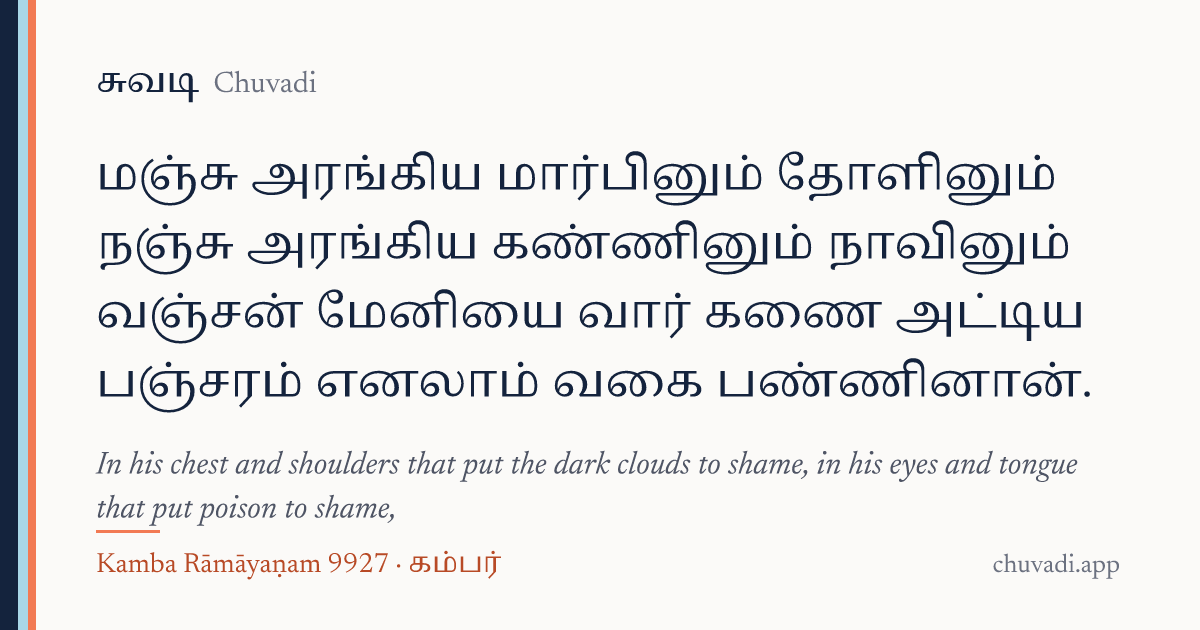
மஞ்சு அரங்கிய மார்பினும் தோளினும் - (நிறத்தால்) மேகத்தைத் தோல்வியுறச் செய்த மார்பிலும் தோளிலும்; நஞ்சு அரங்கிய கண்ணினும் நாவினும் - நஞ்சினைத் தோல்வியுறச் செய்த கண்களிலும் நாவிலும்; வஞ்சன் மேனியை - (வேறு பிற உறுப்புகளிலுமாக) வஞ்சகனான இராவணன் உடம்பினை; வார்கணை அட்டிய - (அம்புகளை விடுத்து) நீண்ட அம்புகள் வைத்திருப்பதற்கேற்ற; பஞ்சரம் எனலாம் வகை பண்ணினான் - கூடு (தூணி) என்று கூறலாம்படி செய்தான்.
பஞ்சரம் - கூடு. இங்கு அம்பறாத் தூணி. இராமனின் அம்புகள் ஆயிரக்கணக்காகப் புறப்பட்டமையால், அவன் முதுகிலிருந்த சிறிய அம்பறாத்தூணி போதாமையால் அவ்வம்புகளை வைக்க இராவணனின் உடம்பை, பெரிய அம்பறாத் தூணியாக்கினான் எனும் நயந்தோன்றக் கூறினார்
ஆங்கிலம் · English translationAI
Translation
- In his chest and shoulders that put the dark clouds to shame,
- in his eyes and tongue that put poison to shame,
- he made the deceiver's body
- into what one might call a quiver packed with long arrows.
What the poem says
Irāmaṉ fills Irāvaṇaṉ's chest, shoulders, eyes and tongue with so many arrows that his body looks like a quiver.
The commentary enjoys the conceit: Irāmaṉ was shooting so many thousands of arrows that the small quiver on his back could not hold them, so he turned his enemy's huge body into a bigger one.