



கம்பராமாயணம் 9935 · யுத்த 36.174
பாடல் · The poem
Tap a word to see its gloss in the commentary and where else it occurs.
பொருள் · Meaning in Tamil
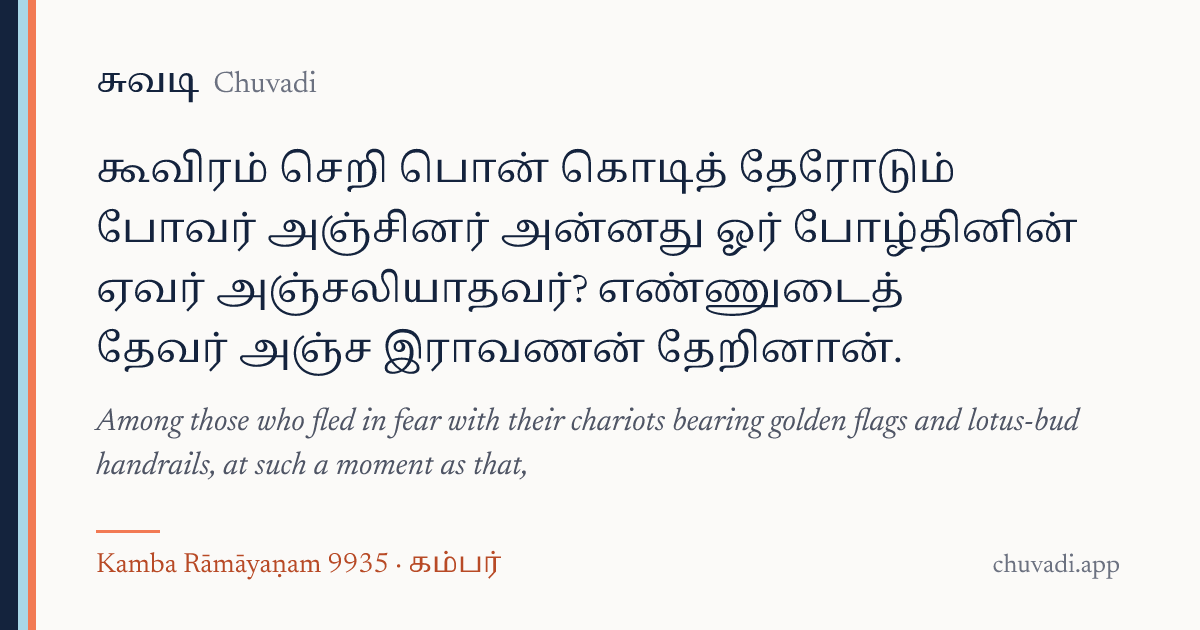
கூவிரம் செறி பொற் கொடித் தேரொடும் - கொடிஞ்சியெனும் கைப்பிடியோடு கூடிய பொன்னாலான கொடியுடன் கூடிய தேர்களோடு; போவர் அஞ்சினர் - போகின்ற அச்சம் கொண்ட அரக்கருள்; அன்னதோர் போழ்தினின் - அப்போது; ஏவர் அஞ்சலியாதவர்? - (இராமபிரானுடைய அற நெஞ்சத்தை எண்ணி) யார்தாம் கை கூப்பி வணங்காதவர்?; எண்ணுடை - மதிப்புக்குரிய; தேவர் அஞ்ச - வானவர்கள் அஞ்சுமாறு (அப்போது); இராவணன் தேறினான் - இராவணன் (மயக்க நிலையிலிருந்து) தெளிவுபெற்றான்.
கூவிரம் - கொடிஞ்சி. தேரில் இருக்கைக்கு எதிராக, கையாற் பற்றிக் கொள்ளுவதற்கு உதவும் தாமரை மொட்டின் வடிவில் அமைந்த ஓர் உறுப்பு. இராமபிரானின் போர் அறச்சிந்தை கண்டு, இரக்கம் என்றொரு பொருள் இல்லாத அரக்கர்களும் அஞ்சலி செய்தனர் "இரங்காத அரக்கிமாரும் தளர்ந்தழுதார்" (கம்ப. 8675) என்பதும் நினைக.
ஆங்கிலம் · English translationAI
Translation
- Among those who fled in fear with their chariots bearing golden flags and lotus-bud handrails,
- at such a moment as that,
- who was there that did not join his palms in reverence? And, to the fear
- of the honoured gods, Irāvaṇaṉ came to his senses.
What the poem says
Irāmaṉ's restraint in sparing a fallen enemy moves everyone. Even the frightened rākṣasas fleeing in their chariots fold their hands to him in reverence, pitiless as they are. Just then, to the alarm of the gods, Irāvaṇaṉ comes round.
The kūviram mentioned is the lotus-bud-shaped handgrip at the front of a chariot.