



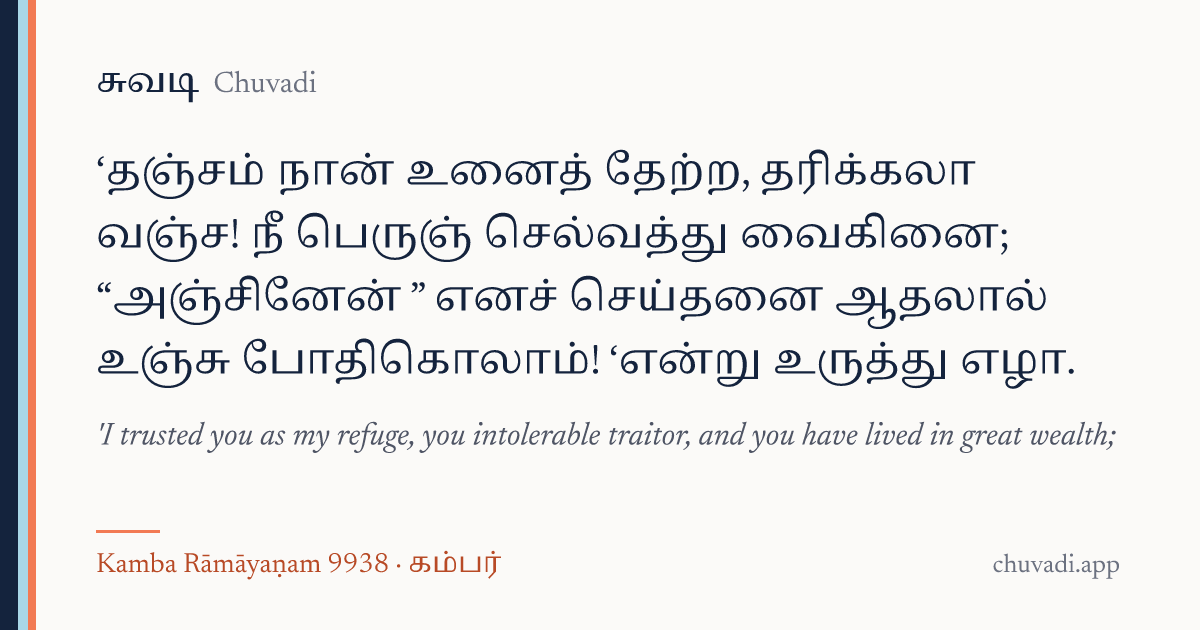
கம்பராமாயணம் 9938 · யுத்த 36.177
பாடல் · The poem
Tap a word to see its gloss in the commentary and where else it occurs.
பாட வேறுபாடு · Project Madurai reads
பொருள் · Meaning in Tamil
தரிக்கலா வஞ்ச! - பொறுத்துக் கொள்ள இயலாத வஞ்சம் கொண்டவனே! தஞ்சம் நான் உனைத் தேற்ற - (என்னைக் காப்பவன் நீ என்று) நான் உன்னைத் தெளிந்திருக்க; நீ பெரும் செல்வத்து வைகினை - (அதனால் நான் தரும் செல்வங்கொண்டு) நீ பெரிய வளவாழ்வு வாழ்கின்றாய்; அஞ்சினேன் எனச் செய்தனை - இவ்வளவிற்கும் கைம்மாறாக எதிரிக்குப் பயந்தேன் என்று (மாற்றார்) (என்னைக்) கருதுமாறு செய்துவிட்டாய்; ஆதலால் - ஆகையால்; உஞ்சு போதி கொல் - உய்ந்து போவாயோ நீ; என்று உருத்து எழா - என்று கூறி (இராவணன்) வெகுண்டு எழுந்து
ஆங்கிலம் · English translationAI
Translation
- 'I trusted you as my refuge, you intolerable
- traitor, and you have lived in great wealth;
- now you have made it seem that I said, "I am afraid";
- so do you think you will escape alive?' — and he rose up in fury,
What the poem says
Irāvaṇaṉ accuses the charioteer of treachery: he trusted him as his protector and kept him in luxury, and in return the man has made the world believe Irāvaṇaṉ ran away in fear. Will he get away with that alive? Irāvaṇaṉ rises in rage, ready to strike.