



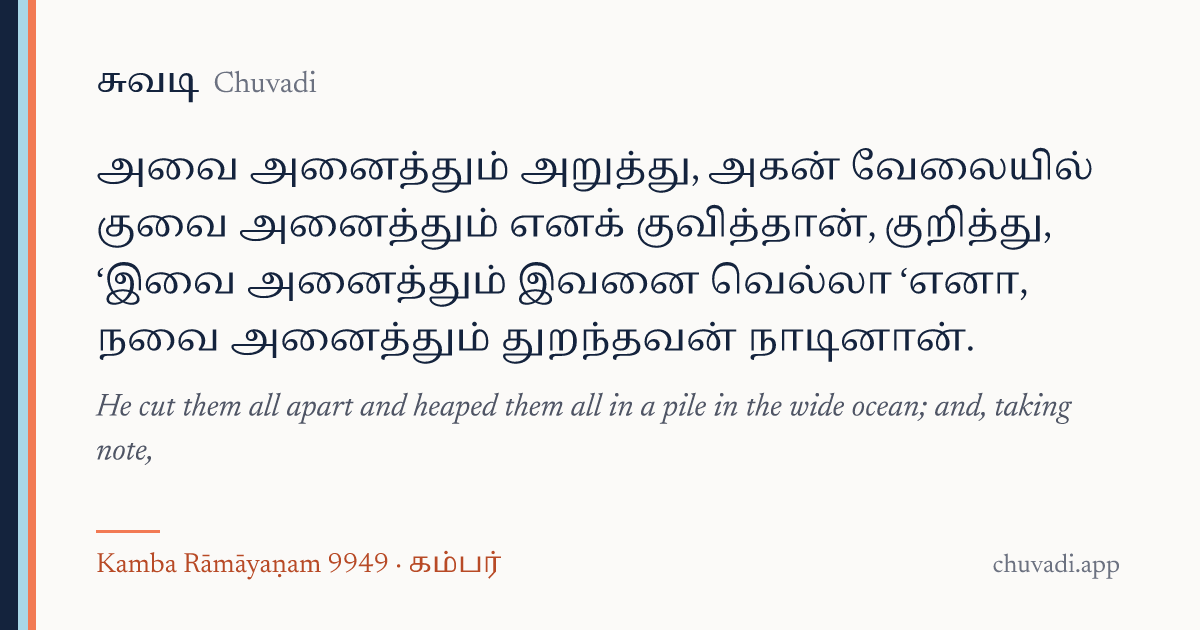
கம்பராமாயணம் 9949 · யுத்த 36.188
பாடல் · The poem
Tap a word to see its gloss in the commentary and where else it occurs.
பாட வேறுபாடு · Project Madurai reads
பொருள் · Meaning in Tamil
அவை அனைத்தும் - (இராவணன் எடுத்த) ஆயுதங்கள் அனைத்தையும்; அறுத்து - (தன் அம்புகளால்) துண்டித்து; அனைத்தும் - (அவ்வாறு துண்டித்த) அனைத்தையும்; அகல் வேலையில் - அகன்ற கடலில்; குவை எனக் குவித்தான் - குவியலாகக் குவித்தான்; நவை அனைத்தும் துறந்தவன் - குற்றங்கள் அனைத்தையும் நீக்கியவனான இராமபிரான்; இவையனைத்தும் இவனை வெல்லா எனா - இப்படைக் கருவிகள் எல்லாம் இவனை வெல்ல இயலாதவையென்று; குறித்து நாடினான் - வேறு செய்யும் குறிப்பில் ஆராய முற்பட்டான்.
நவையனைத்தும் துறந்தவன் - இராமன். "சகல கல்யாண குணங்களுக்கும் உறைவிடமானவன். "குற்றங்களுக்கு எதிர்த் தட்டானவன்" என்பார் திருவாய் ஈடு மகாப்பிரவேசம் நம்பிள்ளை. "குற்றம் வீய்ந்த குணத்தின் எம்கோமகன்" (கம்ப. 332.2) எனவும் "நவையறு குணங்கள் என்னும் பூண் எலாம் பொறுத்த மேனிப் புண்ணிய மூர்த்தி" (கம்ப. 7653) எனவும் கூறும் பிராட்டி வாக்குகளை இங்கு நினைவு கூர்க.
ஆங்கிலம் · English translationAI
Translation
- He cut them all apart and heaped them
- all in a pile in the wide ocean; and, taking note,
- 'None of these will defeat him,' thought
- he who has cast off every fault, and he considered.
What the poem says
Irāmaṉ cuts every one of these weapons to pieces and piles the fragments in the sea. Then he decides that weapons like these will never finish Irāvaṇaṉ and begins to think of another way.
He is called 'the one who has cast off every fault'. The commentary links this to the Vaiṣṇava teaching that God is the home of every auspicious quality and the opposite of all defect, and to Cītai's own words elsewhere in the poem praising his flawless virtues.