



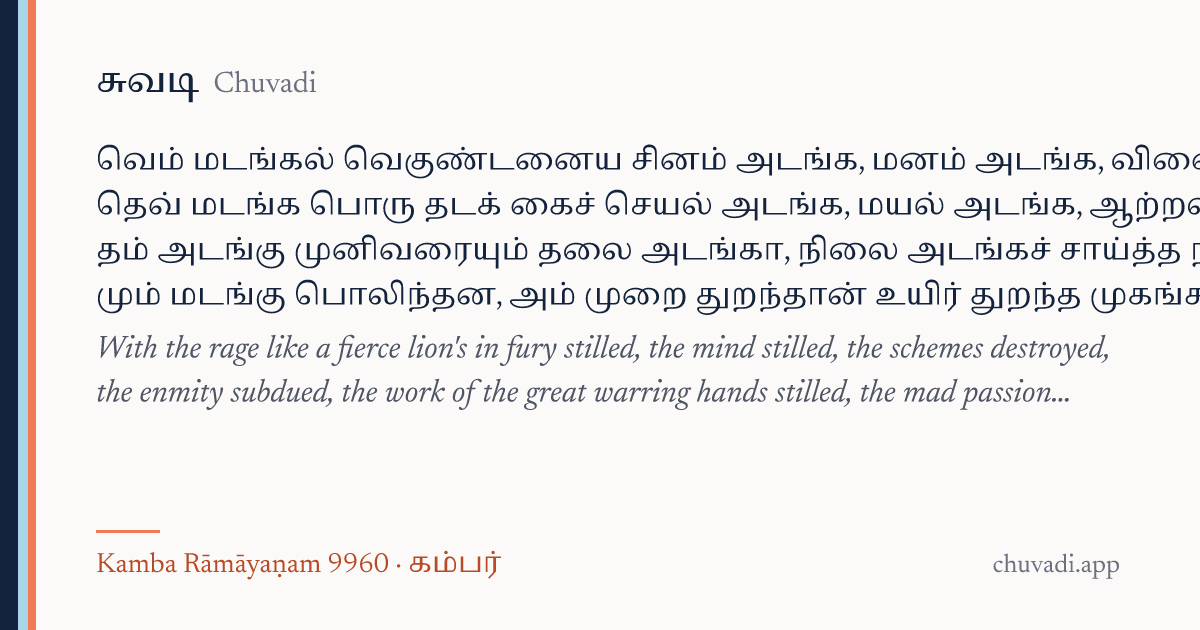
கம்பராமாயணம் 9960 · யுத்த 36.199
பாடல் · The poem
Tap a word to see its gloss in the commentary and where else it occurs.
பாட வேறுபாடு · Project Madurai reads
பொருள் · Meaning in Tamil
வெம்மடங்கல் வெகுண்டனைய - கொடிய சிங்கம் ஒன்று சினந்தாற் போன்று; சினம் அடங்க - வெகுளியடங்கவும்; மனம் அடங்க - (அடங்காத) மனம் அடங்கவும்; வினையம் வீய - (மனத்தே நிறைந்த) சூழ்ச்சிகள் அழியவும்; தெவ் மடங்க - பகைமை அழியவும்; பொரு தடக்கைச் செயல் ஒடுங்க - போரிட்டுக் கொண்டேயிருந்த இருபது கரங்களும் போர்ச்செயல் ஒழியவும்; மயல் அடங்க - (சானகி மீது கொண்ட) மையல் மடியவும்; ஆற்றல் தேய - வலிமை தேயவும்; உயிர் துறந்த அம் முறை துறந்தான் - உயிர் நீங்கிய அந்த அறமுறை நீங்கிய இராவணனின் பத்து முகங்களும்; தம் அடங்கு முனிவரையும் - தம்மைத்தாமே அடக்கிய முனிவரை யெல்லாம்; தலை அடங்கா நிலை அடங்க - தலை தாழவும் நிலை தளரவும், சாய்த்த - முறியடித்த; நாளின் - நாளைவிட; மும் மடங்கு பொலிந்தன - மூன்று மடங்கு பொலிவுற்றுத் திகழ்ந்தன.
இராவணனிடத்தில் அடங்க வேண்டியவை எத்தனையிருந்தன என்பதனை, அடங்க, அடங்க என்னும் வினையெச்ச அடுக்குகளாற் காட்டியுள்ள கவிஞர் பிரானின் திறமை நினைந்து நினைந்து போற்றற்குறியது. "அடக்கம் அமரருள் உய்க்கும்; அடங்காமை ஆரிருள் உய்த்து விடும்" (குறள் 121) அடங்காமையால் ஆரிருளில் வாழ்வினைச் செலுத்திக் கொண்ட இராவணனின் நெஞ்சத்துள் இராமபிரானின் புனித வாளி புகுந்து ஒளியேற்றியமையால் இராவணன் வாழ்வில் பெரு வெற்றிக் காலத்தில் அடைந்த பொலிவை விட, இப்பொழுது அவன் முகம் மும்மடங்கு பொலிந்தன என்று பொருத்தமுற கூறினார். "தம் மடங்கு முனிவரையும் தலையடங்கா நிலையடங்கச் சாய்த்த நாளில் அவன் பெற்ற முகப் பொலிவு புறப் பொலிவு இப்பொழுது இராம பாணத்தால் அடைந்தது அகப்பொலிவு ஆதலின் பொலிவின் மடங்கு அதிகரித்தது என்றார் தம் அடங்கு முனிவரையும் இராவணன் வென்றான் ஆதலின் உம்மை உயர்வு சிறப்பின் வந்தது.
ஆங்கிலம் · English translationAI
Translation
- With the rage like a fierce lion's in fury stilled, the mind stilled, the schemes destroyed,
- the enmity subdued, the work of the great warring hands stilled, the mad passion stilled, the strength worn away,
- than on the day he laid low, their heads unbowed but their standing overthrown, even sages who had stilled themselves,
- three times more radiant shone the faces of him who had abandoned the right way, now that he had abandoned life.
What the poem says
In death, everything in Irāvaṇaṉ that would never be subdued is finally subdued: his lion-like fury, his restless mind, his schemes, his hatred, his warring arms, his infatuation with Cītai, his strength. And his ten faces now shine three times brighter than they did on the day of his greatest triumph, when he humbled even sages who had mastered themselves.
The commentary admires the repeated aṭaṅka, 'being stilled', that drives the verse, and recalls the Tirukkuṟaḷ: self-restraint leads to the gods, lack of it to deep darkness. Irāmaṉ's holy arrow has brought light into a heart that lived in that darkness, so the new radiance is an inner one.