



கம்பராமாயணம் 9963 · யுத்த 36.202
பாடல் · The poem
Tap a word to see its gloss in the commentary and where else it occurs.
பொருள் · Meaning in Tamil
வரம்பிலாத வானரங்கள் - அளவற்ற குரங்குகள்; மலை மேல் நின்று ஆடுவபோல் - மலை ஒன்றின் மேல் நின்று (மகிழ்ச்சிக்) கூத்து ஆடுவதுபோல; தலை மேலும் தோள் மேலும் தட முதுகின் படர் புறத்தும் - இராவணேசுவரனுடைய தலைகள் மேலும் தோள்கள் மேலும், அகன்ற முதுகின் விசாலப் பரப்பின் மீதும்; தாவி ஏறி - தாவிக் குதித்து ஏறி; ஆடின - நடனம் ஆடின; புலை மேலும் செலற்கு ஒத்து - இழிந்த புலைத்தன்மை யுடையாரிடத்தும் (கூசாது) செல்வதற்கு ஒருப்படும்; பொது நின்ற செல்வத்தின் - (உயர்ந்தோர் தாழ்ந்தோர் என்றில்லாது எல்லோரிடத்தும்) பொதுவாகச் செல்லும் தன்மையுடைய செல்வத்தினுடைய; புன்மைத் தன்மை - இழிந்த தன்மையை விளக்க; நிலை மேலும் இனி உண்டோ? - இராவணன் வீழ்ச்சிக்குப் பிறகும் வேறு உவமை தேடும் நிலை இனி உலகில் உண்டாகுமோ? நீர் மேலைக் கோலம் எனும் நீர்மைத்து அன்றே - (இழிந்தோர் செல்வ வாழ்வு) நீர் மேற் குமிழியின் (நிலையிலாக) கோலம் என்னும் இயல்பினது அன்றோ?
ஆங்கிலம் · English translationAI
Translation
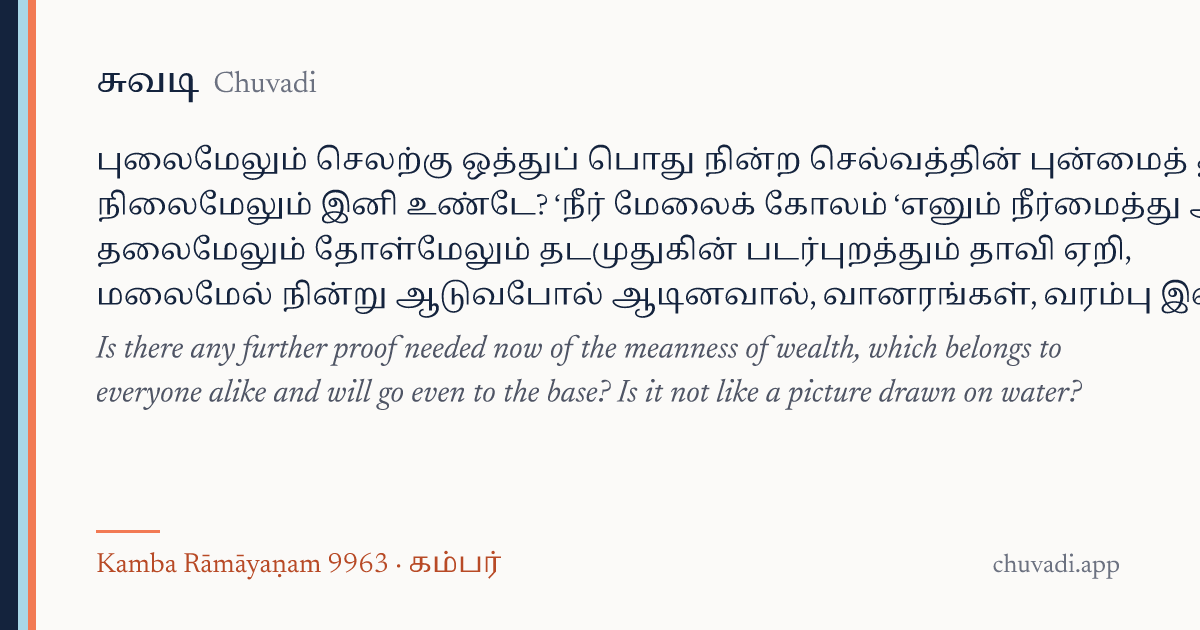
- Is there any further proof needed now of the meanness of wealth,
- which belongs to everyone alike and will go even to the base? Is it not like a picture drawn on water?
- Leaping and climbing onto his heads, onto his shoulders, over the broad spread of his back,
- the countless monkeys danced, as if they were dancing on top of a mountain.
What the poem says
The monkeys swarm over Irāvaṇaṉ's fallen body, dancing on his heads, shoulders and broad back as if they were capering on a mountain top.
The poet draws a moral: wealth is common property that goes to anyone, even the lowest, and it is as fleeting as a pattern drawn on water. After the fall of Irāvaṇaṉ, the richest king of all, who could need any further proof?