



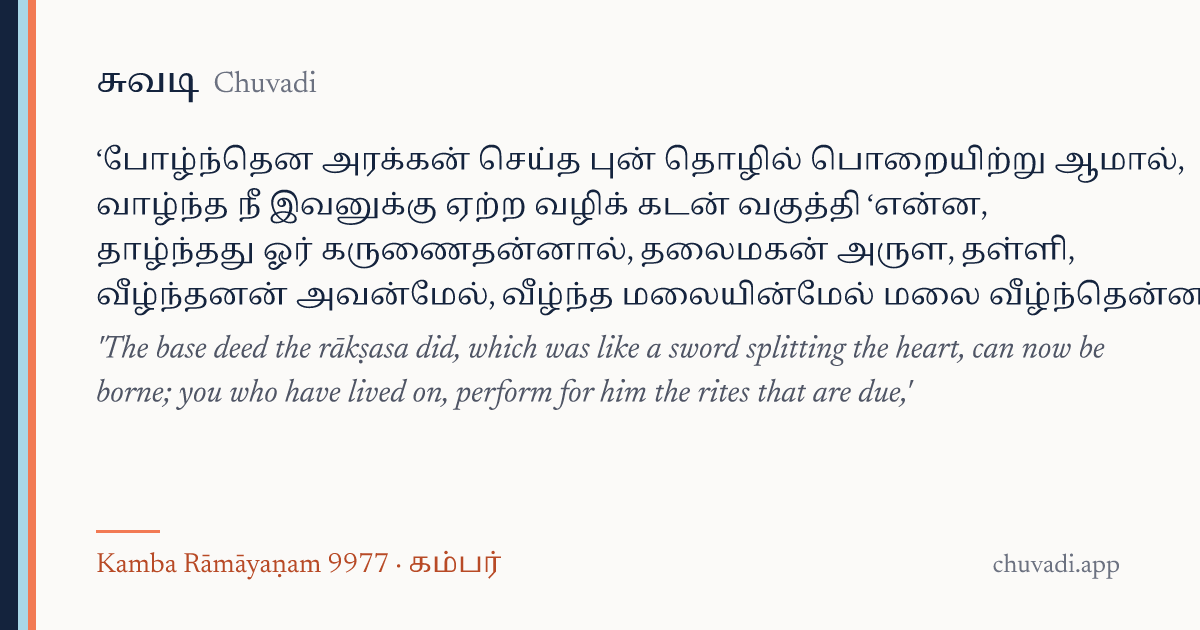
கம்பராமாயணம் 9977 · யுத்த 36.216
பாடல் · The poem
Tap a word to see its gloss in the commentary and where else it occurs.
பாட வேறுபாடு · Project Madurai reads
பொருள் · Meaning in Tamil
போழ்ந்தென - (நெஞ்சினை வாளால்) பிளந்தாற்போன்ற; அரக்கன் செய்த புன்தொழில் - இராவணன் புரிந்த அற்பச் செயல்; பொறையிற்று ஆம் - பொறுக்கத்தக்கதேயாம்; வாழ்ந்த நீ - (இறந்துபட்ட) இவனுக்குச் செய்யத்தக்க இறுதிக் கிரியைகளை; வரன் முறை வகுத்தி - மரபுப்படி செய்வாயாக; என்ன - என்று; தாழ்ந்தது ஓர் கருணை தன்னால் - இரக்கமுற்றால் செல்லும் (இராமபிரானின் இயல்பான) கருணையினால்; தலை மகன் அருள - இராமபிரான் அருளிச் செய்ய; வீழ்ந்த மலையின் மேல் மலை வீழ்ந்தென்ன - விழுந்து கிடந்த மலையின் மேல் (நின்ற) மலையொன்று விழுந்தது போல; தள்ளி - (துயரம்) தள்ளியதனால்; அவன்மேல் வீழ்ந்தனன் - இராவணன் (உடல்) மேல் வீழ்ந்தான் (வீடணன்).
களவியல் அரக்கன் பின்னே தோன்றி கடன்மை தீர்ந்தது. (கம்ப. 6506) நான் உன் தம்பி. இவனுக்கு நான் எப்படிக் கடன் செய்வது என்பது வீடணனின் தயக்கத்திற்குக் காரணம் ஆகலாம். இங்கு வீடணா! இறுதிக் கடனை நீ செய்கிறாயா? இல்லை, நான் செய்யட்டுமா? என்று பெருமான் கேட்டான் என்று நம்பிள்ளை ஈடு கூறுவது நினைவுக்கு வருகிறது. நீ என் தம்பி. இவன் உன் அண்ணன்; ஆகவே, இவன் எனக்கும் உறவினன் ஆவான். என்று இராவணனுக்கு இராமபிரான் இறுதிக் கடன் செய்ய எழுந்தபோது, உடனே வீடணன் நீர்க்கடன் செய்ய எழுந்தான் என்று நம்பிள்ளை ஈட்டுரை கூறுவது ஒப்பு நோக்கற்பாலது.
ஆங்கிலம் · English translationAI
Translation
- 'The base deed the rākṣasa did, which was like a sword splitting the heart, can now be borne;
- you who have lived on, perform for him the rites that are due,'
- said the Leader, out of a compassion that stooped low in mercy; and, driven by grief,
- Vīṭaṇaṉ fell upon him, like a mountain falling upon a fallen mountain.
What the poem says
Irāmaṉ, in his deep compassion, says that Irāvaṇaṉ's vile act, as cruel as a sword through the heart, can now be forgiven, and urges Vīṭaṇaṉ, the surviving brother, to carry out the funeral rites. Overwhelmed with grief, Vīṭaṇaṉ throws himself on his brother's body, like one mountain toppling onto another.
The commentary suggests Vīṭaṇaṉ may have hesitated, having left his brother to join Irāmaṉ. It cites a medieval Vaiṣṇava commentator's story that Irāmaṉ offered to perform the rites himself, since Irāvaṇaṉ was the brother of his own adopted brother, and that Vīṭaṇaṉ then hurried to do them.