



கம்பராமாயணம் 9978 · யுத்த 36.217
பாடல் · The poem
Tap a word to see its gloss in the commentary and where else it occurs.
பாட வேறுபாடு · Project Madurai reads
பொருள் · Meaning in Tamil
ஏவரும் உலகத்து எல்லா உயிர்களும் - இடையறாது (பெருகி வரும்) உலகத்தில் உள்ள எல்லா உயிர்களும்; இரங்கி ஏங்க - இரக்கமுற்று ஏங்கவும்; தேவரும் முனிவர் தாமும் சிந்தையின் இரக்கம் சேர - தேவரும் முனிவர் (கூடத்) தத்தமது நெஞ்சில் இரக்கம் கொள்ளவும்; ஆ அரும் பொறையினான் தன் அறிவினைத் தகைக்க நின்ற - தனது பற்றற்ற உணர்வினைத் தடுக்குமாறு நின்ற; ஆவலும் துயரும் தீர - ஆசையும் துன்பமும் தீருமாறு; பகுவாய் ஆர அரற்றினான் - பிளந்த வாயாரப் புலம்பத் தொடங்கினான்.
வாய் விட்டு அரற்றி அழுதால் ஆசையும் துயரும் குறையும் என்று இன்றைய உளநூல் அறிஞரும் கூறுவதற்கேற்ப, "ஆவலும் துயரும் தீர வாயார அரற்றினான்" என்றார்.
ஆங்கிலம் · English translationAI
Translation
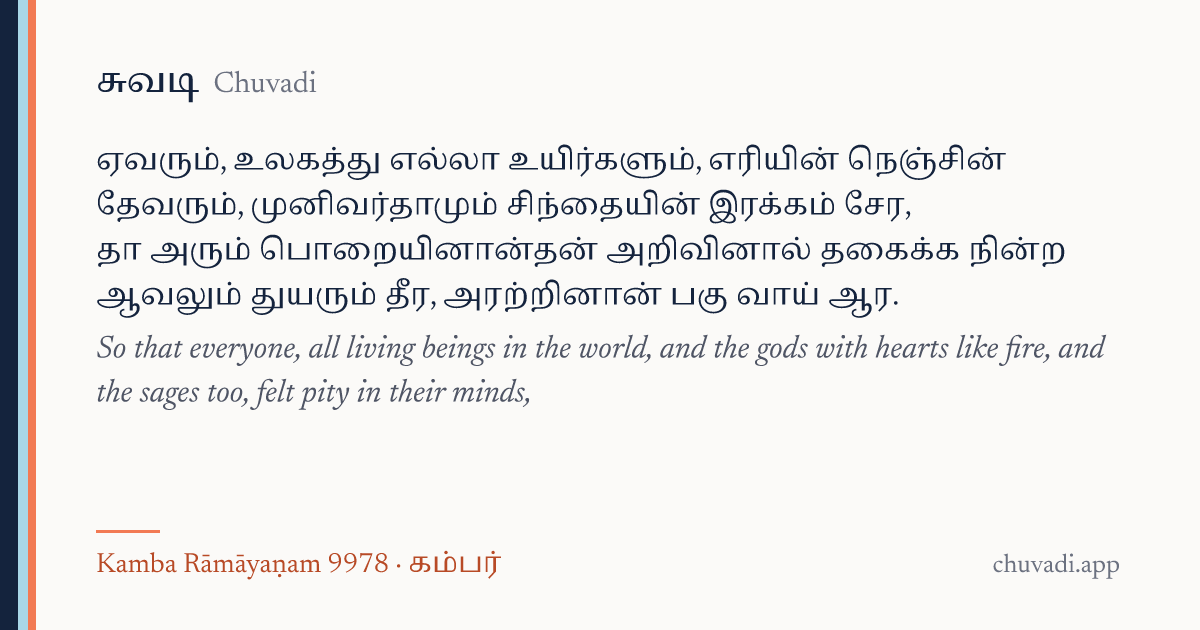
- So that everyone, all living beings in the world,
- and the gods with hearts like fire, and the sages too, felt pity in their minds,
- so that the longing and the grief that were holding back the wisdom of that man of matchless patience might be eased,
- he wailed aloud with his mouth wide open.
What the poem says
Vīṭaṇaṉ, a man of rare self-control, lets his grief pour out in loud lamentation, so moving that every creature on earth, and even the hard-hearted gods and the sages, are filled with pity.
He cries out so that the attachment and sorrow clouding his wisdom may be released. The commentary notes that modern psychology agrees: crying aloud eases grief.