



கம்பராமாயணம் 9981 · யுத்த 36.220
பாடல் · The poem
Tap a word to see its gloss in the commentary and where else it occurs.
பொருள் · Meaning in Tamil
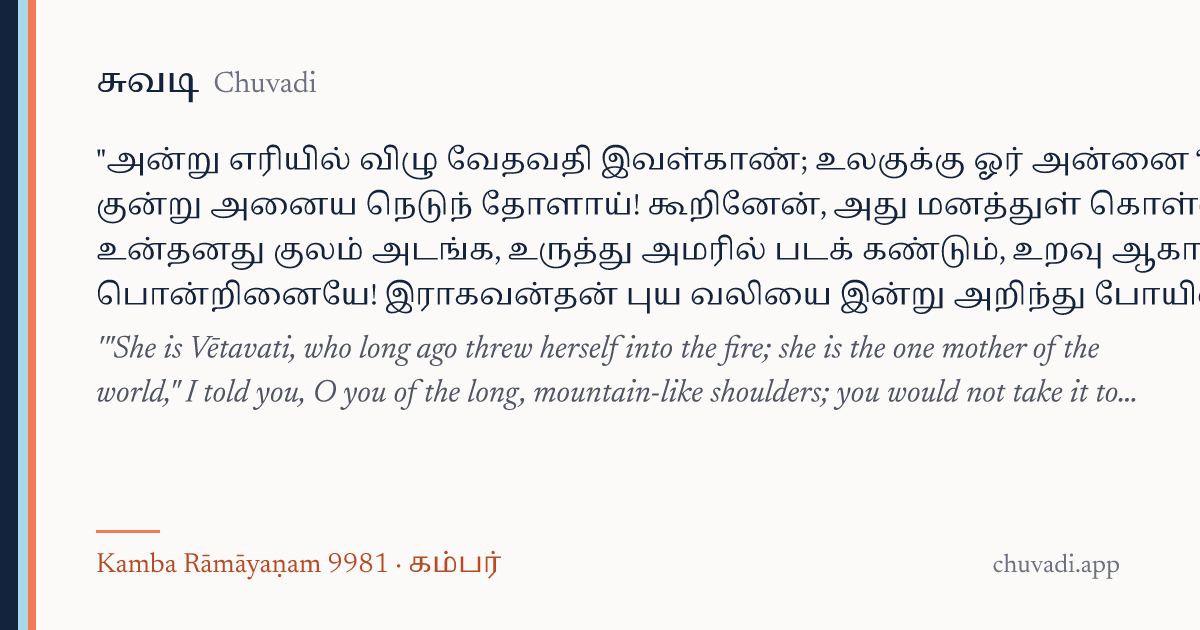
அன்று - ஒரு காலத்தில், எரியில் விழு வேதவதி - தீயில் (உன்னைச் சபித்து) விழுந்த வேதவதி என்பவள்; உலகுக்கு ஓர் அன்னை - உலகத்துக்கெல்லாம் ஒப்பற்ற தாயாகி (சீதையென்னும்); இவள் காண் - இவளாகி வந்துள்ளாள்; என்று - என்று; குன்று அனைய நெடுந்தோளாய் - மலை போன்ற திண்மையுடைய பெருந்தோளனே!; கூறினேன் - நான் சொன்னேன்; அது மனத்துள் கொள்ளாதே போய் - அவ்வுரையை மனத்துட் கொள்ளாமல் போய்; உன் தனது குலம் அடங்க - உன்னுடைய குலம் முழுவதும் அழிய; அமரில் உருத்து - போரில் சினந்து; படக் கண்டும் - இறந்து மடிதலைக் கண்டும்; உறவு ஆகாதே - (நீ இராமபிரானை) உறவாகக் கொள்ளாமல்; பொன்றினையே - இறுதி வரையில் அவனைப் பகையாகக் கொண்டு அழிந்து ஒழிந்தாயே; இராகவனார் புய வலியை - இராமபிரானுடைய தோள்வலியை (நான் சொல்லும்போது அறியாமல்); இன்று அறிந்து போயினாயோ - (சாகும்போது) அறிந்துகொண்டு போயிருக்கிறாயோ!
இறைவனுக்கும் உயிர்கட்கும் உள்ள ஒன்பது வகை (நவவித சம்பந்தம்) உறவுகளில், பிதா புத்திர உறவும் ஒன்று. உறவாகக் கருத வேண்டிய தலைவனைப் பகையாக மயக்க உணர்வால், பிறழ உணர்ந்து, இராவணன் போன்றோர் அழிகின்றனர் என்பதனை "உறவாகாமல் பொன்றினையே" என்பதனால் பெறவைத்தார்
ஆங்கிலம் · English translationAI
Translation
- '"She is Vētavati, who long ago threw herself into the fire; she is the one mother of the world,"
- I told you, O you of the long, mountain-like shoulders; you would not take it to heart,
- and even after you saw your whole clan perish in fury on the battlefield, you would not make him your kin,
- and so you perished! Did you learn the strength of Irākavaṉ's arms only today, as you went?'
What the poem says
Vīṭaṇaṉ recalls that he warned Irāvaṇaṉ that Cītai was Vētavati reborn. Vētavati was the ascetic woman whom Irāvaṇaṉ once molested and who threw herself into fire, cursing him; she has returned as the mother of the world. Even after seeing his whole race destroyed, Irāvaṇaṉ refused to accept Irāmaṉ as kin and died his enemy.
The commentary explains 'kin' theologically: tradition counts nine relationships between God and souls, father and son among them, and Irāvaṇaṉ perished because, deluded, he treated as an enemy the Lord he should have known as kin.