



கம்பராமாயணம் 9986 · யுத்த 36.225
பாடல் · The poem
Tap a word to see its gloss in the commentary and where else it occurs.
பொருள் · Meaning in Tamil
என்று ஏங்கி - என்று இரங்கி; அரற்றுவான் தனை - கதறுகின்ற வீடணனை; எடுத்து - (கைகளால்) எடுத்து; சாம்பவனாம் எண்கின் வேந்தன் - சாம்பவன் என்கின்ற கரடிகளின் அரசன்; குன்று ஓங்கு நெடுந்தோளாய்! - மலை போல் உயர்ந்த பெருந் தோளனே!; விதி நிலையை மதியாத கொள்கைத்து ஆகி - விதியின் நிலைமையைக் கருதாத கொள்கையதாய்; சென்று ஓங்கும் - சென்று உயர்கின்ற; உணர்வினையோ? - உணர்வினையுடையவனாய் ஆயினையோ?, தேறாதே அழுந்துதியோ? - தெளியாமல் (துன்பத்தில்) ஆழ்கின்றாயோ?; என்ன - என்று கூற; தேறி - தெளிவுற்றவனாய், அப்புறத்து நின்றான் - அப்புறமாக நின்றான்; (வீடணன்) மயன் பயந்த நெடுங்கண் பாவை - மயனின் மகளாகிய பெரிய கண்களையுடைய மண்டோதரி; அரக்கன் நிலை கேட்டாள் - இராவணன் (பட்ட) நிலையைக் கேள்வியுற்றாள்.
ஆங்கிலம் · English translationAI
Translation
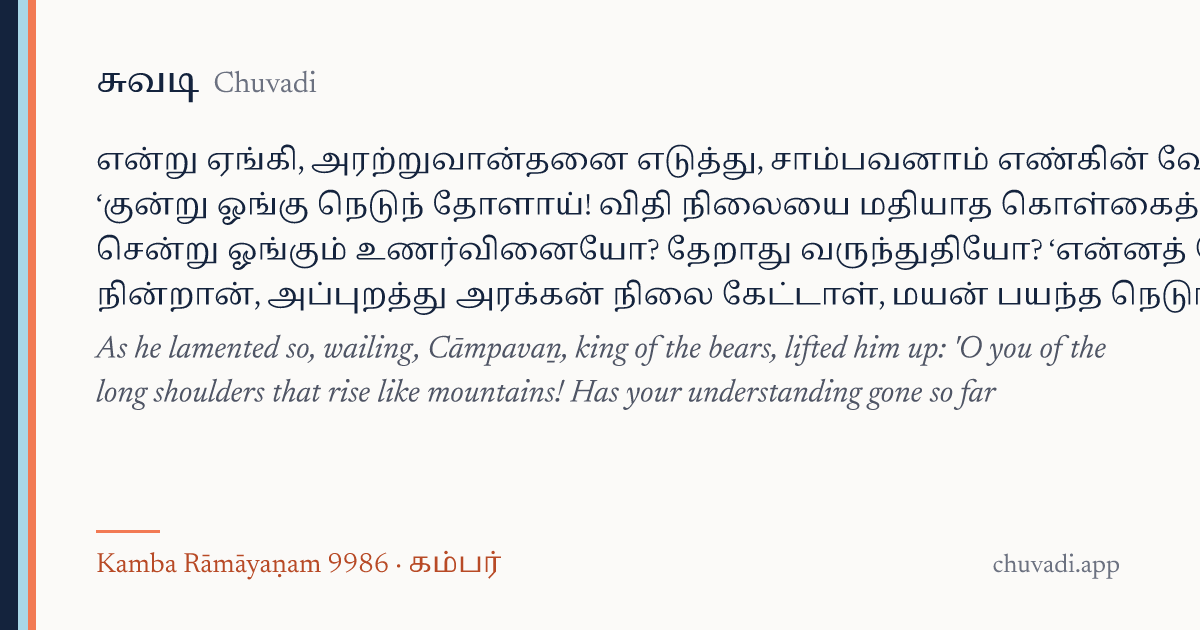
- As he lamented so, wailing, Cāmpavaṉ, king of the bears, lifted him up:
- 'O you of the long shoulders that rise like mountains! Has your understanding gone so far
- as to take no account of the course of fate? Will you sink in grief and not be comforted?' At this he was consoled
- and stood aside. Meanwhile the long-eyed daughter born of Mayaṉ heard what had become of the rākṣasa.
What the poem says
Cāmpavaṉ (Jāmbavān), the wise old king of the bears, lifts the weeping Vīṭaṇaṉ and gently rebukes him: has he forgotten that no one can resist fate, and will he refuse all comfort? Vīṭaṇaṉ steadies himself and steps aside.
The scene shifts: Irāvaṇaṉ's queen Vaṇṭōtari (Mandodarī), the long-eyed daughter of the architect Mayaṉ, has heard of her husband's death.