



கம்பராமாயணம் 9987 · யுத்த 36.226
பாடல் · The poem
Tap a word to see its gloss in the commentary and where else it occurs.
பாட வேறுபாடு · Project Madurai reads
பொருள் · Meaning in Tamil
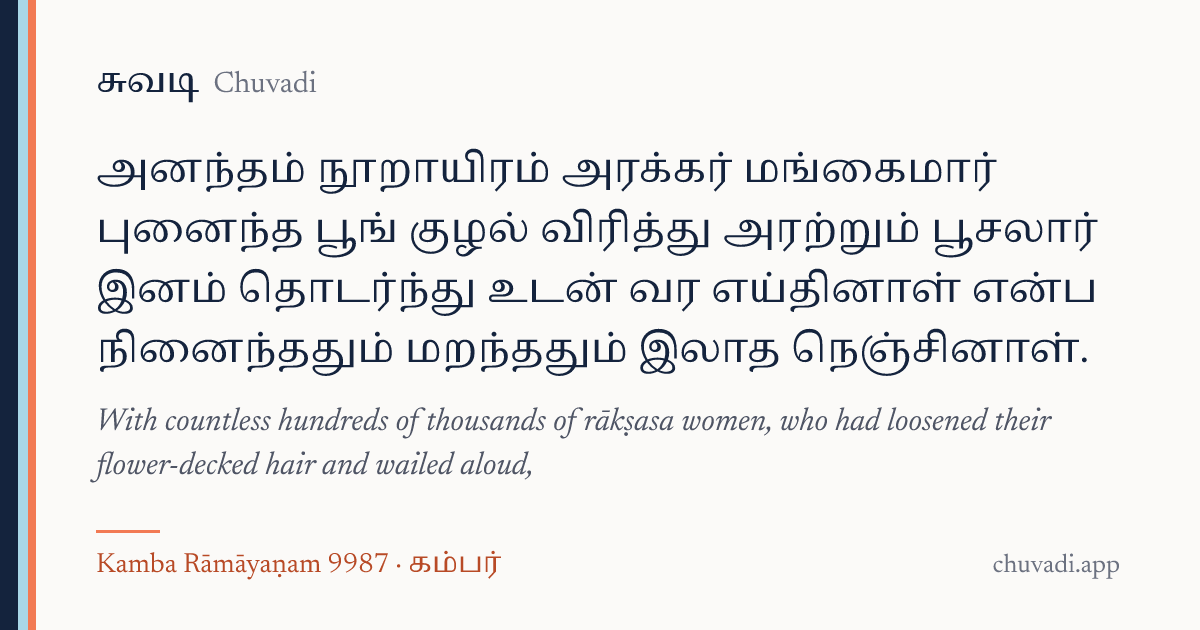
அனந்தம் நூறாயிரம் அரக்கர் மங்கைமார் - பல இலட்சக் கணக்கினரான இராட்சதப் பெண்கள்; புனைந்த பூங்குழல் விரித்து - மலர் சூடிய கூந்தல்களை விரித்து; அரற்றும் பூசலார் - கதறுகின்ற அழுகையினராய்; இனம் தொடர்ந்து - கும்பலாகத் தொடர்ந்து; உடன் வர - கூட வர; நினைந்ததும் மறந்ததும் இலாத நெஞ்சினாள் - நினைவும் மறப்பும் அற்ற நெஞ்சினளாகிய மண்டோதரி; எய்தினாள் - அடைந்தாள்.
தன்னுடைய கணவனை மறந்து விடுவது, பின் நினைவது என்னும் நிலையின்றி, எப்போதும் கணவனை நெஞ்சுட் கொண்டிருப்பவள் ஆதலால், "நினைந்ததும் மறந்ததும் இலாத நெஞ்சினள்" என்றார். ஒப்பு. "உன்னினேன் என்றேன், மற்று என் மறந்தீர் என்று என்னைப் புல்லாள் புலத்தக்கனள்" (குறள் 1310)
ஆங்கிலம் · English translationAI
Translation
- With countless hundreds of thousands of rākṣasa women,
- who had loosened their flower-decked hair and wailed aloud,
- following in a throng with her, she arrived, they say —
- she whose heart knew neither remembering nor forgetting.
What the poem says
Vaṇṭōtari comes to the battlefield, followed by hundreds of thousands of rākṣasa women with their flower-adorned hair let down in mourning, all crying aloud.
She is described as having a heart that never 'remembered' her husband, because she never once forgot him: he was always in her mind. The commentary compares a Tirukkuṟaḷ couplet in which a lover sulks when her beloved says he 'remembered' her, since that implies he had forgotten.