



கம்பராமாயணம் 9998 · யுத்த 36.237
பாடல் · The poem
Tap a word to see its gloss in the commentary and where else it occurs.
பொருள் · Meaning in Tamil
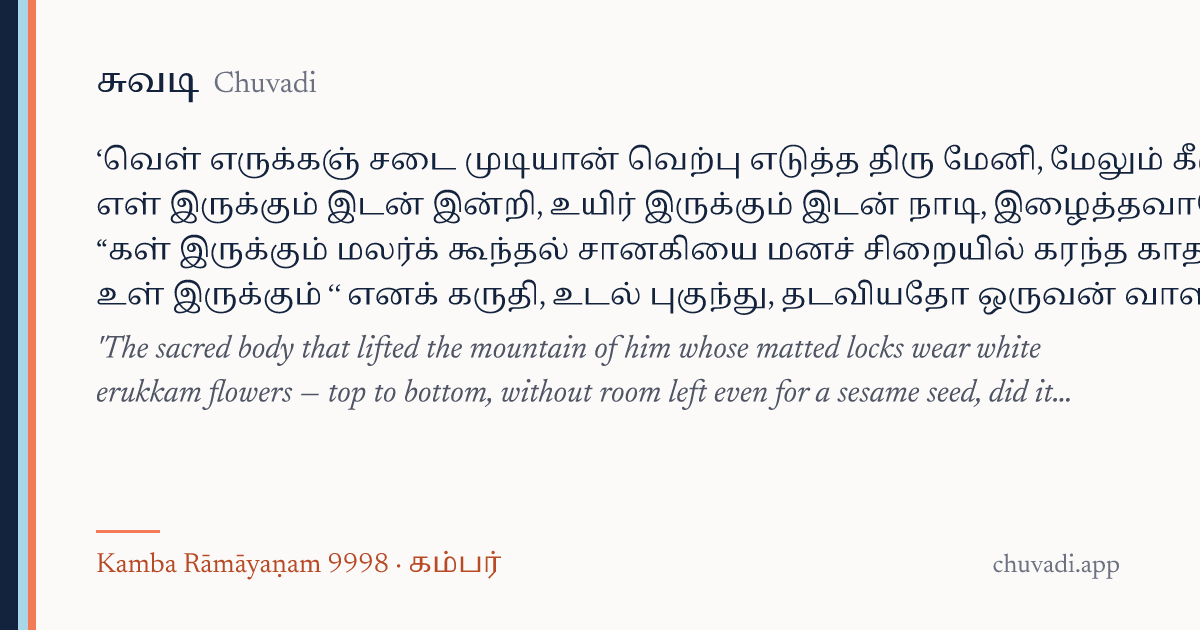
ஒப்பற்ற இராமபிரானின் அம்பு; வெள் எருக்கம் சடைமுடியான் - வெள்ளை எருக்கம் பூவை (முடியில்) சூடும் சிவபெருமானுடைய, வெற்பு எடுத்த திருமேனி - கயிலை மலையைத் தூக்கிய இராவணனுடைய அழகிய உடலின்; மேலும் கீழும் - உடம்பின் மேல்பகுதியிலும் கீழ்ப்பகுதியிலும்; எள் இருக்கும் இடம் இன்றி - எள் இருக்கும் இடம் கூட இல்லாமல், உயிர் இருக்கும் இடம் நாடி - உயிர் இருக்கும் இடம் முழுவதையும் தேடி; இழைத்த ஆறோ? - ஆராய்ந்த வண்ணமோ? கள் இருக்கும் மலர்க்கூந்தல் சானகியை - தேன் குடிகொள்ளும் மலர்களைச் சூடிய கூந்தலையுடைய சீதாதேவியை; மனச் சிறையில் கரந்த காதல் - மனம் எனும் சிறையில் ஒளித்து வைத்திருந்த காதலானது; உள் இருக்கும் எனக் கருதி - உள்ளே (இன்னும் எங்காவது) பதுங்கியிருக்கும் என்று எண்ண; உடல் புகுந்து தடவியதோ? - உடல் முழுதும் நுழைந்து (நுழைந்து) தடவிப் பார்த்ததோ?
இறப்பின் பின் நிகழும் புலம்பலில் எள்ளைச் சுட்டிய நயம் காண்க.
ஆங்கிலம் · English translationAI
Translation
- 'The sacred body that lifted the mountain of him whose matted locks wear white erukkam flowers —
- top to bottom, without room left even for a sesame seed, did it riddle it, seeking where his life might lie?
- Thinking, "The love for Cāṉaki with her honey-filled flowered hair, which he hid in the prison of his heart,
- must be inside," did that one man's arrow enter his body and grope through it?'
What the poem says
Vaṇṭōtari looks at her husband's body, so pierced with arrows that there is not room for a sesame seed between the wounds. The body that lifted Śiva's mountain has been searched all over, as if Irāmaṉ's arrow were hunting for the place where his life was hidden, or for the love for Cītai he had locked away in his heart.
The commentary notes the aptness of mentioning sesame, which is offered in the rites for the dead.