



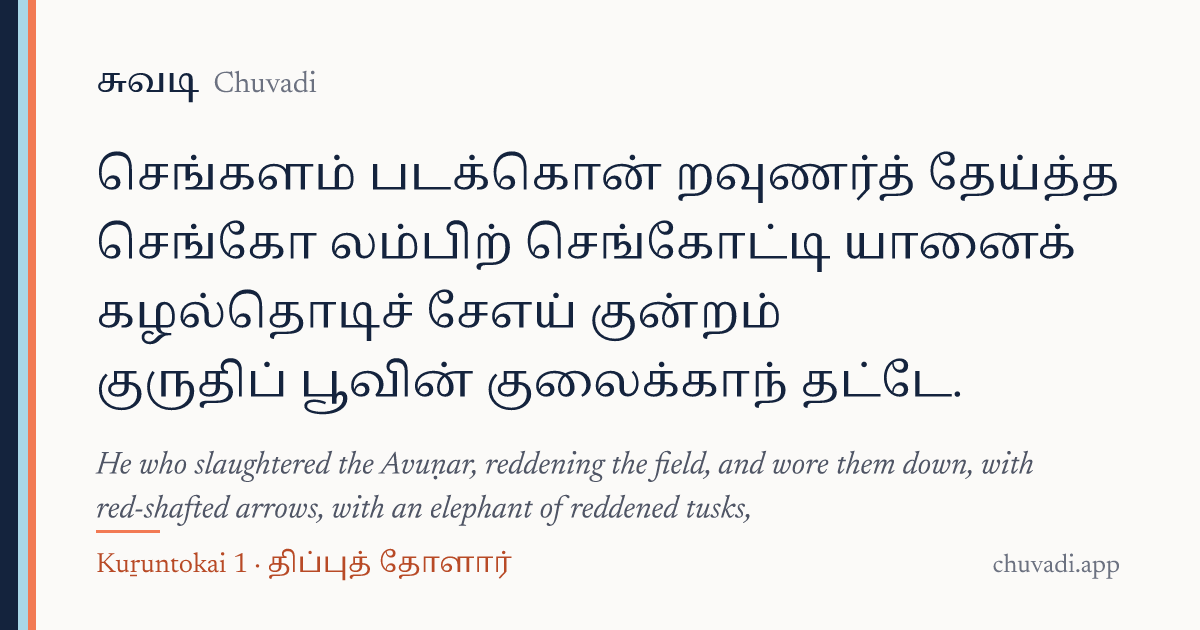

குறுந்தொகை 1
பாடல் · The poem
Tap a word to see where else it occurs.
பொருள் · Meaning in TamilAI
போர்க்களம் குருதியால் சிவக்கும்படி அவுணர்களைக் கொன்று அழித்தவன்; சிவந்த அம்புகளையும், குருதி படிந்து சிவந்த கொம்புகளையுடைய யானையையும் உடையவன்; வீரக்கழலும் தொடியும் அணிந்த சேயோன். அவனுடைய மலை, குருதியைப் போலச் சிவந்த பூக்களைக் கொத்துக் கொத்தாகக் கொண்ட காந்தள் செடிகளால் நிறைந்திருக்கிறது.
குறிஞ்சித் திணை; தோழி கூற்று. சேய் என்பது செந்நிறத்தவனான முருகனின் பெயர்; களம், அம்பு, யானைக் கொம்பு, பூ என எல்லாம் சிவப்பாகவே வருகின்றன. தலைவன் காந்தள் மலரைக் கையுறையாகக் கொண்டு வந்தபோது, இம்மலையெங்கும் காந்தள் மலிந்திருக்கிறது, இது எமக்குப் புதிதன்று என்று தோழி மென்மையாக மறுப்பதாக மரபு விளக்குகிறது; அச்சூழல் பாடலில் வெளிப்படையாகச் சொல்லப்படவில்லை.
ஆங்கிலம் · English translationAI
Translation
- He who slaughtered the Avuṇar, reddening the field, and wore them down,
- with red-shafted arrows, with an elephant of reddened tusks,
- Cēy of the warrior anklets and armlets — his mountain
- is thick with clusters of kāntaḷ, flowers the colour of blood.
What the poem says
The heroine's friend speaks in the hill country (kuṟiñci). Tradition reads the poem as her reply when the hero brings a gift of kāntaḷ flowers to win her help. She turns the gift aside: on this mountain, which belongs to Murukaṉ, kāntaḷ grows everywhere, so his flowers are nothing special.
Cēy, 'the red one', is a name of Murukaṉ. Red runs through every line: the battlefield red with the blood of the Avuṇar (demons), red arrows, red tusks, blood-red flowers. The red kāntaḷ (the glory lily) was sacred to Murukaṉ.
Because the poem names only the god and the flowers, the situation comes from the traditional commentaries rather than the text. On its own the poem is a short praise of the god's hill, and the gentle refusal is suggested rather than stated.