



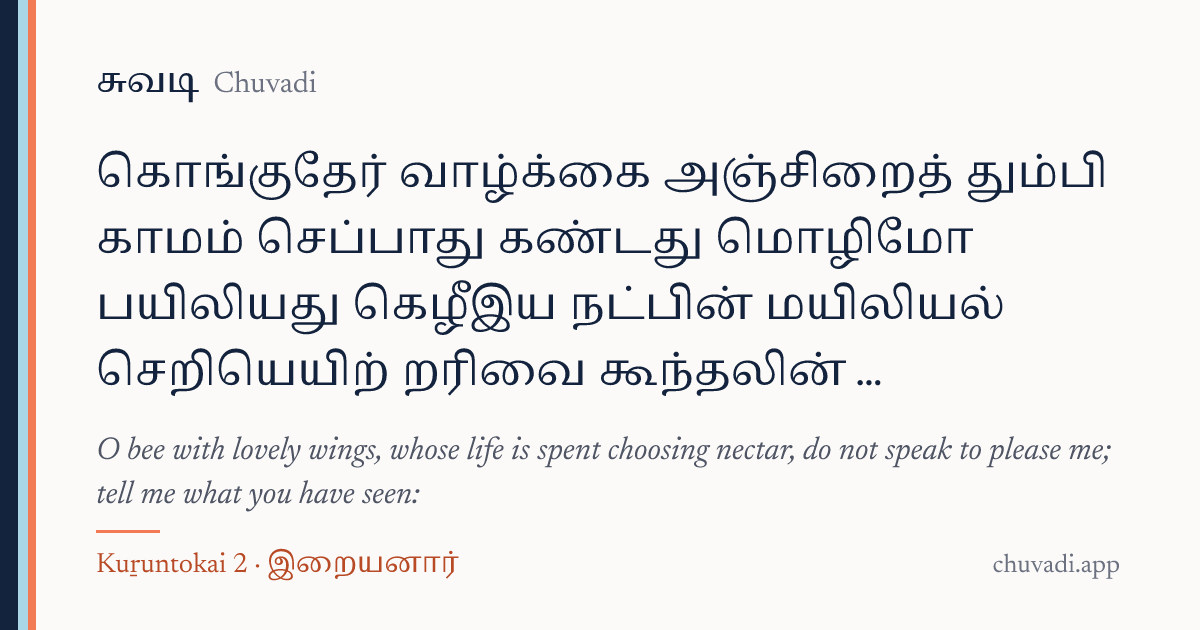

குறுந்தொகை 2
பாடல் · The poem
Tap a word to see where else it occurs.
பொருள் · Meaning in TamilAI
பூந்தாதைத் தேர்ந்து உண்டு வாழும் வாழ்க்கையையும் அழகிய சிறகுகளையும் உடைய தும்பியே! என்மேல் கொண்ட அன்பினால் எனக்கு இனியதைச் சொல்லாமல், நீ உண்மையில் கண்டதைச் சொல். நெடுநாள் பழகிப் பொருந்திய நட்பையும், மயிலைப் போன்ற மென்மையான சாயலையும், நெருங்கிய பற்களையும் உடைய இந்த இளம்பெண்ணின் கூந்தலைவிட மிகுந்த மணமுடைய பூக்களும் நீ அறிந்தவற்றுள் உண்டோ?
குறிஞ்சித் திணை; தலைவன் கூற்று. மணத்தை நன்கு அறிந்த தும்பியிடம் கேட்பதன் மூலம், தலைவியின் கூந்தல் மணத்தை மறைமுகமாகப் புகழ்கிறான்; தும்பியின் விடை சொல்லப்படாமலேயே பாடல் முடிகிறது. இறையனார் என்ற புலவர் பெயரைச் சிவபெருமானாகக் கொள்வது பிற்கால மரபு.
ஆங்கிலம் · English translationAI
Translation
- O bee with lovely wings, whose life is spent choosing nectar,
- do not speak to please me; tell me what you have seen:
- of this woman, close to me through long companionship, graceful as a peacock,
- with close-set teeth — than her hair
- is there anything more fragrant among the flowers you know?
What the poem says
The hero speaks to a bee hovering near him in the hill country (kuṟiñci, the landscape of lovers' union). He asks it to answer honestly, not out of partiality to him: of all the flowers it has visited, is any more fragrant than his beloved's hair?
The praise works by indirection. A bee is the expert on fragrance, so its 'answer' — which the poem never needs to give — settles the matter. Tradition attributes the poem to Iṟaiyaṉār, a name later identified with Śiva, and a well-known legend about a debate in the Madurai academy grew up around it.