



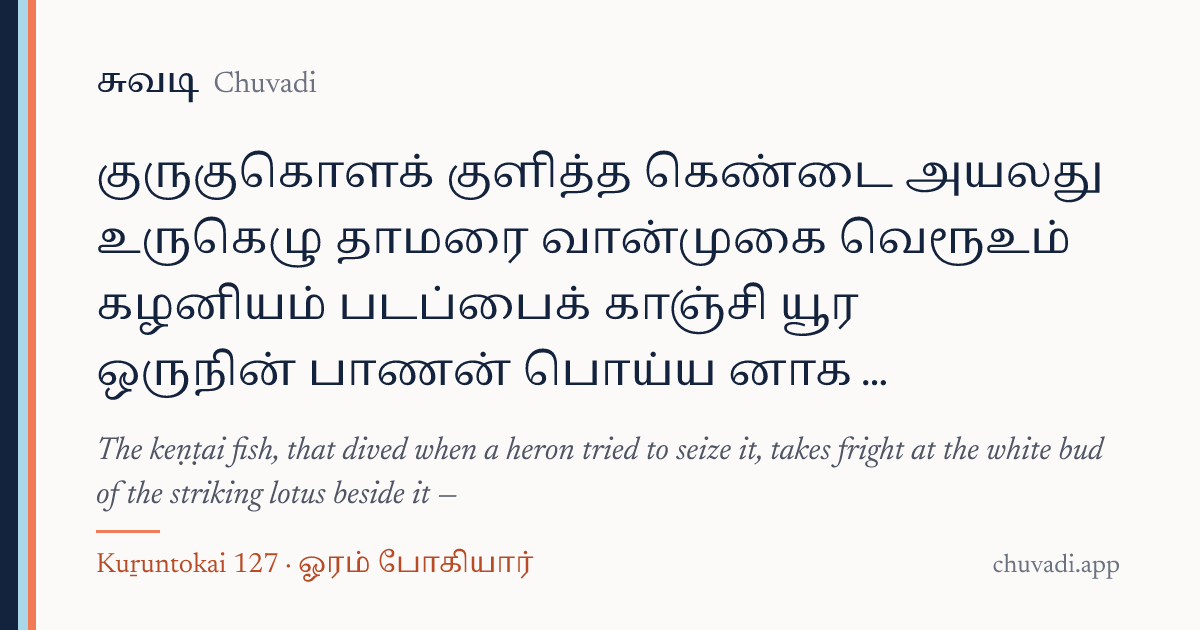

குறுந்தொகை 127
பாடல் · The poem
Tap a word to see where else it occurs.
பொருள் · Meaning in TamilAI
கொக்கு பிடிக்க வந்தபோது நீரில் மூழ்கித் தப்பிய கெண்டை மீன், அருகில் உள்ள அச்சம் தரும் தாமரையின் வெண்மையான மொட்டைக் கண்டும் அஞ்சுகிறது. அத்தகைய வயல்களும் தோட்டங்களும் உடைய, காஞ்சி மரங்கள் நிறைந்த ஊரனே! உன்னுடைய ஒரு பாணன் பொய்யன் ஆகிவிட்டதால், உலகில் உள்ள பாணர்கள் எல்லாருமே நீ கைவிட்டுச் சென்ற பெண்களுக்குத் திருடர்களைப் போலத் தோன்றுகிறார்கள்.
மருதத் திணை; தோழி தலைவனிடம் கூறுவது. பரத்தையரிடம் சென்ற தலைவன் தனக்காகப் பேச அனுப்பிய பாணனை ஏற்க மறுக்கிறாள். ஒருமுறை கொக்கிடம் தப்பிய மீன் கொக்கின் அலகுபோன்ற தாமரை மொட்டுக்கும் அஞ்சுவது, ஒருமுறை ஏமாந்த தலைவி எல்லாத் தூதரையும் ஐயுறுவதைக் காட்டும் உள்ளுறை. "அகன்றிசினோர்" என்ற பன்மை, அவன் கைவிட்டவள் இவள் ஒருத்தி மட்டுமல்லள் என்ற குத்தலைக் கொண்டது.
ஆங்கிலம் · English translationAI
Translation
- The keṇṭai fish, that dived when a heron tried to seize it,
- takes fright at the white bud of the striking lotus beside it —
- lord of the town of kāñci trees among fields and gardens,
- because your one bard has turned out a liar,
- all the bards there are
- seem like thieves to the women you have left.
What the poem says
The friend speaks to the hero, who has been living with courtesans and now sends his bard (pāṇaṉ) to plead his case with his wife. The setting is marutam, the farmland where such quarrels are the usual theme.
The opening image is an uḷḷuṟai. A small fish that has escaped a heron's beak becomes so nervous that it shies away from a lotus bud, which merely looks like a bird's bill. Having been deceived once, the heroine now fears every messenger.
The bard was the hero's go-between, carrying his excuses home. Since this one has lied, the friend says, every bard looks like a thief to the women who have been abandoned. The plural is pointed: the hero's wife is not the only one he has left.
Kāñci is a tree of riverbanks and fields.