



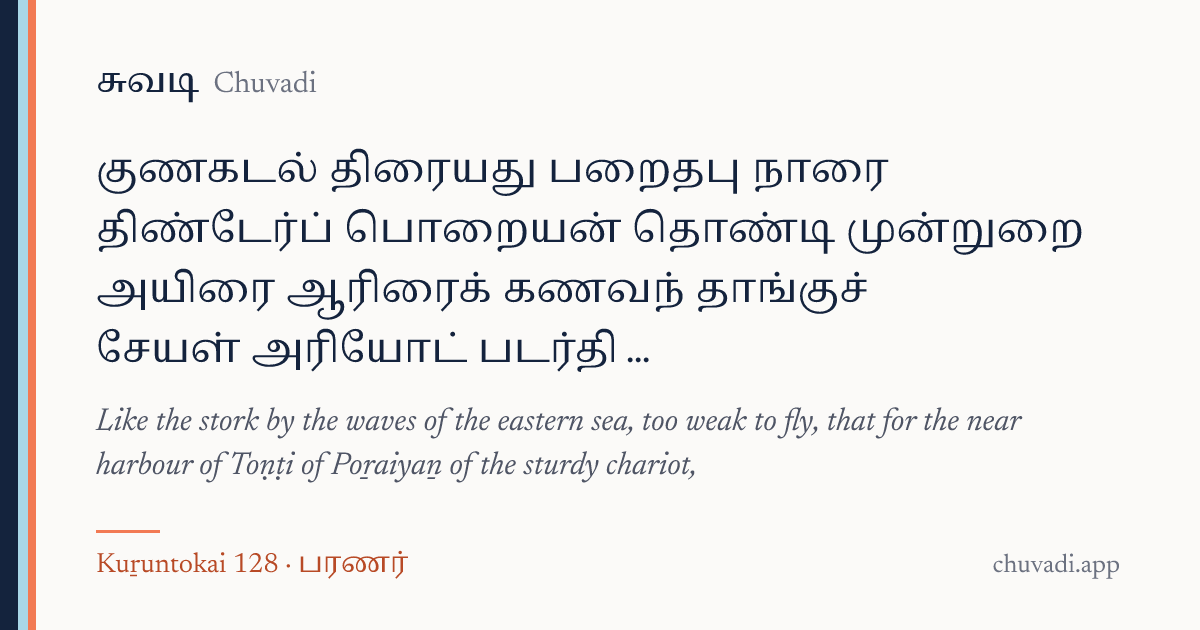

குறுந்தொகை 128
பாடல் · The poem
Tap a word to see where else it occurs.
பொருள் · Meaning in TamilAI
கிழக்குக் கடலின் அலைக்கரையில் வாழும், பறக்கும் வலிமை இழந்த நாரை, உறுதியான தேரையுடைய சேரமன்னன் பொறையனின் தொண்டித் துறையில் கிடைக்கும் அயிரை மீனாகிய அரிய உணவை விரும்பித் தலையை நீட்டி ஏங்குவதைப் போல, நெஞ்சே! தொலைவில் இருப்பவளும் அடைவதற்கு அரியவளுமான ஒருத்தியை நினைத்து ஏங்குகிறாய். நீ நோயுற்றாய்; துன்பத்துக்கே உரிய விதியை உடையாய்.
நெய்தல் திணை; தலைவன் தன் நெஞ்சுக்குக் கூறுவது (பரணர் பாடல்). தொண்டி மேற்குக் கடற்கரையில் இருந்த சேரர் துறைமுகம்; கிழக்குக் கரையிலிருக்கும் பறக்க இயலாத நாரை அதை நாடுவது நிறைவேறாத ஆசைக்கு உவமை. அடைய முடியாத தலைவியை விரும்பும் தன் நெஞ்சை அவன் இரங்கிக் கடிகிறான்.
ஆங்கிலம் · English translationAI
Translation
- Like the stork by the waves of the eastern sea, too weak to fly,
- that for the near harbour of Toṇṭi of Poṟaiyaṉ of the sturdy chariot,
- for the rich food of its āyirai fish, cranes its neck in longing —
- you pine for one who is far away and hard to reach;
- you are sick, my heart; you are one marked for suffering.
What the poem says
The hero speaks to his own heart in a poem by Paraṇar. He longs for a woman who is far beyond his reach.
The comparison rests on geography. Toṇṭi was a harbour on the western coast belonging to the Cēra kings, who bore the title Poṟaiyaṉ. A stork on the eastern shore, its wings too weak to carry it across the peninsula, stretches its neck toward the āyirai fish of Toṇṭi: a hopeless desire for something on the other side of the land.
The final line diagnoses the heart as diseased, and as belonging to the 'portion' (pāl) of those fated to suffer. Paraṇar often names kings and places, and the mention of Toṇṭi here is a geographic marker rather than a reference to any particular event.