




குறுந்தொகை 136
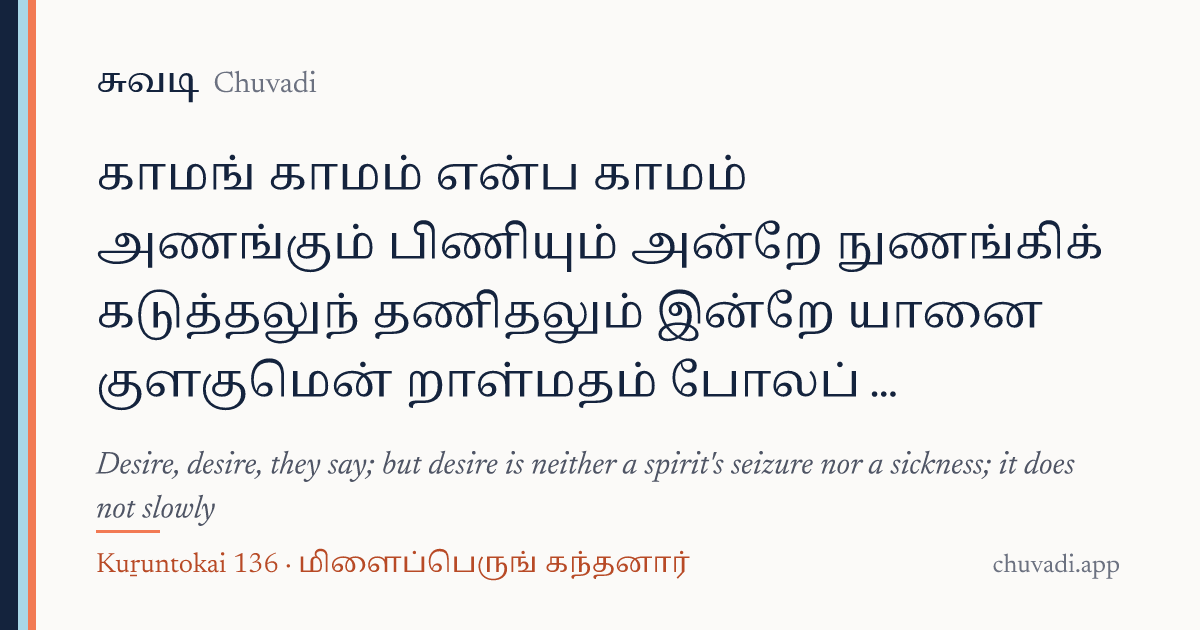
பாடல் · The poem
Tap a word to see where else it occurs.
பொருள் · Meaning in TamilAI
காமம், காமம் என்று பேசுகிறார்கள். காமம் தெய்வம் பற்றிய வருத்தமும் அன்று, நோயும் அன்று; மெல்ல மெல்லப் பெருகுவதும் தணிவதும் அதற்கு இல்லை. தழையுணவைத் தின்று வாழும் யானைக்கு மதம் தோன்றுவதைப் போல, காணத்தக்க ஒருவரைக் கண்டால் அதுவும் தனக்குரிய பருவத்தில் வெளிப்படும்.
குறிஞ்சித் திணை; தலைவன் கூற்று, தன்னைக் கடிந்த தோழனுக்குக் கூறுவதாகக் கொள்ளலாம். காமத்தை நோய் என்று பேசுவோருக்கு, அது உயிரின் இயல்பு, உரிய ஒருவரைக் காணும்போது யானையின் மதம்போல் வெளிப்படும் என்கிறான். "கடுத்தலும் தணிதலும் இன்று" என்ற தொடரும் இறுதி வரியும் வேறுவேறாகப் பொருள்கொள்ளப்படுகின்றன; காமம் உள்ளே எப்போதும் நிலையாக இருந்து உரிய பொருளைக் கண்டதும் வெளிப்படும் என்றும் கொள்ளலாம்.
ஆங்கிலம் · English translationAI
Translation
- Desire, desire, they say; but desire
- is neither a spirit's seizure nor a sickness; it does not slowly
- flare up and then die down; like the elephant
- that chews its leafy fodder and comes into must,
- it has its season, when it finds someone to look upon.
What the poem says
The hero speaks, probably to a friend who has scolded him for being in love. People talk of kāmam, desire, he says, as if it were an affliction sent by a spirit or a disease. It is neither.
His alternative is the elephant's must (matam). The bull elephant feeds on fodder, and in its own time the must rises in it. Desire, he says, is natural, part of a living creature, and it breaks out when it meets the right sight: a woman to look at.
The exact sense of 'it does not flare up and die down' and of the last line is debated; the poem can be read as saying that desire is constant within a person, and only shows itself when it meets its object. The poet is Miḷaipperuṅkantaṉār.