



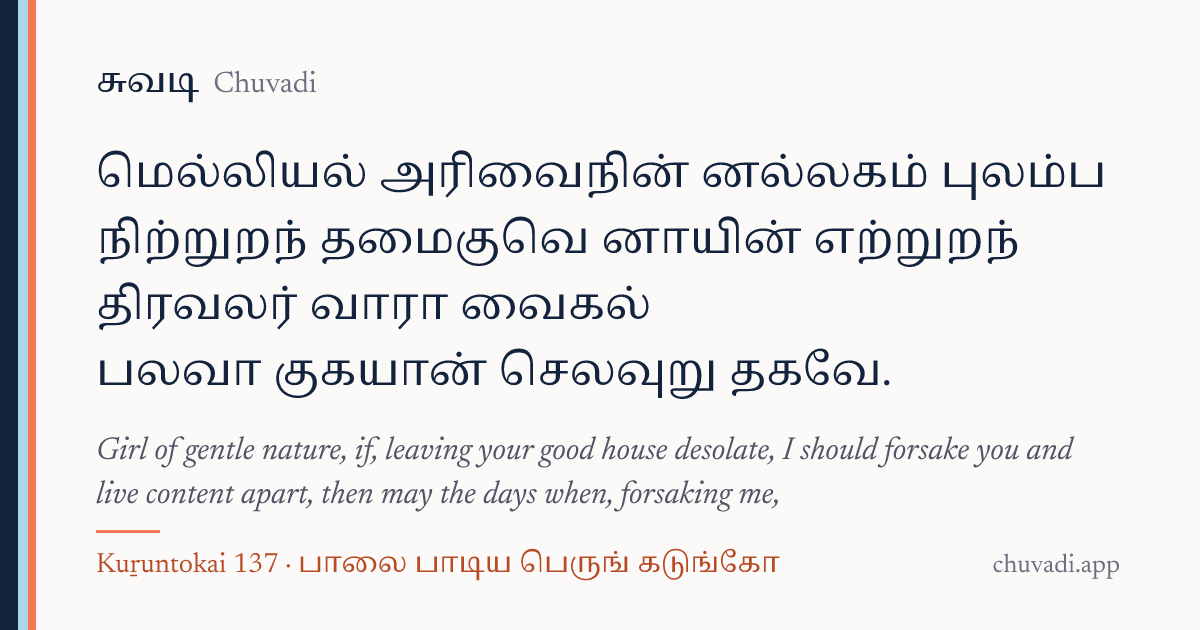

குறுந்தொகை 137
பாடல் · The poem
Tap a word to see where else it occurs.
பொருள் · Meaning in TamilAI
மென்மையான இயல்புடைய பெண்ணே! உன் நல்ல வீடு தனிமையில் வருந்தும்படி உன்னைக் கைவிட்டுப் பிரிந்து நான் அமைதியாக வாழ்வேன் என்றால், என்னைக் கைவிட்டு இரவலர் என்னிடம் வராத நாட்கள் பல ஆகட்டும்; நான் பிரிந்து செல்வதற்குத் தக்க பயன் அதுவாகவே இருக்கட்டும்.
பாலைத் திணை; தலைவன் தலைவியிடம் கூறுவது. பொருள்தேடப் பிரிவானோ என்று அஞ்சும் அவளுக்கு அவன் சூளுரைக்கிறான். இரவலர்க்குக் கொடுப்பதே பொருளின் பயன் என்று கருதிய சமூகத்தில், இரவலர் வராமை பெருமை இழந்த வறுமையின் அடையாளம்; அதையே தனக்குத் தண்டனையாக வேண்டுவதால் பிரியமாட்டேன் என்ற உறுதி தெரிகிறது.
ஆங்கிலம் · English translationAI
Translation
- Girl of gentle nature, if, leaving your good house desolate,
- I should forsake you and live content apart, then may the days when, forsaking me,
- no suppliants come to me
- be many — that would be the true worth of my going.
What the poem says
The hero speaks to the heroine, who fears that he will leave her to earn wealth in distant lands (pālai). He replies with an oath.
In Sangam culture, the main reason for a man to seek wealth was to be able to give: to feed bards, poets and the needy who came to his door. The worst fate for a man of honour was to have no suppliants, a sign of poverty and lost reputation. The hero swears that if he ever leaves her, he deserves just that: may the poor stop coming to him. The oath shows how firmly he means to stay.
The poet is Peruṅkaṭuṅkō, who wrote much of the pālai poetry of the anthology.