



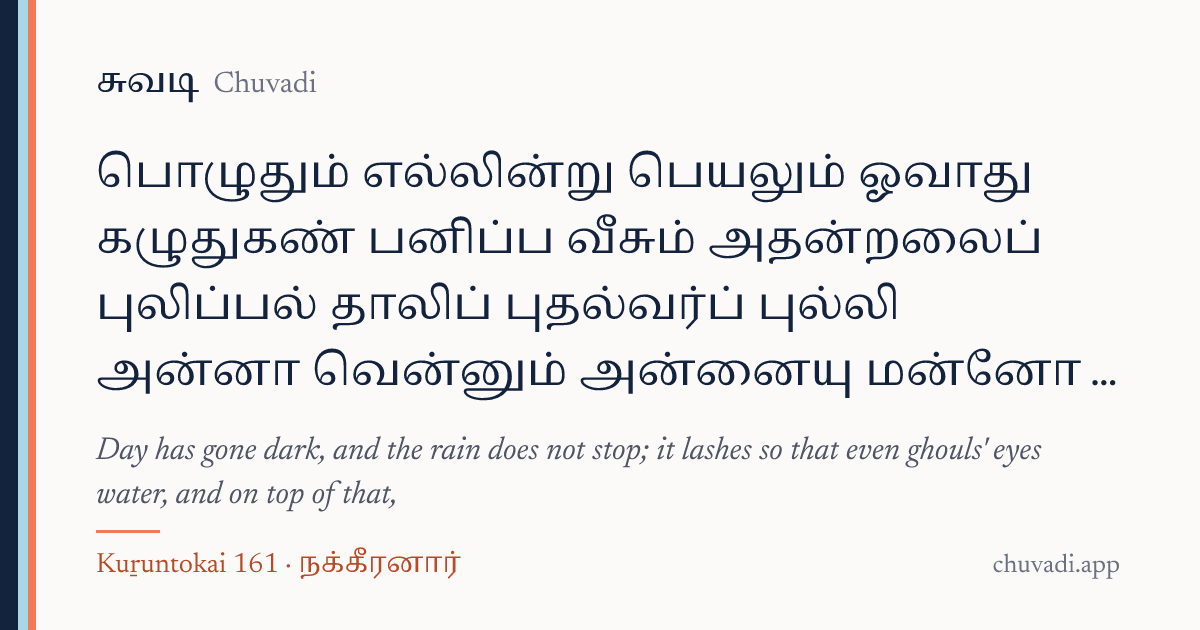

குறுந்தொகை 161
பாடல் · The poem
Tap a word to see where else it occurs.
பொருள் · Meaning in TamilAI
பொழுது இருண்டுவிட்டது; மழையும் ஓயவில்லை; பேய்களின் கண்களும் நீர் சொரியும்படி குளிர்காற்று வீசுகிறது. அதற்கு மேல், புலிப்பல் தாலி அணிந்த சிறுவர்களை அணைத்துக்கொண்டு "அன்னா!" என்று கதறுகிறாள் அன்னையும். அந்தோ! எதையெல்லாம் எதிர்த்து வந்தானோ அவன்! தன் மலையில் விளைந்த சந்தனம் மணக்கும் மார்பை உடையவன், மழையில் நனைந்த யானையைப் போல வந்து நின்றான்.
குறிஞ்சித் திணை; தலைவி தோழியிடம் கூறுவது (நக்கீரனார் பாடல்). இருள், மழை, அச்சம் தரும் காற்று, விழித்திருக்கும் அன்னை என எல்லாம் தடுத்தும் தலைவன் இரவுக்குறிக்கு வந்து நின்றான். புலிப்பல் தாலி குழந்தைகளுக்குக் காப்பாக அணிவிப்பது. ஐந்தாம் வரியில் உள்ள "மலைந்தனன்" என்ற சொல்லுக்குப் போரிட்டான், எதிர்கொண்டான், அணிந்தான் எனப் பல பொருள் உண்டு; இங்கே அவன் எதிர்கொண்ட இடர்களை எண்ணி வியப்பதாகக் கொள்ளப்பட்டது.
ஆங்கிலம் · English translationAI
Translation
- Day has gone dark, and the rain does not stop;
- it lashes so that even ghouls' eyes water, and on top of that,
- clasping her sons who wear tiger-tooth amulets,
- there is my mother, crying 'annā!' — alas!
- What can he have braved, I wonder? From his own hills,
- his chest fragrant with sandalwood,
- he has come and stands like an elephant in the rain.
What the poem says
The heroine tells her friend about a night of storm when her lover came to meet her in secret. Everything seemed to forbid it. It was pitch dark, the rain would not stop, and the cold wind was fierce enough to frighten even the spirits of the night. Her mother was awake, holding the little boys of the house close and crying out in fear. Yet there he stood, drenched like a wild elephant in the monsoon.
The tiger-tooth amulet (puli-p-pal tāli) was worn by children for protection. The image of the hero as a rain-soaked elephant suggests both his strength and the danger he has gone through. His chest smells of sandalwood from his own mountains, a reminder of the distance he has come.
The fifth line is difficult. The verb malaintaṉaṉ can mean 'fought', 'faced' or 'wore', and readers take it differently. Here it is read as wonder at what he has had to brave to reach her. The poem is attributed to Nakkīraṉār.