



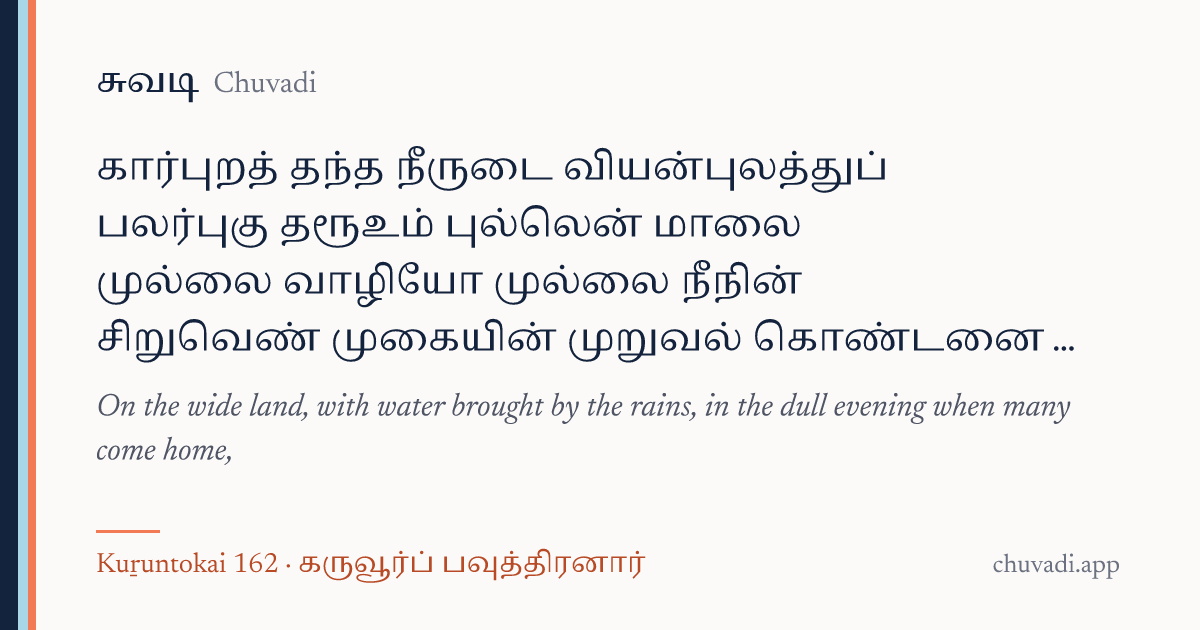

குறுந்தொகை 162
பாடல் · The poem
Tap a word to see where else it occurs.
பொருள் · Meaning in TamilAI
கார்மழை கொண்டுவந்த நீர் நிறைந்த அகன்ற நிலத்தில், பலரும் தம் வீடுகளுக்குத் திரும்பும் பொலிவிழந்த மாலைப்பொழுதில், முல்லையே, நீ வாழ்க! முல்லையே, உன் சிறிய வெண்மொட்டுகளால் புன்முறுவல் கொண்டுவிட்டாய். தனித்திருப்பவர்களிடம் இப்படிச் சிரிப்பது போலக் காட்டுவது உனக்குத் தகுமோ?
முல்லைத் திணை; பிரிந்திருக்கும் தலைவன் கூற்று. எல்லாரும் வீடு திரும்பும் மாலையில் தனித்திருக்கும் அவனுக்கு, முல்லை மொட்டுகள் தன்னைப் பார்த்துச் சிரிப்பதுபோலத் தோன்றுகின்றன; முல்லை மொட்டு பெண்ணின் பற்களுக்கு வழக்கமான உவமை. அந்த மலர்ச்சி, அவன் திரும்புவதாக வாக்களித்த பருவத்தையும் காத்திருக்கும் தலைவியையும் நினைவூட்டுகிறது.
ஆங்கிலம் · English translationAI
Translation
- On the wide land, with water brought by the rains,
- in the dull evening when many come home,
- jasmine — long may you live — O jasmine, you
- have taken on a smile with your small white buds;
- to show yourself as if you were laughing —
- is that fitting, toward those who are alone?
What the poem says
The hero speaks, away from home on some duty and alone at evening in the rainy season. This is mullai, the forest and pasture landscape of waiting, whose emblem is the wild jasmine (mullai). Evening is the hour when herdsmen and travellers return home and couples are together, so it is the hardest hour for anyone apart.
He addresses the jasmine flowering after the rain. Its small white buds look like a smile, and Tamil poets often compare jasmine buds to a woman's teeth. To him the flower seems to be laughing at his loneliness, and he asks whether that is any way to treat a solitary man. The greeting 'long may you live' (vāḻiyō) is a formula of address, here touched with irony.
The open buds also mark the season he promised to return by, so the flower reminds him of the woman who is waiting for him and of his promise.