



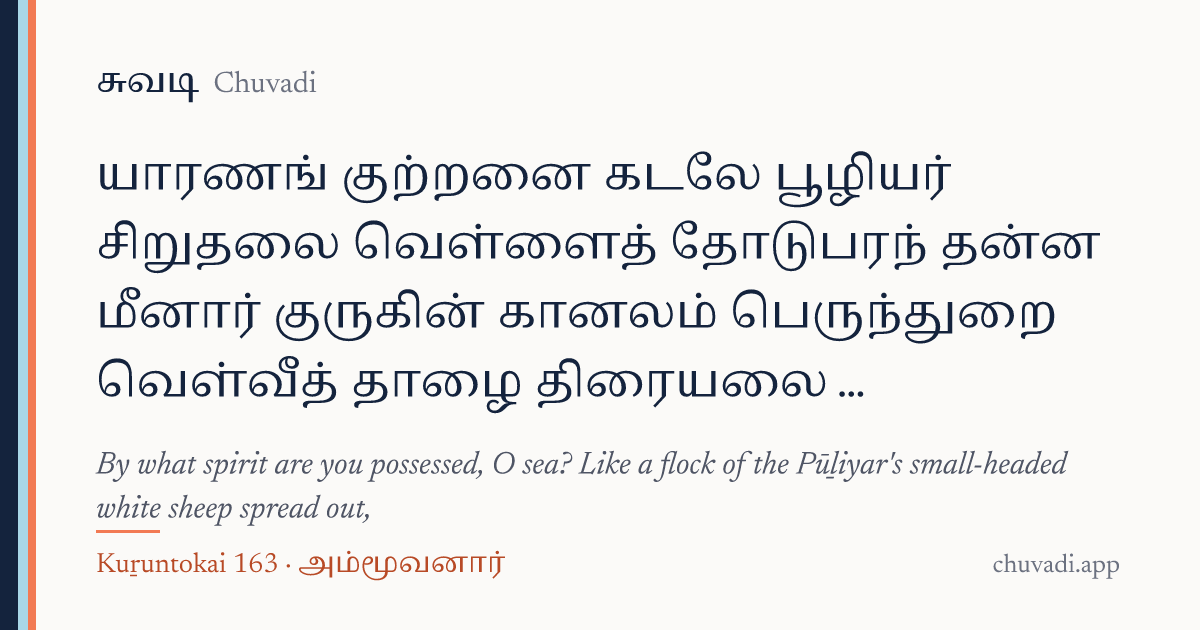

குறுந்தொகை 163
பாடல் · The poem
Tap a word to see where else it occurs.
பொருள் · Meaning in TamilAI
கடலே! நீ எந்தத் தெய்வத்தால் பீடிக்கப்பட்டாய்? பூழியர்களின் சிறிய தலையுடைய வெண்ணிற ஆட்டு மந்தை பரந்து கிடப்பதைப் போல, மீன் உண்ணும் வெண்குருகுகள் நிறைந்த கடற்கரைச் சோலையின் பெரிய துறையில், வெண்பூக்களையுடைய தாழையை அலைகள் அலைக்கின்றன. நள்ளிரவின் அமைதியிலும் உன் குரல் கேட்டுக்கொண்டே இருக்கிறது.
நெய்தல் திணை; தூக்கமின்றித் தவிக்கும் தலைவி கடலை நோக்கிக் கூறுவது. ஓயாமல் முழங்கும் கடலின் குரல், அவளுடைய ஓயாத் துயரத்தின் எதிரொலியாகிறது; கடலும் அவளைப் போலவே அமைதியின்றித் தவிப்பதாகத் தோன்றுகிறது. பூழியர் சேரரோடு தொடர்புடைய பூழி நாட்டு மக்கள்; ஆட்டு மந்தைகளுக்குப் பெயர் பெற்றவர் போலும்.
ஆங்கிலம் · English translationAI
Translation
- By what spirit are you possessed, O sea? Like a flock
- of the Pūḻiyar's small-headed white sheep spread out,
- herons feeding on fish crowd the great harbour by the grove,
- where the waves beat on the white-flowered tāḻai —
- even in the dead of night I hear your voice.
What the poem says
The heroine, sleepless in the seaside landscape of neytal, speaks to the sea. In the deep of night its roar goes on without pause, and she asks what demon has seized it to make it cry so. Her question also describes her own state. She too cannot rest, and the sea's unceasing voice is like her own grief.
The shore is pictured in detail. White herons crowd the beach like a flock of white sheep, and the waves break over the tāḻai (screw-pine) with its pale flowers. The Pūḻiyar were people of Pūḻi, a region linked in Sangam poems with the Cēra kings, and they seem to have been known for their flocks of sheep.
Neytal is the landscape of pining, and the poem works through its conventions. The lover is absent, night brings no sleep, and the sea and shore seem to share the speaker's restlessness.