



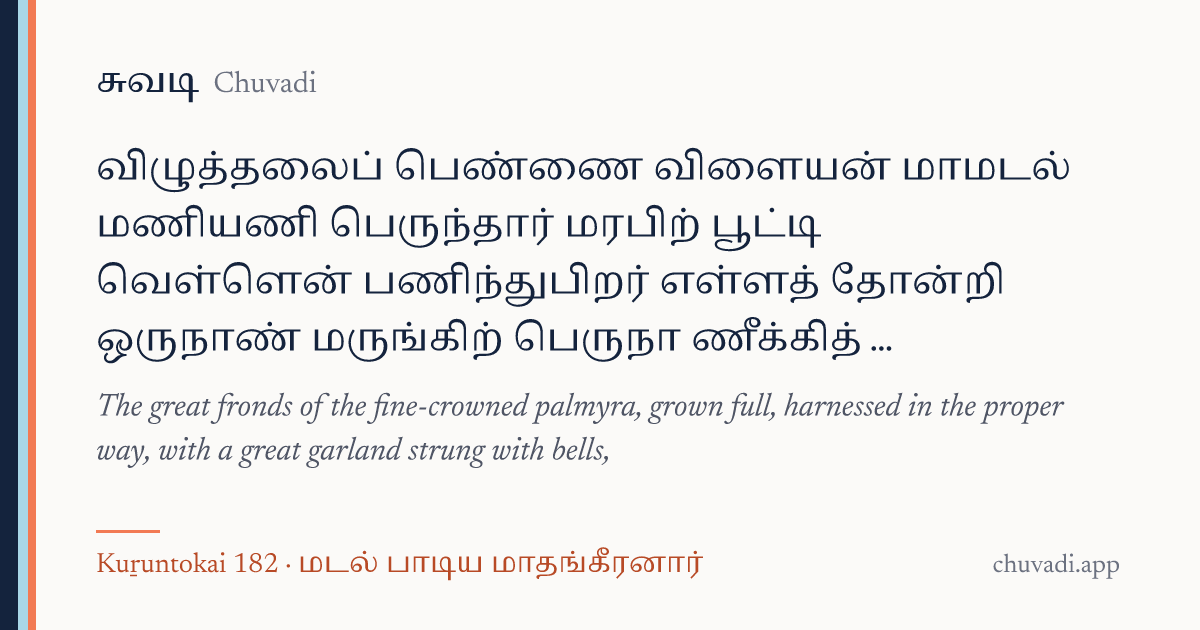

குறுந்தொகை 182
பாடல் · The poem
Tap a word to see where else it occurs.
பொருள் · Meaning in TamilAI
சிறந்த உச்சியுடைய பனைமரத்தின் முற்றிய பெரிய மடல்களால் குதிரை செய்து, மணிகள் கோத்த பெரிய மாலையை முறைப்படி பூட்டி, வெள்ளெலும்பு அணிந்து, பணிந்து, பிறர் ஏளனம் செய்யும்படி தோன்றி, ஒரே நாளில் என் பெரிய நாணத்தை விட்டொழித்துத் தெருவில் செல்வதும் அவளை எனக்குத் தருமோ? செருக்கும் ஒளியும் அசைநடையும் உடைய அந்தப் பேதைப் பெண், நாம் அனுப்பிய தூதுக்கு மனம் இளகவில்லையே.
குறிஞ்சித் திணை; தலைவன் கூற்று. அனுப்பிய தூதுகள் பயனின்றிப் போனதால், மறுக்கப்பட்ட காதலனின் இறுதி வழியான மடலேறுதலைப் பற்றி எண்ணுகிறான். மடலேறுதல் பெண்ணின் வீட்டாருக்கு அழுத்தம் தருவதோடு காதலனையும் இழிவுபடுத்தியது; ஆண்மைக்குரிய நாணத்தையே அவன் கைவிட நினைக்கிறான். இறுதி வரி சுருக்கமானது; "நாம் அனுப்பிய தூது" என்பது பொருத்தமான பொருள். இந்தப் பாடலால் புலவர் "மடல் பாடிய" எனப் பெயர் பெற்றார்.
ஆங்கிலம் · English translationAI
Translation
- The great fronds of the fine-crowned palmyra, grown full,
- harnessed in the proper way, with a great garland strung with bells,
- wearing white bones, bowed, a sight for others to mock,
- casting off my great shame on a single day,
- to go along the street — will even that bring her to me?
- The simple girl of swaying, splendid gait
- has not softened at the messengers we sent to win her.
What the poem says
The hero speaks in despair. He has sent messages to the girl, perhaps through her friend, and she has not relented. Now he thinks of the last resort of a rejected lover in Tamil poetry, maṭal ēṟutal: riding a horse made of palmyra stems through the streets, garlanded and decked with bells and white bones, so that everyone can see his suffering and laugh at him. He asks whether even that would bring her to him.
The custom was a form of public pressure on the woman's family, and it shamed the lover as much as the girl. Here the hero imagines throwing away his 'great shame' (nāṇ), the sense of honour proper to a man, in a single day. The white bones are a sign of the wild, ascetic look the maṭal rider takes on.
The poet's name, Maṭal Pāṭiya Mātaṅkīraṉār, 'Mātaṅkīraṉār who sang of the maṭal', was evidently given him because of this poem. The last line is compressed, and the sense 'messengers we sent' is a probable reading.