



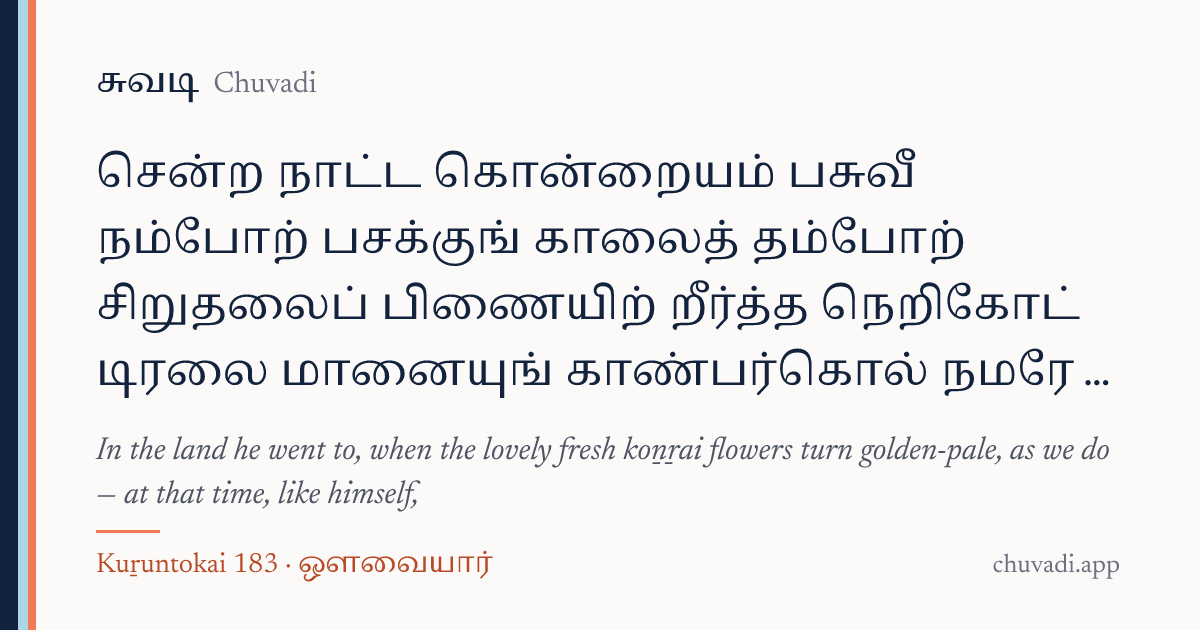

குறுந்தொகை 183
பாடல் · The poem
Tap a word to see where else it occurs.
பொருள் · Meaning in TamilAI
அவர் சென்ற நாட்டில், அழகிய புதிய கொன்றை மலர்கள் நம்மைப் போலப் பசலை நிறம் கொள்ளும் இந்தக் காலத்தில், தம்மைப் போலவே சிறிய தலையுடைய பெண்மானைப் பிரிந்த, முறுக்கிய கொம்புடைய கலைமானையும் நம்மவர் காண்பாரோ? பொலிவற்ற காயாவின் பூக்கள் நிறைந்த பெருங்கிளைகள் மென்மையான மயிலின் கழுத்தைப் போலத் தோன்றும், காடுகள் சூழ்ந்த அந்த வறண்ட நிலத்திலே.
முல்லைத் திணை; தலைவி தோழியிடம் கூறுவது (ஔவையார் பாடல்). கார்காலத்தில் வருவதாகச் சொன்ன தலைவன் செல்லும் நாட்டில், மலர்ந்த கொன்றையும் துணையைப் பிரிந்த மானும் அவனுக்குத் தன் வாக்கை நினைவூட்டுமோ என்று ஏங்குகிறாள். நீலப் பூக்களுடைய காயாக் கிளைகள் மயிலின் கழுத்துக்கு உவமை. இரண்டு மூன்றாம் வரிகள் ஐயத்துக்குரியவை; "தம்போல்" என்பது தனித்த கலைமானைக் குறிக்கிறதா பெண்மானைக் குறிக்கிறதா என்பதும், "தீர்த்த" என்பதன் பொருளும் வேறுபடக் கொள்ளப்படுகின்றன.
ஆங்கிலம் · English translationAI
Translation
- In the land he went to, when the lovely fresh koṉṟai flowers
- turn golden-pale, as we do — at that time, like himself,
- parted from its small-headed doe, the twisted-horned
- stag — will he see that too, our man,
- where the great branch of the dull kāyā, thick with flowers,
- shows like the neck of the soft peacock,
- in the poor land of that forest country?
What the poem says
The heroine speaks to her friend in the rainy season, the time of mullai and of waiting. The hero has gone away and promised to return when the rains came. She imagines the country he is travelling through. The koṉṟai trees there will be in bloom, their golden flowers like the pallor that has come over her own skin. Will he see a stag parted from its doe, as he has parted from her, and remember?
The kāyā is a shrub with small blue flowers. In bloom, its branches look like a peacock's blue neck. The whole forest landscape, with its flowering trees and wandering deer, is filled with signs of the season that ought to remind him of his promise.
Lines two and three are uncertain. The phrase 'like himself' may describe the stag, alone like the hero, or the doe, sad like the heroine, and the verb tīrtta is read in different ways. The poem is by Auvaiyār.