



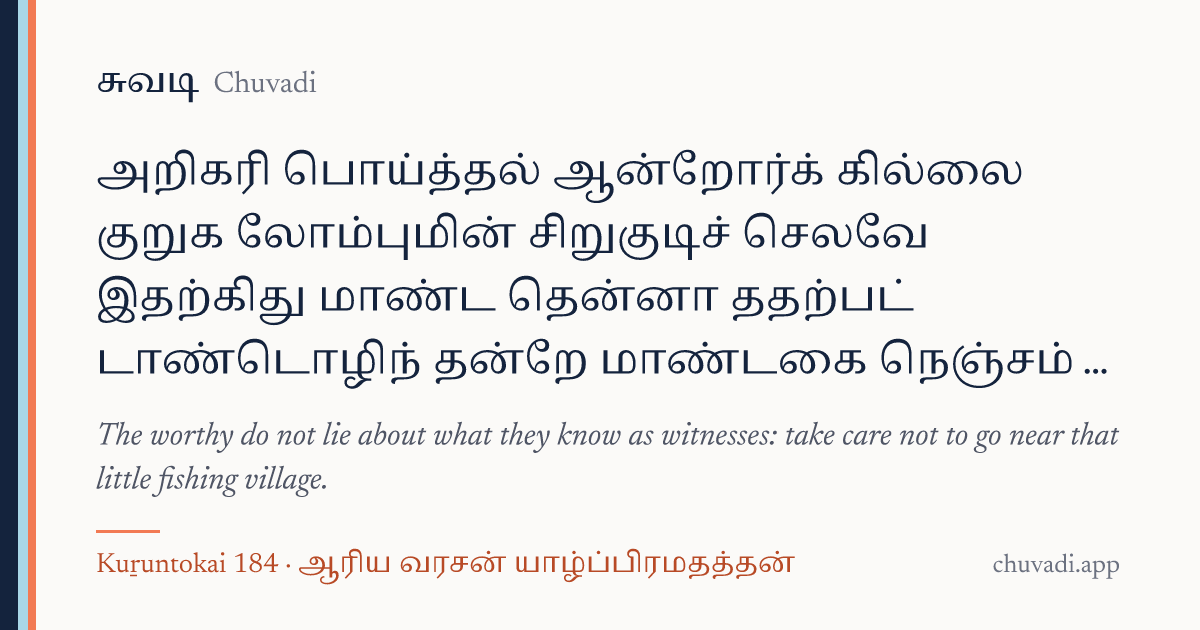

குறுந்தொகை 184
பாடல் · The poem
Tap a word to see where else it occurs.
பொருள் · Meaning in TamilAI
அறிந்ததைச் சான்றாகச் சொல்லும்போது பெரியோர் பொய் சொல்வதில்லை; ஆகவே கேளுங்கள்: அந்தச் சிறிய மீனவக் குடியிருப்புக்குச் செல்வதைத் தவிர்த்துக்கொள்ளுங்கள். இதைவிட இது சிறந்தது என்று ஆராயாமல், அங்கே அகப்பட்டு, அங்கேயே தங்கிவிட்டது என் மாண்புடைய நெஞ்சம். மயில் தோகையின் கண் போன்ற அழகிய கொண்டையுடைய பாவை போன்றவள், நுண்ணிய வலைகளையுடைய பரதவரின் இளமகள்; அந்தக் கடற்கரைச் சோலையில் அவளுடைய கண் என்னும் வலையில் அது சிக்கிக்கொண்டது.
நெய்தல் திணை; தலைவன் தன்னைக் கடிந்த நண்பர்களுக்குக் கூறுவது. அனுபவத்தால் அறிந்தவனாக, அந்த மீனவச் சிற்றூருக்குப் போகாதீர்கள் என்று நகைச்சுவையோடு எச்சரிக்கிறான். பரதவர் கடலில் வலை வீசுவதுபோல, அவர்கள் மகள் கண்வலை வீசி ஆடவரைப் பிடிக்கிறாள் என்ற சொல்நயம் பாடலின் சிறப்பு. புலவர் ஆரிய அரசன் யாழ்ப்பிரமதத்தன் எனப்படுகிறார்; வடநாட்டு அரசர் ஒருவர் தமிழில் பாடியவர் என்பதைத் தவிர அவரைப் பற்றி அதிகம் தெரியவில்லை.
ஆங்கிலம் · English translationAI
Translation
- The worthy do not lie about what they know as witnesses:
- take care not to go near that little fishing village.
- Not asking whether this was better than that, it fell in,
- and there it stayed for good, my noble heart,
- caught by the doll with fine-knotted hair like peacock eyes,
- the young daughter of the fishermen with their fine nets,
- in the net of her eyes, on that seashore.
What the poem says
The hero speaks to his friends, who have been teasing or scolding him for his lovesickness. He gives them earnest advice as one who knows by experience, the kind of witness whose word cannot be doubted. Keep away from that fishing hamlet. His own heart went there, did not stop to weigh one thing against another, and was caught for good.
The poem is in neytal, the coastal landscape, and plays wittily on nets. The girl's father and brothers are fishermen who set fine nets in the sea. She herself catches men in the net of her eyes. Her knotted hair is said to be like the eyes on a peacock's tail.
The poet is named as Āriya Aracaṉ Yāḻppiramatattaṉ, 'Pirammatattaṉ, the Ārya king'. This points to a ruler from the north who composed in Tamil. Tradition links him with Kapilar, who is said to have composed a long poem to teach him Tamil poetic conventions. Little else is known of him.