



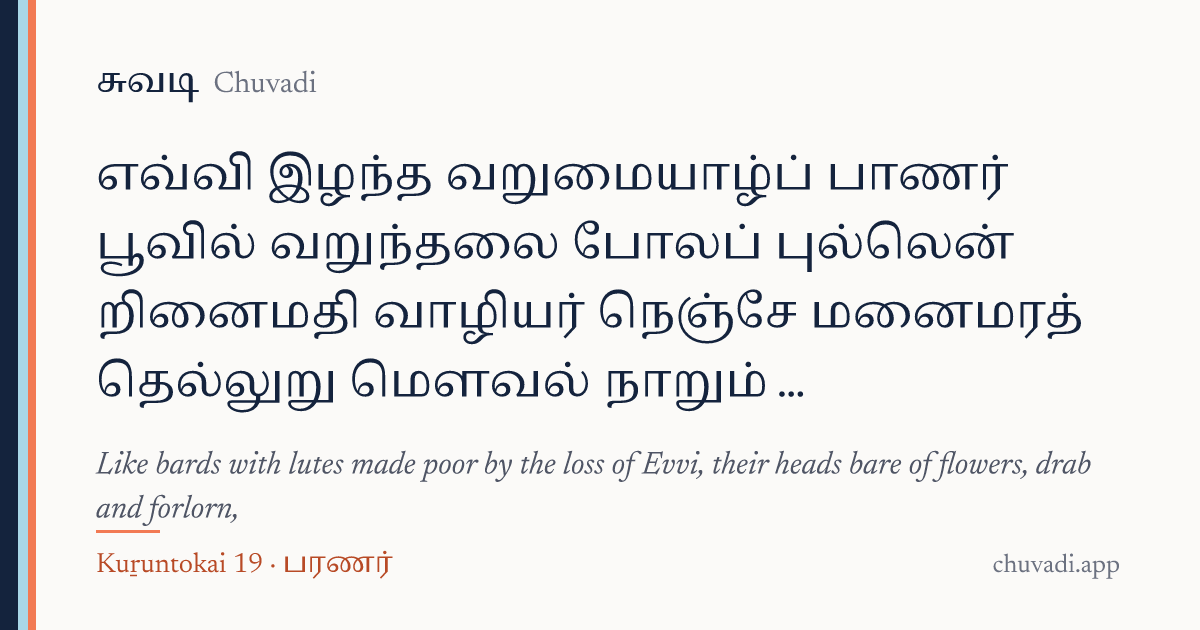

குறுந்தொகை 19
பாடல் · The poem
Tap a word to see where else it occurs.
பொருள் · Meaning in TamilAI
எவ்வியை இழந்ததால் வறுமையுற்ற யாழ்ப் பாணர்களின் பூவில்லாத வெறுந்தலையைப் போலப் பொலிவிழந்து, என் நெஞ்சே, நீ வருந்திக்கொண்டிரு; வாழ்வாயாக! வீட்டு மரத்தில் படர்ந்து ஒளிரும் மௌவல் மலரின் மணம் கமழும், அடர்ந்த கரிய கூந்தலை உடையவள் இனி நமக்கு யாரோ?
மருதத் திணை; தலைவன் தன் நெஞ்சுக்குக் கூறியது. பரத்தமையால் ஊடல் கொண்ட மனைவி அவனோடு பேசாமல் இருக்க, அவன் தன் நிலையைப் புரவலனை இழந்த பாணர்களின் நிலைக்கு ஒப்பிடுகிறான். எவ்வி பாணர்களுக்கு வாரி வழங்கிய வள்ளல்; புரவலன் தந்த பொற்பூவை அணிவது பாணர் வழக்கம், அதனால் பூவில்லாத தலை வறுமையின் அடையாளம். "எல்லுறு" என்பதன் பொருள் உறுதியாகத் தெரியவில்லை.
ஆங்கிலம் · English translationAI
Translation
- Like bards with lutes made poor by the loss of Evvi,
- their heads bare of flowers, drab and forlorn,
- grieve on, my heart, and long may you live! Of the tree beside the house,
- fragrant as the bright mauval jasmine,
- her thick dark hair — who is she to us now?
What the poem says
The hero speaks to his own heart in the farming country (marutam). After his affairs, his wife will not speak to him. She is sulking (ūṭal), the typical mood of this landscape. He feels as lost as the bards who lost their patron Evvi.
Evvi was a chieftain mentioned in several Sangam poems as a generous patron, and his death left the poets who depended on him destitute. Bards honoured by a patron wore gold flowers, so 'heads bare of flowers' marks their poverty.
The last lines show the wife at home, her hair scented with the mauval jasmine that grows on the tree beside their house. 'Who is she to us now?' expresses the hero's sense that she has become a stranger. The word rendered 'bright' (el) can also mean 'daytime' or 'night', and its exact sense here is uncertain.