



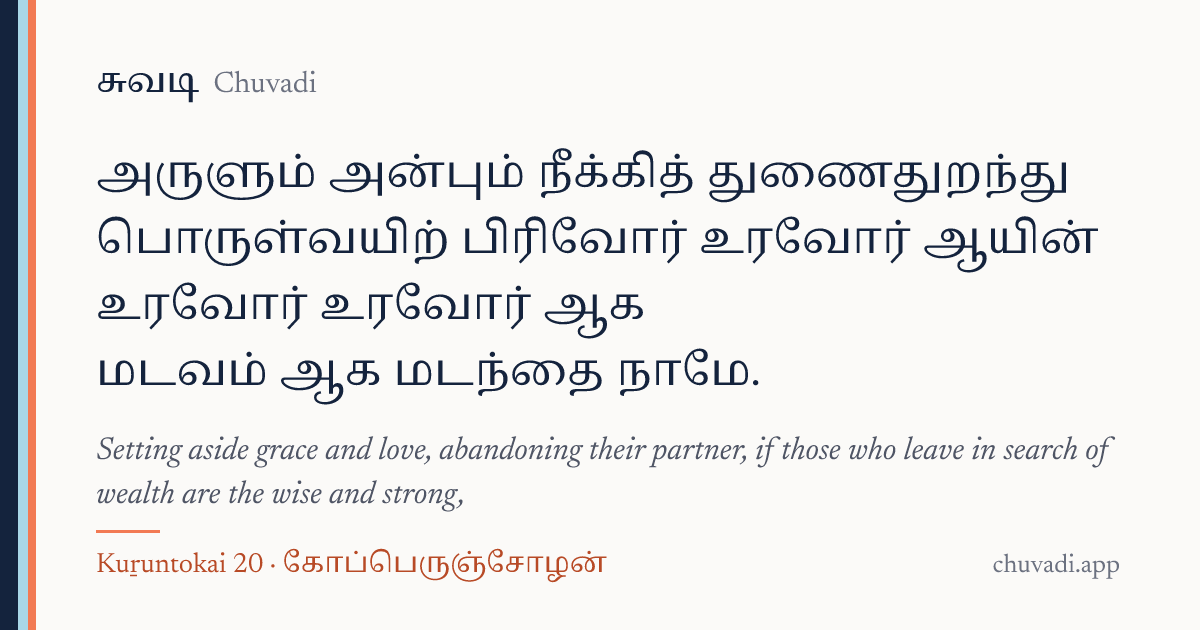

குறுந்தொகை 20
பாடல் · The poem
Tap a word to see where else it occurs.
பொருள் · Meaning in TamilAI
அருளையும் அன்பையும் ஒதுக்கிவைத்து, தம் துணையைக் கைவிட்டுப் பொருள் தேடப் பிரிந்து செல்பவர்களே அறிவும் வலிமையும் உடையவர்கள் என்றால், அந்த வலியவர்கள் வலியவர்களாகவே இருக்கட்டும்; பெண்ணே, நாம் பேதைகளாகவே இருப்போம்.
பாலைத் திணை; தலைவி தோழியிடம் கூறியது. பொருளுக்காகப் பிரிபவர்களை உலகம் அறிவாளிகள் என்று புகழ்வதை அவள் கசப்பான எள்ளலோடு மறுக்கிறாள்; அன்பையே பெரிதாக மதிக்கும் நாம் பேதைகளாக இருந்துவிட்டுப் போவோம் என்கிறாள். "உரவோர்" என்ற சொல் மூன்று முறை வருவதால், இறுதியில் அச்சொல்லே வெறுமையாக ஒலிக்கிறது.
ஆங்கிலம் · English translationAI
Translation
- Setting aside grace and love, abandoning their partner,
- if those who leave in search of wealth are the wise and strong,
- then let the strong be strong;
- and let us be the simple ones, my girl.
What the poem says
The heroine speaks to her friend in the wasteland setting (pālai). Her lover has left her to seek wealth, and people praise men who do so as strong and sensible. Her reply is bitter irony: if that is strength, let them keep it, and we will be the foolish ones who value love.
The poem turns on two words: uravōr, the strong, steady or wise, and maṭavam, the simple, innocent or foolish. Repeating 'strong' three times makes it hollow by the end. The heroine calls her friend maṭantai, 'young girl', and the word echoes the 'simple' of the same line.
The poem is attributed to Kōpperuñcōḻaṉ, a Cōḻa king remembered in Tamil tradition for his close friendship with the poet Picirāntaiyār and for dying by ritual fasting. Several Sangam poems attributed to him survive.