



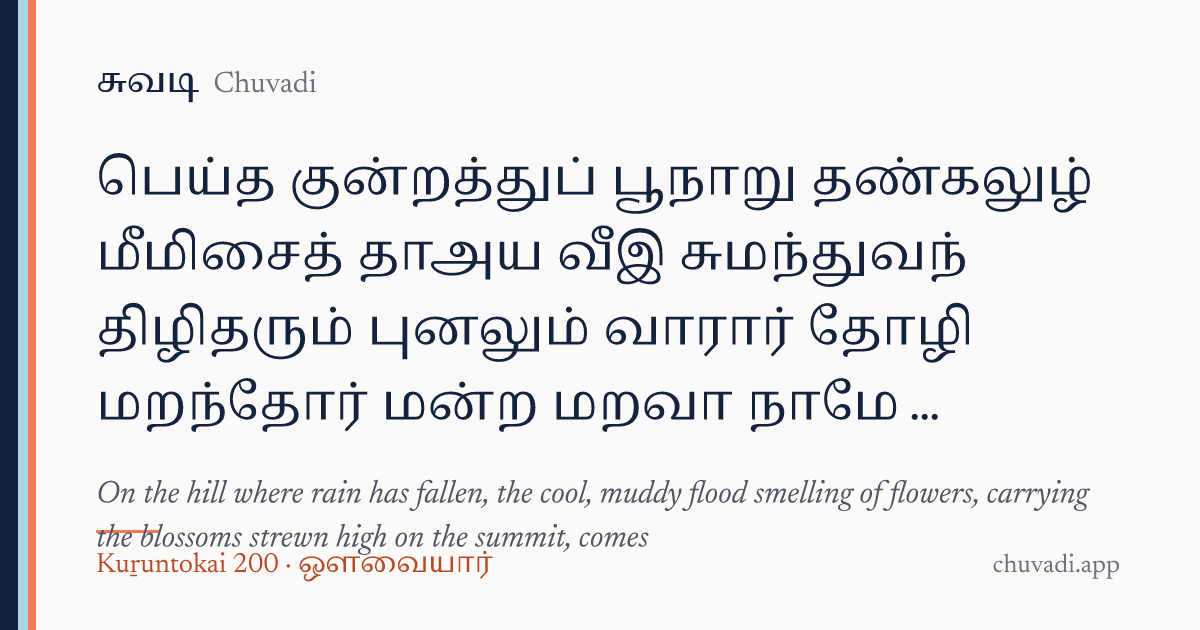

குறுந்தொகை 200
பாடல் · The poem
Tap a word to see where else it occurs.
பொருள் · Meaning in TamilAI
மழை பெய்த குன்றத்திலிருந்து, மலையுச்சியில் பரந்து கிடந்த பூக்களைச் சுமந்துகொண்டு, பூமணம் கமழும் குளிர்ந்த கலங்கல் வெள்ளம் இறங்கி வருகிறது; அவரோ வரவில்லை, தோழி. அவர் உறுதியாக நம்மை மறந்துவிட்டார்; நாமோ மறக்கவில்லை. பருவத்து மழையாக மாலையில் பெரிய மேகங்கள் இனிய ஓசையுடைய இடிக்கூட்டங்களோடு முழங்குகின்றன. அவற்றுக்கு முன்பே வந்துவிடுவேன் என்று உறுதி கூறிவிட்டுப் பிரிந்து சென்றவர் அவர்.
முல்லைத் திணை; தலைவி தோழியிடம் கூறுவது (ஔவையார் பாடல்). அவன் வருகையை அறிவிக்க வேண்டிய கார்கால அடையாளங்கள் எல்லாம் வந்துவிட்டன; அவன் மட்டும் வரவில்லை. வெள்ளம் இறங்கி வருகிறது, அவன் வரவில்லை என்ற முரண் பாடலின் நயம். ஆறாம் வரியில் உள்ள "இனம்" என்ற சொல்லின் பொருள் சற்று ஐயத்துக்குரியது; "முன்வரல் ஏமம்" என்பது மழைக்கு முன் வருவேன் என்ற வாக்காகக் கொள்ளப்பட்டது.
ஆங்கிலம் · English translationAI
Translation
- On the hill where rain has fallen, the cool, muddy flood smelling of flowers,
- carrying the blossoms strewn high on the summit, comes
- down as a stream — yet he does not come, friend;
- he has forgotten, surely, though we do not forget —
- the rains of the season, the great clouds of evening,
- rumble in clusters of sweet-toned thunder —
- he who left us, assuring us he would come before them.
What the poem says
The heroine speaks to her friend in the rainy season, the time of mullai and of waiting. The hills have had rain, and the streams come down muddy and cool, carrying flowers washed from the summit. The evening clouds rumble with thunder. Everything that was supposed to herald his return has arrived, but he has not.
When he left, he reassured her that he would be back before the rains. Now she concludes that he must have forgotten. She herself has not forgotten, neither him nor his promise. The flowers carried down by the floodwaters are an apt sign of the season, and the streams come down while he stays away.
The poem is by Auvaiyār. The sixth line is a little uncertain: the word iṉam may mean 'groups', so 'clusters of thunderclaps', or it may be part of a different reading. The phrase muṉ varal ēmam, 'the assurance of coming before', is read here as his promise to return before the rains.