



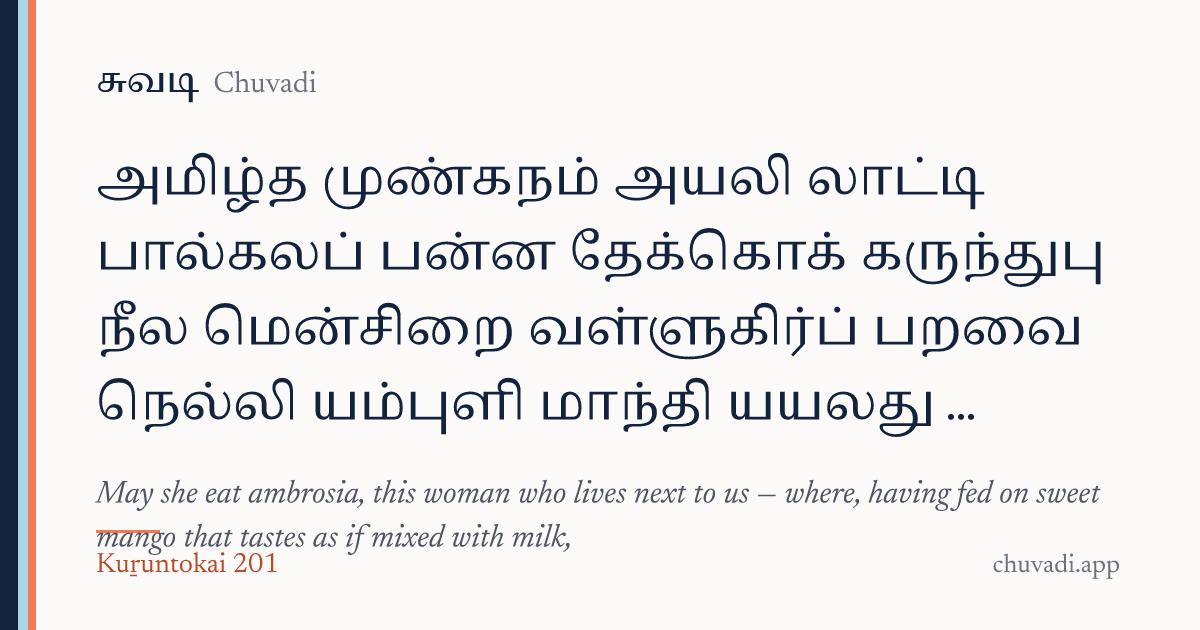

குறுந்தொகை 201
பாடல் · The poem
Tap a word to see where else it occurs.
பொருள் · Meaning in TamilAI
நம் அண்டை வீட்டுப் பெண் அமிழ்தம் உண்டு நீடு வாழ்வாளாக! பாலைக் கலந்தாற்போல இனிக்கும் தேமாங்கனியைத் தின்று, நீல நிற மென்மையான சிறகுகளும் கூரிய நகங்களும் உடைய பறவை, புளிப்பான அழகிய நெல்லிக்கனியையும் வயிறார உண்டு, அருகில் உள்ள முள்ளில்லாத அழகிய மூங்கில் கிளையில் தொங்கிக் கிடக்கும். அத்தகைய, மூங்கில்கள் உயர்ந்து ஓங்கிய சோலைகள் நிறைந்த மலைநாட்டுத் தலைவன் வருவான் என்று அவள் சொன்னாளே!
குறிஞ்சித் திணை; தலைவி கூற்று. தலைவன் வரப்போகிறான் (மணம் பேச வருவான்) என்ற நற்செய்தியைக் கொண்டுவந்த அயல் வீட்டுப் பெண்ணைத் தலைவி மகிழ்ந்து வாழ்த்துகிறாள். இனிப்பையும் புளிப்பையும் உண்டு ஒரே மூங்கிலில் அமைதியாகத் தொங்கும் பறவை (வௌவால் எனக் கொள்வர்), களவின் இன்பதுன்பங்களைக் கடந்து தலைவன் இனி ஓரிடத்தில் நிலைபெறுவான் என்பதைக் குறிப்பாகக் காட்டலாம். இரண்டாம் அடியில் வரும் கனியின் பெயர் உறுதியாகத் தெரியவில்லை; இனிய மாங்கனியாகக் கொள்ளப்பட்டது.
ஆங்கிலம் · English translationAI
Translation
- May she eat ambrosia, this woman who lives next to us —
- where, having fed on sweet mango that tastes as if mixed with milk,
- the bird with soft dark wings and sharp claws
- gorges on the lovely sour nelli fruit, and close by
- hangs from the thornless, graceful stem of a bamboo
- in the grove where the canes rise tall —
- for she said the man of the mountain land would come.
What the poem says
The heroine speaks, overjoyed. A neighbouring woman has brought word that the hero of the hills is coming, and the heroine's blessing on her, "may she eat ambrosia", is a conventional wish for long and happy life given to the bearer of good news. The hope behind the news is that he is coming to ask for her in marriage.
The "bird" with dark soft wings and sharp claws is most likely a fruit bat, which eats its fill and then hangs from a branch. The scene is kuṟiñci, the hill landscape of union. It can be read as an implied comparison: the creature that has enjoyed the sweet and the sour then rests at ease on a single bamboo, as the hero, after the sweet and bitter of a secret love, should now settle in one home.
The precise kind of fruit named in line two is not certain; it is taken here as a sweet mango.