




குறுந்தொகை 208
பாடல் · The poem
Tap a word to see where else it occurs.
பொருள் · Meaning in TamilAI
தோழி! நான் அவனோடு சேரமாட்டேன் என்கிறேன்; ஆனாலும் சேர்ந்துவிடுகிறேன். மலையில், ஒன்றோடொன்று போரிடும் யானை மிதித்ததால் அடிமரம் நெரிந்து வளைந்த வேங்கை மரம், குறவர் மகளிர் தம் கூந்தலில் சூடிக்கொள்ளுமாறு, அவர்கள் நின்றபடியே பறிக்கும் உயரத்தில் மலர்கிறது. அத்தகைய நாட்டை உடையவனோடு சேரேன் என்று சொன்னாலும், சேர்ந்தே விடுகிறேன்.
குறிஞ்சித் திணை; தலைவி தோழிக்குக் கூறியது. தலைவன் செய்த ஏதோ ஒன்றால் மனம் நொந்து அவனை ஒதுக்க நினைத்தாலும், அவள் உள்ளம் அவனையே சேர்கிறது. யானையால் நெரிக்கப்பட்டும் தாழ்ந்து மலர்களை எளிதாக வழங்கும் வேங்கை, புண்பட்டாலும் அன்பைத் தந்துவிடும் தலைவியின் நிலையைக் குறிப்பாகக் காட்டுகிறது (உள்ளுறை). வேங்கை பூக்கும் காலம் மணக்காலமாகவும் கருதப்படுவதால், மணத்தை நோக்கிய எதிர்பார்ப்பும் இதில் தொனிக்கலாம்.
ஆங்கிலம் · English translationAI
Translation
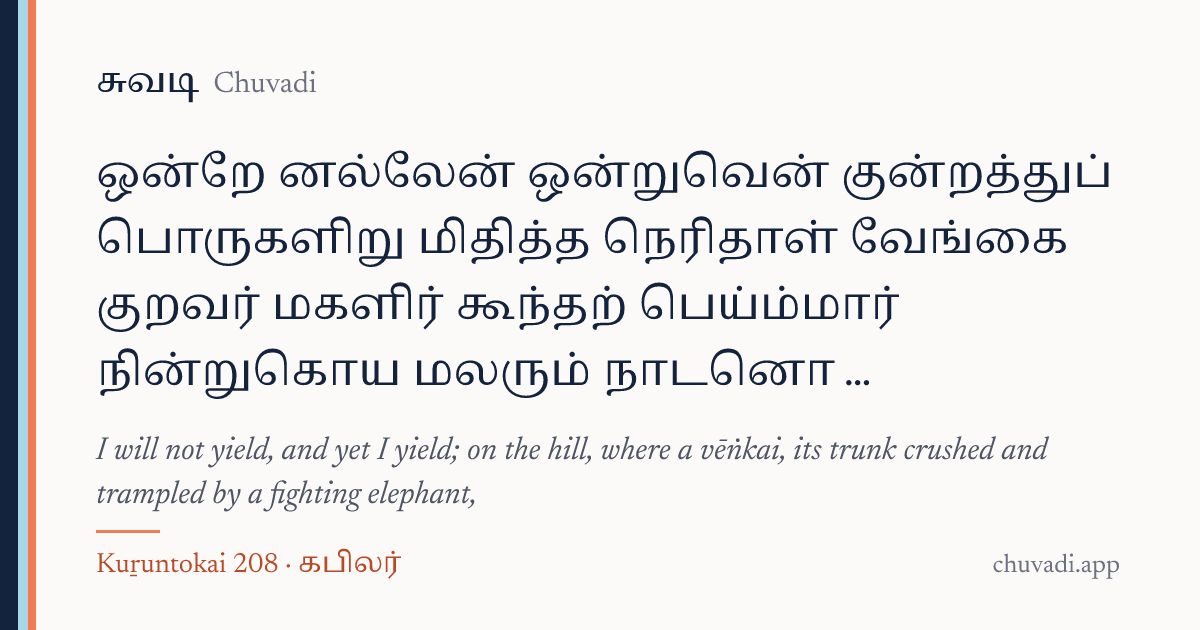
- I will not yield, and yet I yield; on the hill,
- where a vēṅkai, its trunk crushed and trampled by a fighting elephant,
- so that the daughters of the kuṟavar may put flowers in their hair,
- blooms where they can pick it standing — with the man of that land
- I will not be one, friend; yet I am one with him.
What the poem says
The heroine speaks to her friend in this poem by Kapilar, the great poet of the hills (kuṟiñci). Something the hero has done has hurt her, and she means to hold herself aloof. She cannot: the very line that says "I will not be one with him" ends by admitting that she is.
The vēṅkai is a hill tree whose golden flowers usually grow out of reach. Here a fighting elephant has trampled it so that its trunk is bent, and now the hill girls can pick its blossoms standing on the ground. The hidden meaning (uḷḷuṟai) is that his land gives gifts freely even when it has been hurt, and so does she. The flowering vēṅkai is also linked to the season of marriage, so there may be a hint of the wedding she hopes for.