



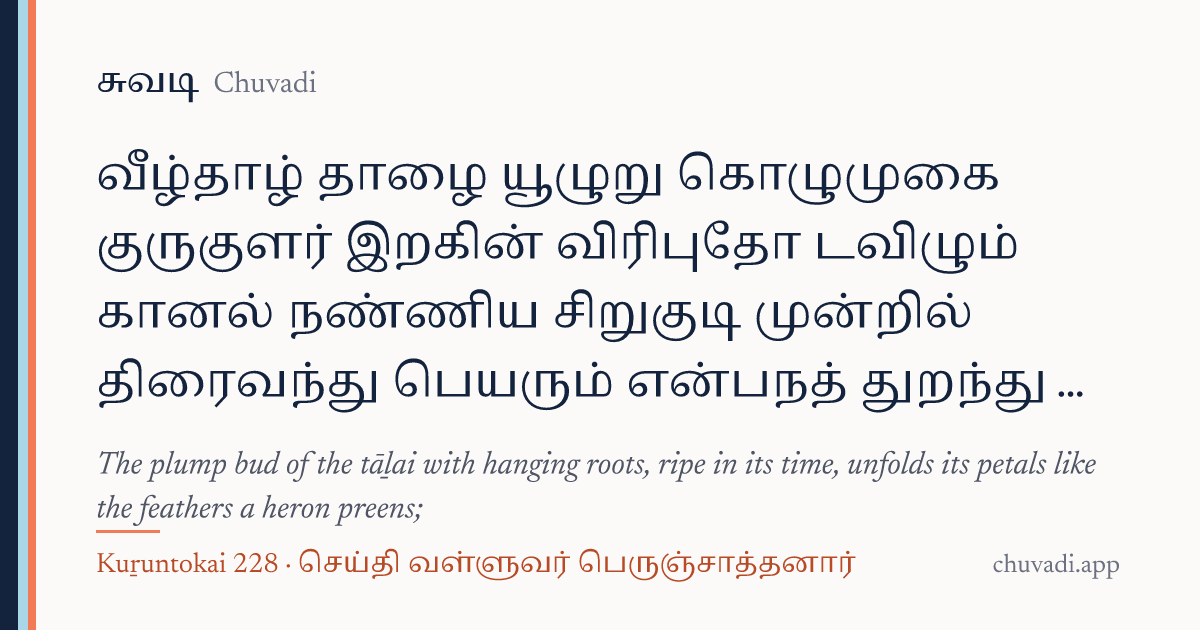

குறுந்தொகை 228
பாடல் · The poem
Tap a word to see where else it occurs.
பொருள் · Meaning in TamilAI
தொங்கும் விழுதுகளை உடைய தாழையின் காலம் முதிர்ந்த கொழுத்த அரும்பு, நாரை கோதிவிடும் இறகுகள் போல இதழ் விரிந்து மலரும்; அந்தக் கடற்கரைச் சோலையை அடுத்த சிற்றூரின் வீட்டு முற்றங்களில் அலைகள் வந்து மீளுமாம். நம்மைப் பிரிந்து நெடுந்தொலைவு நாட்டவர் ஆனாலும், குளிர்ந்த கடல் நாட்டை உடைய அவர் என் நெஞ்சுக்கு மிக அருகில் இருக்கிறார்.
நெய்தல் திணை; தலைவி கூற்று. தொலைவில் சென்ற தலைவனின் கடற்கரை ஊரைப் பற்றிக் கேட்டதை எண்ணி, அவன் உடலால் தொலைவில் இருந்தாலும் நெஞ்சுக்கு அணியன் என்கிறாள். முற்றத்துக்கு வந்து மீளும் அலை, அவன் வருவதும் போவதுமான நிலையைக் குறிப்பாகக் காட்டலாம்.
ஆங்கிலம் · English translationAI
Translation
- The plump bud of the tāḻai with hanging roots, ripe in its time,
- unfolds its petals like the feathers a heron preens;
- and in the little hamlet beside the seaside grove, into the yards
- the waves come and go back, they say; though he left us
- and now belongs to a land very far away,
- he is close to my heart, in that land of the cool sea.
What the poem says
The heroine speaks of the hero who has gone away to a distant country. Instead of mourning, she dwells on what she has heard of his home on the coast (neytal): screw-pine (tāḻai) buds opening like a heron's feathers, and a little fishing village where the waves wash into the front yards.
The poem turns on the contrast between distance and nearness. He is far away by land, but close to her heart. The picture of waves that come and go back from the house may also suggest his coming and going in her life.