




குறுந்தொகை 229
பாடல் · The poem
Tap a word to see where else it occurs.
பொருள் · Meaning in TamilAI
இவன் இவளுடைய ஐம்பாலாகப் பின்னிய கூந்தலைப் பற்றி இழுக்கவும், இவள் இவனுடைய மெல்லிய சிறு குடுமியைப் பிடித்து இழுத்துவிட்டு ஓடவும், அன்புடைய செவிலியர் தடுத்தும் நிற்காமல், அயலாரைப் போலச் சிறுசிறு சண்டைகள் இட்டுக்கொண்டிருந்தனர் ஒருகாலத்தில். ஊழே! நீ மிக நல்லது! மென்மையான இயல்புடைய, இரட்டை மலர்களால் தொடுத்த மாலை போன்ற இவர்களுக்கு மணவாழ்வின் மகிழ்ச்சியைக் காட்டிவிட்டாயே!
பாலைத் திணை என வகுக்கப்பட்டது; கண்டோர் கூற்று. சிறுவயதில் பகைவர்போலச் சண்டையிட்ட இருவரும் இப்போது மணமக்களாகியதைக் கண்டவர்கள் வியந்து, காதலரைச் சேர்க்கும் ஊழைப் ("பால்") புகழ்கின்றனர். குறுந்தொகையில் இளமைத் தோழர்களின் காதலைக் காட்டும் அரிய பாடல் இது. ஐம்பால் என்பது சிறுமியரின் கூந்தல் அமைப்பு.
ஆங்கிலம் · English translationAI
Translation
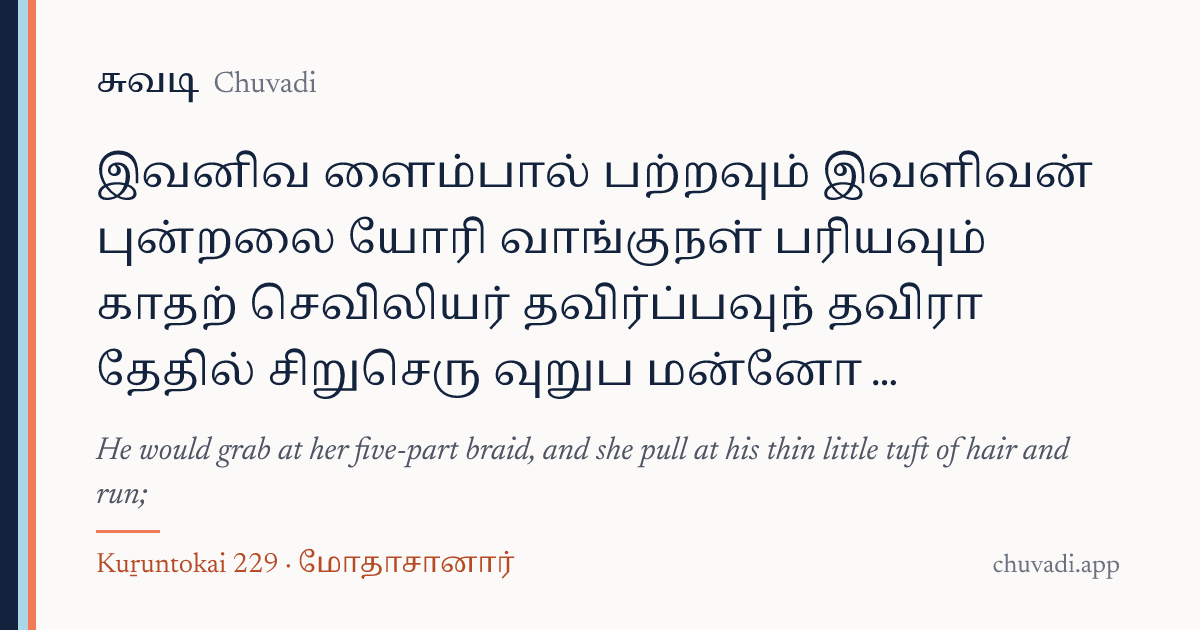
- He would grab at her five-part braid, and she
- pull at his thin little tuft of hair and run;
- though their loving nurses tried to stop them, they would not stop,
- and fought their little battles like strangers, once;
- you are good indeed, O fate: this gentle
- pair, like a garland of twin flowers,
- you have shown the joyous nature of marriage.
What the poem says
Here those who have seen the couple speak (kaṇṭōr kūṟṟu); the poem is classed under pālai, perhaps because the pair have left home together. They remember the bride and groom as small children who fought like strangers, he pulling her braids and she pulling his tuft, while their nurses tried in vain to part them.
Now the two are married, and the onlookers praise fate (pāl), the destiny that joins lovers in Tamil thought. The once-quarrelling children have become a pair like a garland of two matched flowers.
The poem is unusual in Kuṟuntokai for showing childhood companions rather than strangers who fall in love. The five-part braid was a style for young girls. The poet's name, Mōtācaṉār, is otherwise unknown.